
"Gli Spaccapietre" di Gustave Courbet è l'opera che ha rivoluzionato...
 Storia dell'arte1,369 views·Updated Jun 28, 2026·2 pages
Gli Spaccapietre di Gustave Courbet - Analisi e Significato
L
Lara Chini@larachini_bmad
1
of 2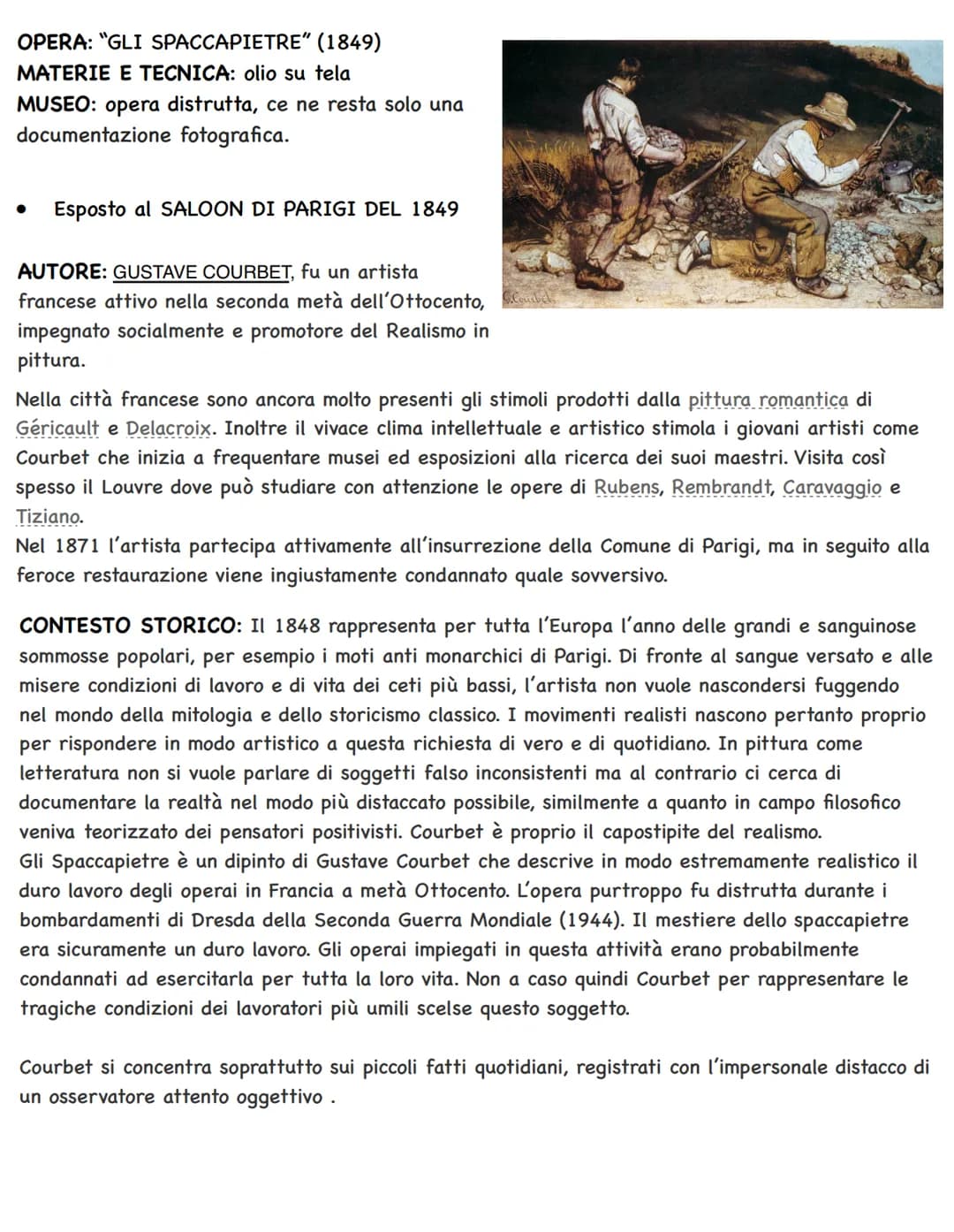
L'opera che ha cambiato tutto: contesto e significato
Immagina di vivere nel 1849 e vedere per la prima volta un quadro che mostra due operai sudati invece di dee e imperatori. Gustave Courbet ha fatto proprio questo, creando un'opera rivoluzionaria che ha segnato la nascita del Realismo.
L'artista francese non voleva più dipingere soggetti mitologici o storici. Dopo i moti del 1848 e le rivolte popolari in tutta Europa, Courbet sentiva il bisogno di raccontare la verità della sua epoca. Come i filosofi positivisti cercavano la verità attraverso la scienza, lui la cercava attraverso l'arte.
Il mestiere dello spaccapietre era uno dei più duri dell'epoca. Chi iniziava questo lavoro spesso non ne usciva più per tutta la vita. Courbet sceglie proprio questo soggetto per denunciare le condizioni tragiche dei lavoratori più umili, dipingendo con il distacco oggettivo di un documentarista.
💡 Curiosità: Courbet ha studiato i grandi maestri come Caravaggio e Rembrandt al Louvre, ma ha usato le loro tecniche per raccontare storie completamente diverse!
2
of 2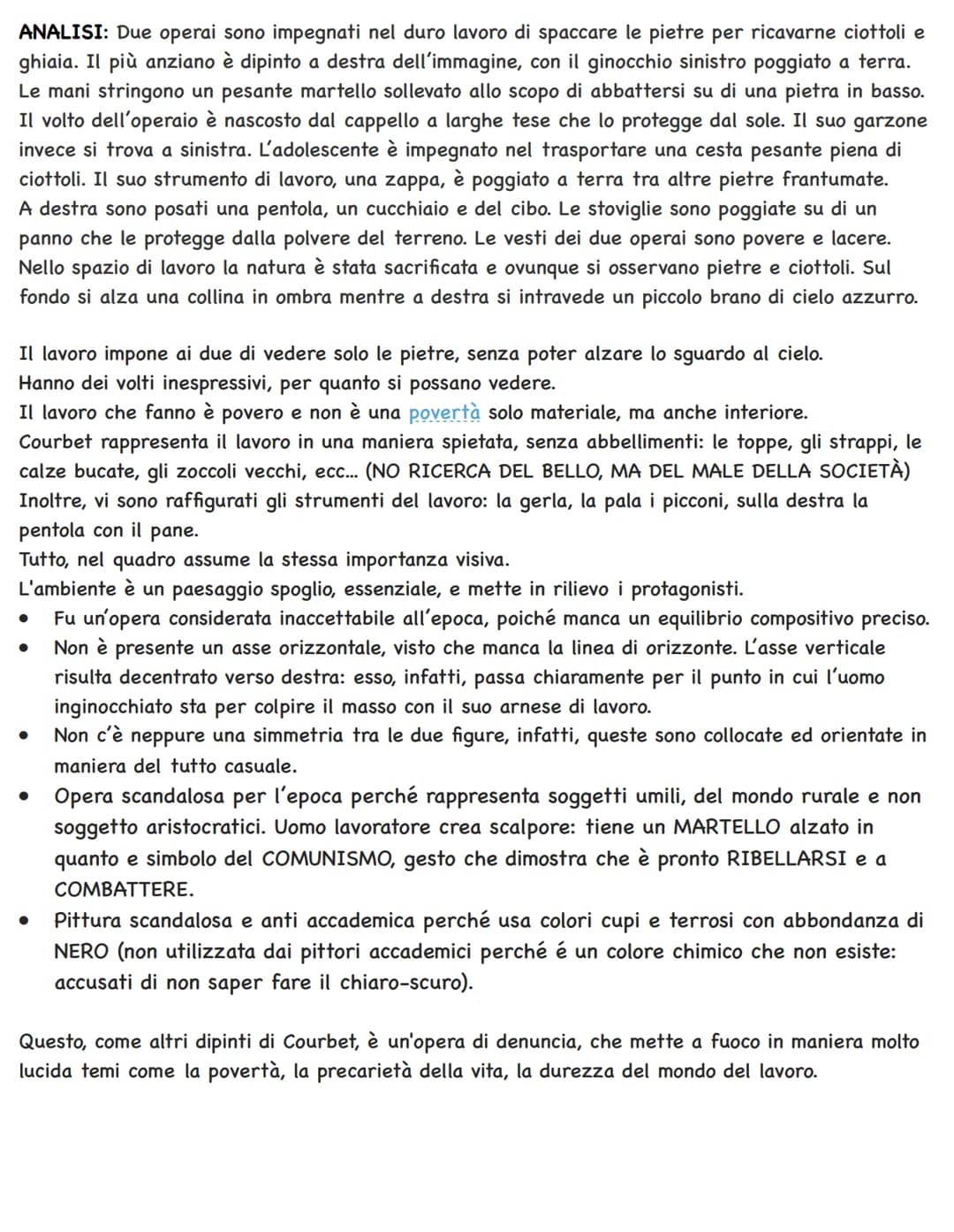
Analisi dell'opera: una denuncia senza compromessi
Guarda attentamente questa composizione: due figure, un anziano e un ragazzo, condannati a spaccare pietre sotto il sole. L'operaio più anziano tiene il martello alzato, pronto a colpire, mentre il giovane garzone trasporta faticosamente una cesta piena di ciottoli.
Courbet non abbellisce nulla: le vesti lacere, le toppe, le calze bucate, gli zoccoli consumati. Tutto ha la stessa importanza visiva, dagli strumenti di lavoro alla modesta pentola con il pane. I volti sono nascosti o inespressivi - questi uomini possono guardare solo le pietre, mai il cielo.
La composizione era scandalosa per l'epoca perché rompeva tutte le regole accademiche. Niente simmetria, niente equilibrio classico, niente linea d'orizzonte precisa. Le figure sono disposte "casualmente", proprio come nella vita reale.
Il vero scandalo però era altro: Courbet usava colori cupi e terrosi, con abbondanza di nero (colore "vietato" dai pittori accademici). E soprattutto, quel martello alzato sembrava un simbolo di ribellione, una minaccia all'ordine costituito.
⚡ Impatto: Quest'opera di denuncia ha aperto la strada a tutti i movimenti artistici moderni che raccontano la realtà sociale senza filtri!
We thought you’d never ask...
Our AI companion is specifically built for the needs of students. Based on the millions of content pieces we have on the platform we can provide truly meaningful and relevant answers to students. But its not only about answers, the companion is even more about guiding students through their daily learning challenges, with personalised study plans, quizzes or content pieces in the chat and 100% personalisation based on the students skills and developments.
You can download the app in the Google Play Store and in the Apple App Store.
That's right! Enjoy free access to study content, connect with fellow students, and get instant help – all at your fingertips.
Similar Content
 Kunst
KunstMost popular content: Gustave Courbet
8Storia dell'arteÉdouard Manet
Manet: vita e opere principali (Colazione sull’erba, Olympia, Il bar alle Folies-Bergère).
4ªl2,70674
Storia dell'arteEdouard Manet
Descrizione della vita e della formazione artistica. Analisi delle opere: colazione sull'erba, Olympia, il bar delle folies-bergere
5ªl2,26454
Storia dell'arteGustave Courbet
Vita e opere
5ªl2,26729
Storia dell'arteEdouard Manet
vitae opere più importanti
4ªl64812
Storia dell'arteGustave Courbet
Riassunto riguardante la biografia di Gustave Courbet e le opere "Gli Spaccapietre" e "Fanciulle sulla riva della Senna"
5ªl2,12249
 Italiano
La belle époque
La belle époque e storia
3ªm56410
Storia dell'arteRealismo in Francia e in Italia
Con opere di Daumier, Millet, Gustave Courbet, Giovanni Fattori, Silvestro Lega e Telemaco Signorini
5ªl1,33045
Storia dell'arteREALISMO
Storia dell'Arte: Realismo. Contesto storico, Courbet, Millet. Con spiegazione delle opere.
3ªl1,77546
Most popular content in Storia dell'arte
9Storia dell'arteLeonardo da Vinci
Riassunto di storia dell'arte su Leonardo da Vinci
3ªl1,55334
Q
Storia dell'artequiz sull'arte dei greci
4 periodi, arte arcaica, tempi, ordini architettonici, vasi
1ªl2,6305
A
Storia dell'arteAVANGUARDIE nell’arte
Quiz sulla nascita delle avanguardie, espressionismo, cubismo, futurismo, astrattismo
5ªl1,2634
Storia dell'arteArte romanica
Riassunto sull’architettura romanica e analisi di diverse chiese e cattedrali in Italia, romanico siciliano
2ªl2,39060
Q
Storia dell'artequiz sulla pittura vascolare e sulla statuaria greca
quiz sull’arte greca arcaica, classica, ellenistica. quiz storia dell arte. Statuaria e pittura vascolare
1ªl1,4804
L
Storia dell'arteLeonardo da Vinci
un mini quiz su Leonardo da Vinci per ripassare quello che avete studiato
3ªl6393
Q
Storia dell'arteQuiz 4rte paleocristiana (semplice)
test sull'arte paleocristiana difficoltà: semplice
1ªm9130
S
Storia dell'artesimbologia nell' 4rte paleocristiana (medio)
simbologia dell'arte paleocristiana
1ªm5160
L
Storia dell'arteL'arte classica
Storia, Arte e Pensiero
1ªl6140
Most popular content
9ItalianoRiassunto patente B
Riassunto patente B - appunti presi a lezione
5ªl29,378947
 Altro
AltroTeoria patente b
Tutti gli argomenti per la patente
1ªl21,343690
 Ed. civ.
Teoria patente di guida B: Segnali stradali
Segnali stradali di pericolo, luminosi, di prescrizione, di indicazione, temporanei, complementari, pannelli integrativi, segnaletica orizzontale, segnalazioni agenti del traffico, distanza di visibilità per l‘arresto, minima di sicurezza.
5ªl40,1971,650
 Filosofia
Aristotele
Aristotele: vita, metafisica, fisica, etica e politica, retorica e poetica
3ªl7,624216
ItalianoI promessi sposi
Riassunti completi di tutti i 38 capitoli dei Promessi sposi.
2ªl14,092314
AltroPATENTE
schemi per esame teorico della patente
Università22,178757
S
ItalianoSintesi finale di Analisi logica
Esercitazione completa di analisi logica su frasi articolate per consolidare la conoscenza di tutti i complementi.
3ªm5,5410
P
 Inglese
Present Simple vs Present Continuous
Develop the ability to choose correctly between the Present Simple for habits and the Present Continuous for ongoing actions.
3ªm4,2190
G
ItalianoGabriele D'Annunzio e l'Estetismo
Domande sull'ideale del superuomo, il panismo e la concezione dell'arte come valore assoluto in D'Annunzio.
4ªl2,6740
Students love us — and so will you.
4.6/5App Store
4.7/5Google Play
The app is very easy to use and well designed. I have found everything I was looking for so far and have been able to learn a lot from the presentations! I will definitely use the app for a class assignment! And of course it also helps a lot as an inspiration.
Stefan SiOS user
This app is really great. There are so many study notes and help [...]. My problem subject is French, for example, and the app has so many options for help. Thanks to this app, I have improved my French. I would recommend it to anyone.
Samantha KlichAndroid user
Wow, I am really amazed. I just tried the app because I've seen it advertised many times and was absolutely stunned. This app is THE HELP you want for school and above all, it offers so many things, such as workouts and fact sheets, which have been VERY helpful to me personally.
AnnaiOS user
Storia dell'arte1,369 views·Updated Jun 28, 2026·2 pagesGli Spaccapietre di Gustave Courbet - Analisi e Significato
L
Lara Chini@larachini_bmad
"Gli Spaccapietre" di Gustave Courbet è l'opera che ha rivoluzionato l'arte dell'Ottocento, scandalizzando il pubblico borghese del Salon di Parigi del 1849. Quest'opera perduta (distrutta durante la Seconda Guerra Mondiale) rappresenta il manifesto del Realismo, mostrando senza filtri la...
1
of 2
Sign up to see the content. It's free!
- Access to all documents
- Improve your grades
- Join milions of students
L'opera che ha cambiato tutto: contesto e significato
Immagina di vivere nel 1849 e vedere per la prima volta un quadro che mostra due operai sudati invece di dee e imperatori. Gustave Courbet ha fatto proprio questo, creando un'opera rivoluzionaria che ha segnato la nascita del Realismo.
L'artista francese non voleva più dipingere soggetti mitologici o storici. Dopo i moti del 1848 e le rivolte popolari in tutta Europa, Courbet sentiva il bisogno di raccontare la verità della sua epoca. Come i filosofi positivisti cercavano la verità attraverso la scienza, lui la cercava attraverso l'arte.
Il mestiere dello spaccapietre era uno dei più duri dell'epoca. Chi iniziava questo lavoro spesso non ne usciva più per tutta la vita. Courbet sceglie proprio questo soggetto per denunciare le condizioni tragiche dei lavoratori più umili, dipingendo con il distacco oggettivo di un documentarista.
💡 Curiosità: Courbet ha studiato i grandi maestri come Caravaggio e Rembrandt al Louvre, ma ha usato le loro tecniche per raccontare storie completamente diverse!
2
of 2Sign up to see the content. It's free!
- Access to all documents
- Improve your grades
- Join milions of students
Analisi dell'opera: una denuncia senza compromessi
Guarda attentamente questa composizione: due figure, un anziano e un ragazzo, condannati a spaccare pietre sotto il sole. L'operaio più anziano tiene il martello alzato, pronto a colpire, mentre il giovane garzone trasporta faticosamente una cesta piena di ciottoli.
Courbet non abbellisce nulla: le vesti lacere, le toppe, le calze bucate, gli zoccoli consumati. Tutto ha la stessa importanza visiva, dagli strumenti di lavoro alla modesta pentola con il pane. I volti sono nascosti o inespressivi - questi uomini possono guardare solo le pietre, mai il cielo.
La composizione era scandalosa per l'epoca perché rompeva tutte le regole accademiche. Niente simmetria, niente equilibrio classico, niente linea d'orizzonte precisa. Le figure sono disposte "casualmente", proprio come nella vita reale.
Il vero scandalo però era altro: Courbet usava colori cupi e terrosi, con abbondanza di nero (colore "vietato" dai pittori accademici). E soprattutto, quel martello alzato sembrava un simbolo di ribellione, una minaccia all'ordine costituito.
⚡ Impatto: Quest'opera di denuncia ha aperto la strada a tutti i movimenti artistici moderni che raccontano la realtà sociale senza filtri!
We thought you’d never ask...
Our AI companion is specifically built for the needs of students. Based on the millions of content pieces we have on the platform we can provide truly meaningful and relevant answers to students. But its not only about answers, the companion is even more about guiding students through their daily learning challenges, with personalised study plans, quizzes or content pieces in the chat and 100% personalisation based on the students skills and developments.
You can download the app in the Google Play Store and in the Apple App Store.
That's right! Enjoy free access to study content, connect with fellow students, and get instant help – all at your fingertips.
Similar Content
Most popular content: Gustave Courbet
8Storia dell'arteÉdouard Manet
Manet: vita e opere principali (Colazione sull’erba, Olympia, Il bar alle Folies-Bergère).
4ªl2,70674
Storia dell'arteEdouard Manet
Descrizione della vita e della formazione artistica. Analisi delle opere: colazione sull'erba, Olympia, il bar delle folies-bergere
5ªl2,26454
Storia dell'arteGustave Courbet
Vita e opere
5ªl2,26729
Storia dell'arteEdouard Manet
vitae opere più importanti
4ªl64812
Storia dell'arteGustave Courbet
Riassunto riguardante la biografia di Gustave Courbet e le opere "Gli Spaccapietre" e "Fanciulle sulla riva della Senna"
5ªl2,12249
ItalianoLa belle époque
La belle époque e storia
3ªm56410
Storia dell'arteRealismo in Francia e in Italia
Con opere di Daumier, Millet, Gustave Courbet, Giovanni Fattori, Silvestro Lega e Telemaco Signorini
5ªl1,33045
Storia dell'arteREALISMO
Storia dell'Arte: Realismo. Contesto storico, Courbet, Millet. Con spiegazione delle opere.
3ªl1,77546
Most popular content in Storia dell'arte
9Storia dell'arteLeonardo da Vinci
Riassunto di storia dell'arte su Leonardo da Vinci
3ªl1,55334
Q
Storia dell'artequiz sull'arte dei greci
4 periodi, arte arcaica, tempi, ordini architettonici, vasi
1ªl2,6305
A
Storia dell'arteAVANGUARDIE nell’arte
Quiz sulla nascita delle avanguardie, espressionismo, cubismo, futurismo, astrattismo
5ªl1,2634
Storia dell'arteArte romanica
Riassunto sull’architettura romanica e analisi di diverse chiese e cattedrali in Italia, romanico siciliano
2ªl2,39060
Q
Storia dell'artequiz sulla pittura vascolare e sulla statuaria greca
quiz sull’arte greca arcaica, classica, ellenistica. quiz storia dell arte. Statuaria e pittura vascolare
1ªl1,4804
L
Storia dell'arteLeonardo da Vinci
un mini quiz su Leonardo da Vinci per ripassare quello che avete studiato
3ªl6393
Q
Storia dell'arteQuiz 4rte paleocristiana (semplice)
test sull'arte paleocristiana difficoltà: semplice
1ªm9130
S
Storia dell'artesimbologia nell' 4rte paleocristiana (medio)
simbologia dell'arte paleocristiana
1ªm5160
L
Storia dell'arteL'arte classica
Storia, Arte e Pensiero
1ªl6140
Most popular content
9ItalianoRiassunto patente B
Riassunto patente B - appunti presi a lezione
5ªl29,378947
AltroTeoria patente b
Tutti gli argomenti per la patente
1ªl21,343690
Ed. civ.Teoria patente di guida B: Segnali stradali
Segnali stradali di pericolo, luminosi, di prescrizione, di indicazione, temporanei, complementari, pannelli integrativi, segnaletica orizzontale, segnalazioni agenti del traffico, distanza di visibilità per l‘arresto, minima di sicurezza.
5ªl40,1971,650
FilosofiaAristotele
Aristotele: vita, metafisica, fisica, etica e politica, retorica e poetica
3ªl7,624216
ItalianoI promessi sposi
Riassunti completi di tutti i 38 capitoli dei Promessi sposi.
2ªl14,092314
AltroPATENTE
schemi per esame teorico della patente
Università22,178757
S
ItalianoSintesi finale di Analisi logica
Esercitazione completa di analisi logica su frasi articolate per consolidare la conoscenza di tutti i complementi.
3ªm5,5410
P
InglesePresent Simple vs Present Continuous
Develop the ability to choose correctly between the Present Simple for habits and the Present Continuous for ongoing actions.
3ªm4,2190
G
ItalianoGabriele D'Annunzio e l'Estetismo
Domande sull'ideale del superuomo, il panismo e la concezione dell'arte come valore assoluto in D'Annunzio.
4ªl2,6740
Students love us — and so will you.
4.6/5App Store
4.7/5Google Play
The app is very easy to use and well designed. I have found everything I was looking for so far and have been able to learn a lot from the presentations! I will definitely use the app for a class assignment! And of course it also helps a lot as an inspiration.
Stefan SiOS user
This app is really great. There are so many study notes and help [...]. My problem subject is French, for example, and the app has so many options for help. Thanks to this app, I have improved my French. I would recommend it to anyone.
Samantha KlichAndroid user
Wow, I am really amazed. I just tried the app because I've seen it advertised many times and was absolutely stunned. This app is THE HELP you want for school and above all, it offers so many things, such as workouts and fact sheets, which have been VERY helpful to me personally.
AnnaiOS user