
Environmental pollution has become one of the greatest problems facing...
 Environmental Science41 views·Updated Jul 16, 2026·3 pages
Understanding Environmental Pollution: Causes and Laws
1 / 3
1
of 3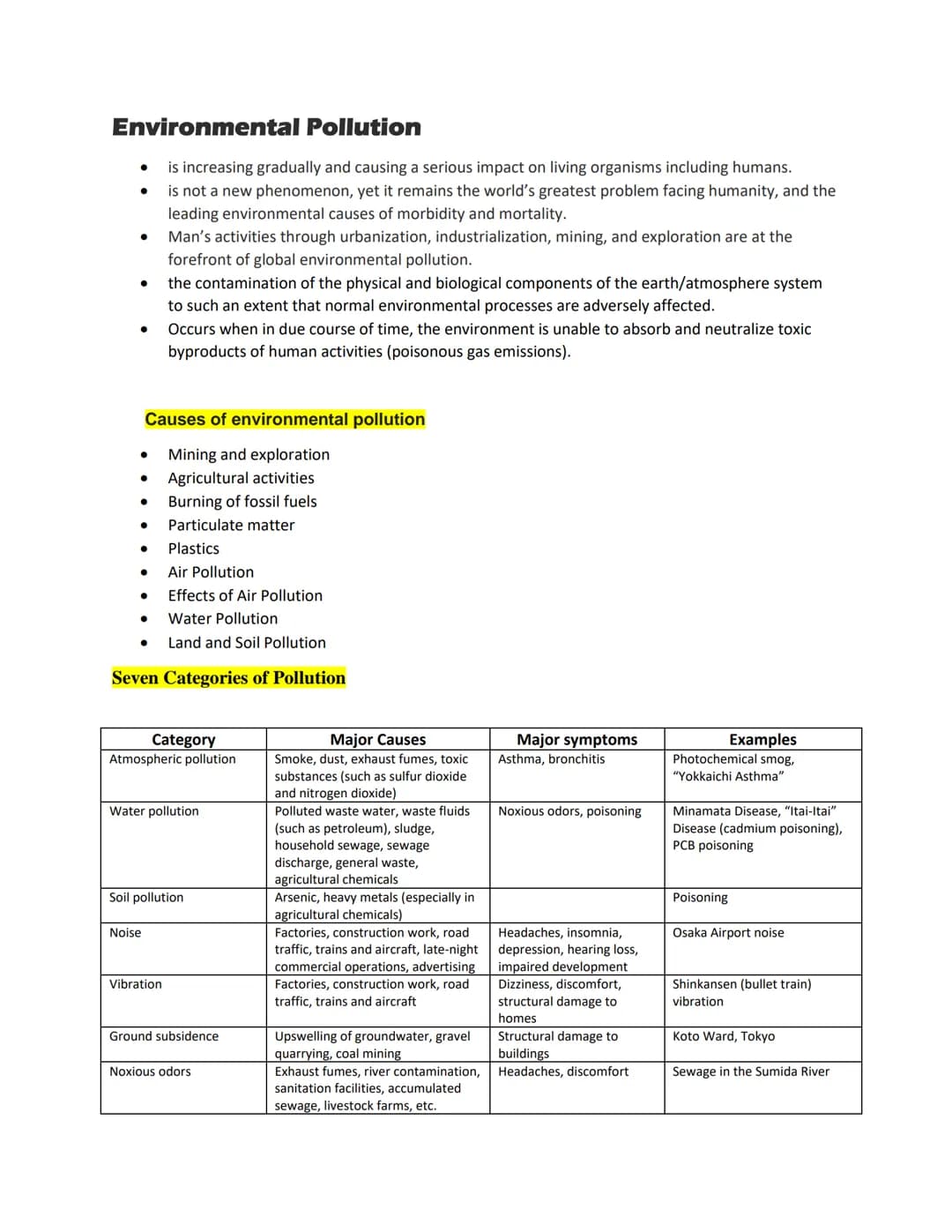
Understanding Environmental Pollution
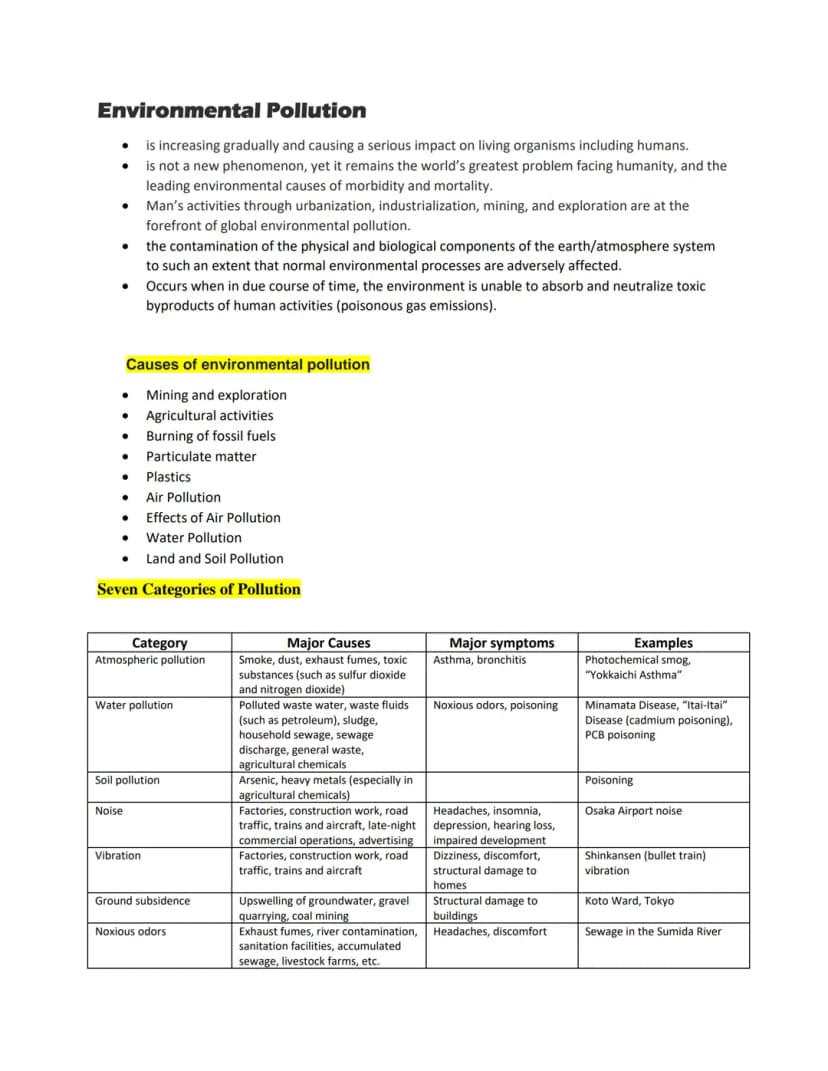
Environmental pollution isn't new, but it's rapidly increasing and causing serious impacts on all living organisms, including humans. Human activities like urbanization, industrialization, and mining are major contributors to this global issue. When our environment becomes contaminated to the point that normal environmental processes are disrupted, we face pollution problems.
The main causes of environmental pollution include mining operations, agricultural activities, burning fossil fuels, particulate matter release, and plastic waste. These activities contribute to different types of pollution: air, water, and land/soil pollution.
Pollution is typically classified into seven categories, each with distinct causes and health effects. Atmospheric pollution comes from smoke and exhaust fumes, causing respiratory problems like asthma. Water pollution results from waste fluids and sewage discharge, leading to serious conditions like Minamata Disease. Other categories include soil pollution, noise, vibration, ground subsidence, and noxious odors.
Health Alert: Environmental pollution is one of the leading causes of morbidity (illness) and mortality (death) worldwide, affecting millions of people daily through contaminated air, water, and soil.
2
of 3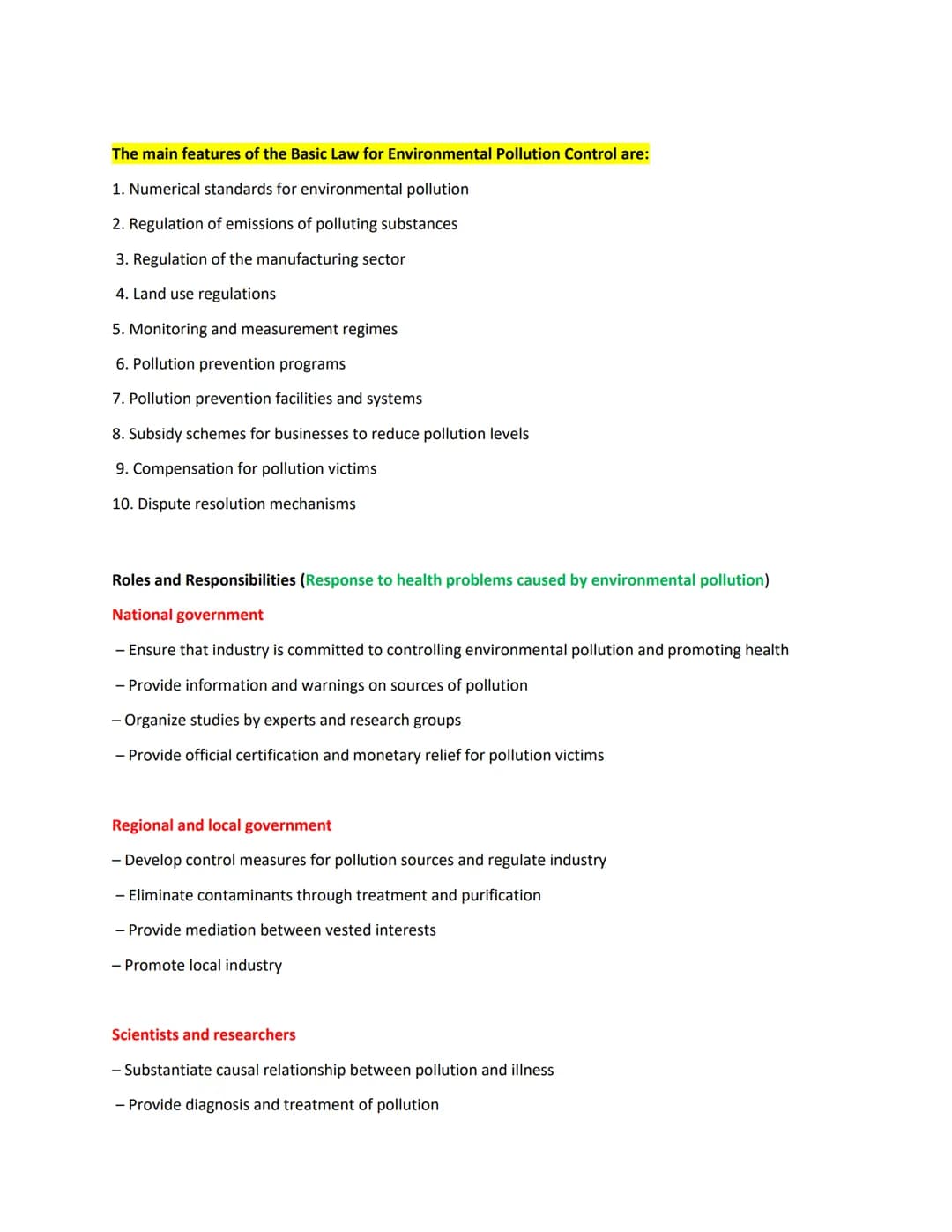
Pollution Control Frameworks
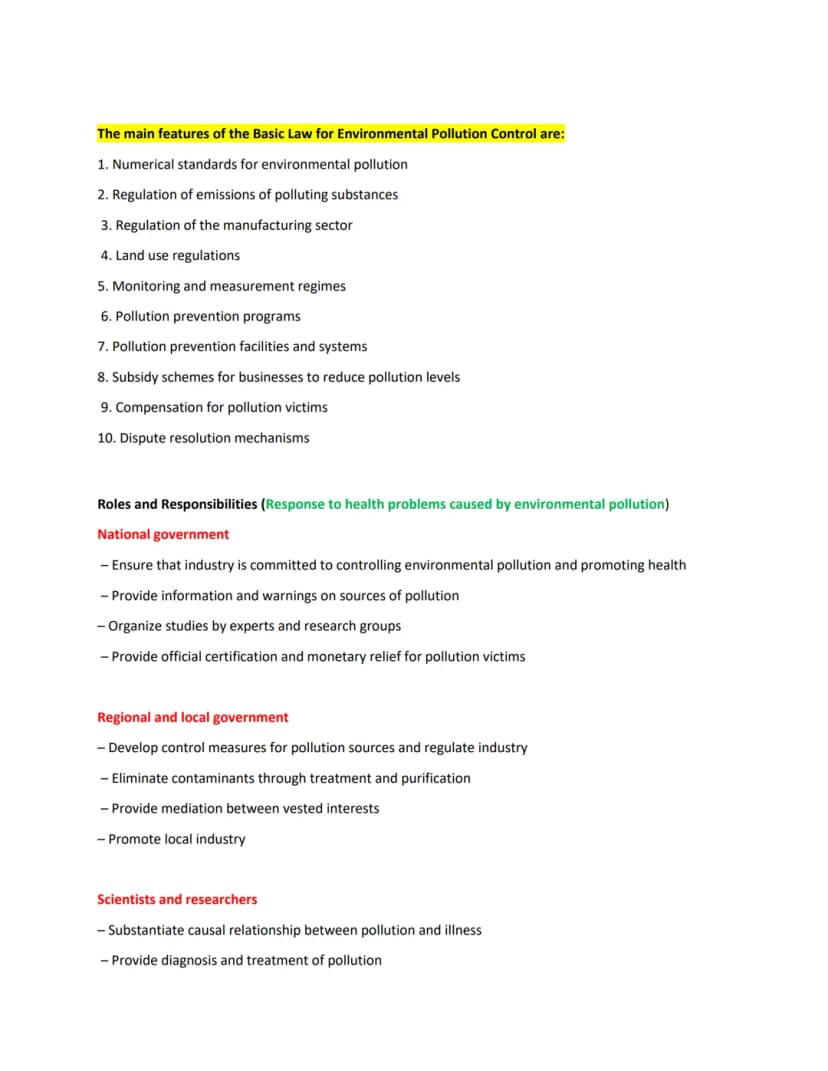
The Basic Law for Environmental Pollution Control provides a comprehensive framework for managing pollution issues. It establishes numerical standards for measuring pollution and regulations for emissions of harmful substances. The law also focuses on regulating manufacturing sectors and implementing land use restrictions to prevent further environmental damage.
Key components of this framework include monitoring systems to track pollution levels and prevention programs designed to reduce environmental impact. The law also provides subsidy schemes that encourage businesses to adopt cleaner practices. For those affected by pollution, compensation systems and dispute resolution mechanisms offer pathways to justice.
Different entities have specific responsibilities in addressing pollution-related health problems. The national government ensures industry commitment to pollution control, provides information about pollution sources, and offers relief for victims. Meanwhile, regional and local governments develop control measures and mediate between different interests.
Important Note: Scientists play a crucial role in establishing the connection between pollution and illness, which is essential for both treating affected individuals and creating effective prevention policies.
3
of 3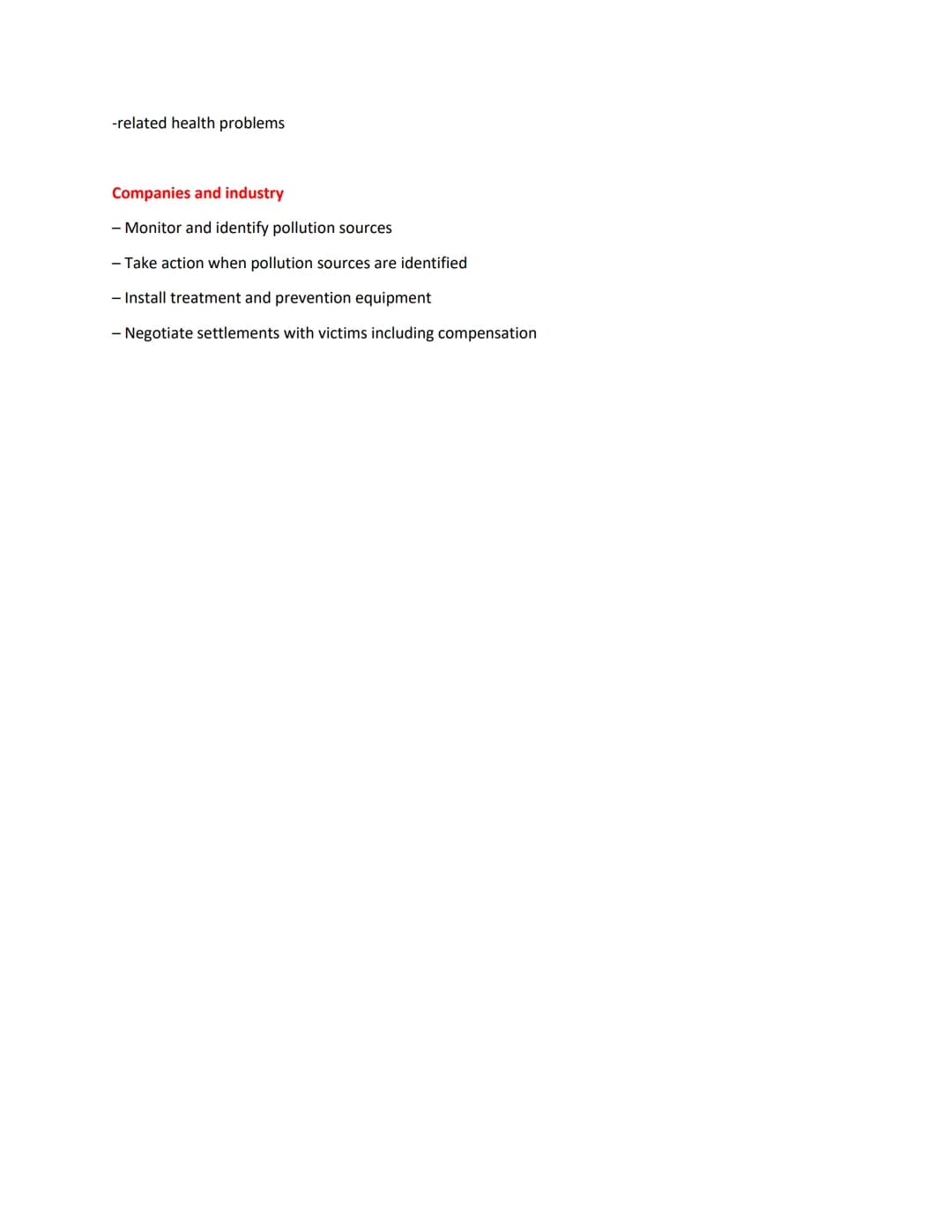
Stakeholder Responsibilities
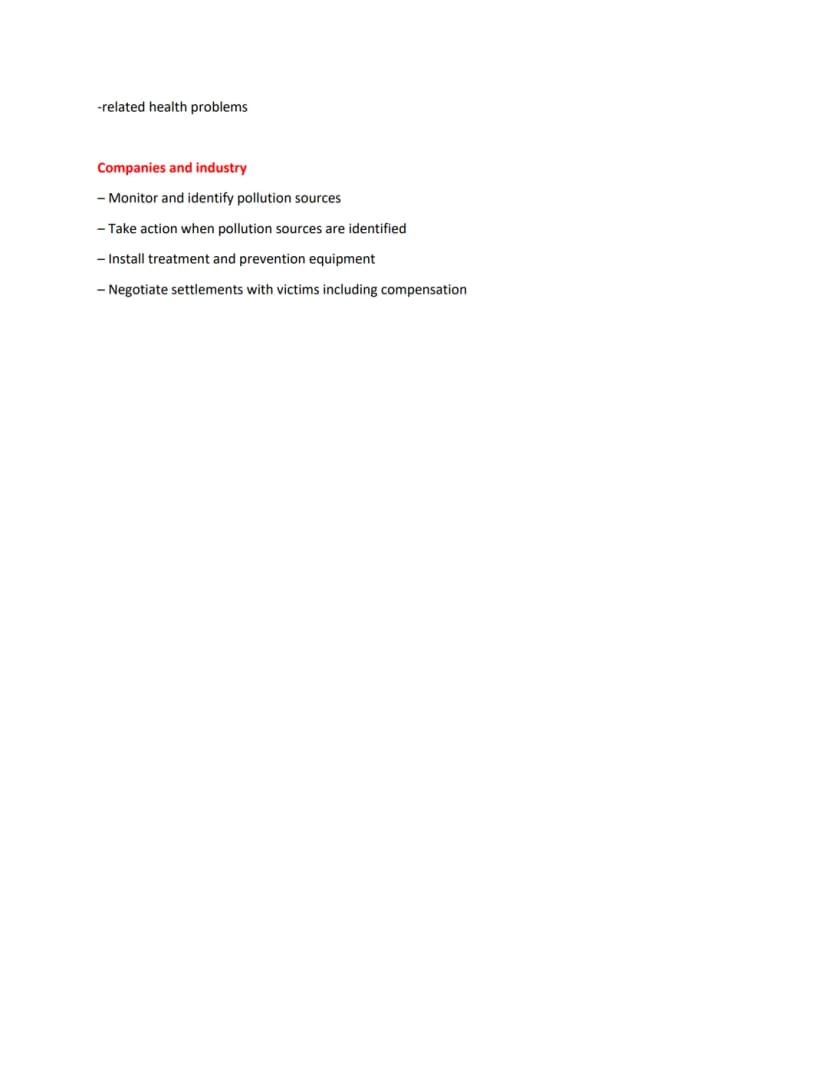
Scientists and researchers have crucial responsibilities in the battle against environmental pollution. They must substantiate the causal relationships between pollution and illness through rigorous research. Additionally, they provide essential diagnostic tools and treatment protocols for people suffering from pollution-related health conditions.
Companies and industries bear significant responsibility as they are often the source of pollution problems. They must actively monitor and identify pollution sources within their operations. When pollution is detected, immediate action is required to address the issue and prevent further contamination.
Industries must invest in proper treatment and prevention equipment to minimize their environmental impact. When pollution causes harm, companies are expected to negotiate fair settlements with victims, including appropriate compensation for damages to health and property.
Taking Action: Everyone has a role to play in reducing pollution - from large corporations installing prevention equipment to individual choices about transportation and consumption habits that can collectively make a significant difference.
We thought you’d never ask...
Our AI companion is specifically built for the needs of students. Based on the millions of content pieces we have on the platform we can provide truly meaningful and relevant answers to students. But its not only about answers, the companion is even more about guiding students through their daily learning challenges, with personalised study plans, quizzes or content pieces in the chat and 100% personalisation based on the students skills and developments.
You can download the app in the Google Play Store and in the Apple App Store.
That's right! Enjoy free access to study content, connect with fellow students, and get instant help – all at your fingertips.
Similar Content
Most popular content in Environmental Science
8C
Environmental ScienceCells
Basics
9th800
Environmental ScienceStudent Exploration: GMOs and the Environment Answer Key.pdf
GMOs and the Environment
4267
Environmental ScienceEcology
Gives an overview of Ecological levels of Organization .
1141
Environmental ScienceEarth and Space: Ch. 2- Minerals
Slideshow about Ch. 2 of Earth and Space Science
11th752
Environmental ScienceEarth and Space: Ch. 5- Weathering, Soil, and Mass Movements
Slideshow about Ch. 5 of Earth and Space Science
11th1424
 Earth and Space Science
Human Impact on the Earth: Effects of Environmental Change on Biodiversity
Very interesting and full of info presentation about human impact on our planet and the biodiversity among the animal species
390
Environmental ScienceSymbiotic Relationships
Covers: community interactions, mutualism, commensalism, parasitism, habitats, microhabitats, tolerance, ecological niche, keystone species
9th911
Environmental ScienceAsexual vs Sexual Reproduction
Comparison of advantages and disadvantages of asexual and sexual reproduction, including mitosis and meiosis processes.
9th1567
Most popular content
9O
 AP US History
Origins and Dynamics of the Columbian Exchange
Analyze the ecological and economic motivations behind the initial transfer of goods, people, and diseases between the Old and New Worlds.
9th3,1280
I
AP US HistoryIntroduction to Early Cultural Interactions
Analyze the initial social and religious encounters between Europeans, Africans, and Indigenous peoples in the colonial Americas.
9th2,7730
O
AP World HistoryOrigins of Ancient River Civilizations
Analyze the environmental factors and technological innovations that led to the rise of early states in Mesopotamia, Egypt, and the Indus Valley.
9th3,1870
M
AP US HistoryMotivations for European Exploration
Analyze the economic, religious, and political factors that drove European powers to the Americas during the 15th and 16th centuries.
9th1,7780
F
 AP Psychology
Foundations of Ethical Guidelines in Research
Practice the core principles of the APA ethical code including informed consent, debriefing, and the role of Institutional Review Boards.
9th1,3360
I
AP US HistoryIntroduction to Native American Societies
Examine the diverse social, political, and economic structures of North American indigenous groups prior to European contact.
9th1,1100
I
AP US HistoryIntroduction to the Spanish Encomienda System
Explore the fundamental economic and social structures of the Spanish colonial system, focusing on the encomienda and the casta social hierarchy.
9th8890
I
 AP Biology
Introduction to Biological Elements of Life
Practice identifying the essential elements including carbon, nitrogen, phosphorus, and sulfur that compose biological macromolecules.
9th1,7410
O
AP US Government & PoliticsOrigins of the Articles of Confederation
Practice identifying the motivations for a weak central government and the specific powers granted to the states under the first U.S. constitution.
9th9370
Students love us — and so will you.
4.6/5App Store
4.7/5Google Play
The app is very easy to use and well designed. I have found everything I was looking for so far and have been able to learn a lot from the presentations! I will definitely use the app for a class assignment! And of course it also helps a lot as an inspiration.
Stefan SiOS user
This app is really great. There are so many study notes and help [...]. My problem subject is French, for example, and the app has so many options for help. Thanks to this app, I have improved my French. I would recommend it to anyone.
Samantha KlichAndroid user
Wow, I am really amazed. I just tried the app because I've seen it advertised many times and was absolutely stunned. This app is THE HELP you want for school and above all, it offers so many things, such as workouts and fact sheets, which have been VERY helpful to me personally.
AnnaiOS user
Environmental Science41 views·Updated Jul 16, 2026·3 pagesUnderstanding Environmental Pollution: Causes and Laws
Environmental pollution has become one of the greatest problems facing humanity today. It occurs when the environment can't naturally absorb or neutralize the toxic byproducts of human activities. Understanding pollution's causes, categories, and management is essential for addressing this growing...
1
of 3
Sign up to see the content. It's free!
- Access to all documents
- Improve your grades
- Join milions of students
Understanding Environmental Pollution
Environmental pollution isn't new, but it's rapidly increasing and causing serious impacts on all living organisms, including humans. Human activities like urbanization, industrialization, and mining are major contributors to this global issue. When our environment becomes contaminated to the point that normal environmental processes are disrupted, we face pollution problems.
The main causes of environmental pollution include mining operations, agricultural activities, burning fossil fuels, particulate matter release, and plastic waste. These activities contribute to different types of pollution: air, water, and land/soil pollution.
Pollution is typically classified into seven categories, each with distinct causes and health effects. Atmospheric pollution comes from smoke and exhaust fumes, causing respiratory problems like asthma. Water pollution results from waste fluids and sewage discharge, leading to serious conditions like Minamata Disease. Other categories include soil pollution, noise, vibration, ground subsidence, and noxious odors.
Health Alert: Environmental pollution is one of the leading causes of morbidity (illness) and mortality (death) worldwide, affecting millions of people daily through contaminated air, water, and soil.
2
of 3Sign up to see the content. It's free!
- Access to all documents
- Improve your grades
- Join milions of students
Pollution Control Frameworks
The Basic Law for Environmental Pollution Control provides a comprehensive framework for managing pollution issues. It establishes numerical standards for measuring pollution and regulations for emissions of harmful substances. The law also focuses on regulating manufacturing sectors and implementing land use restrictions to prevent further environmental damage.
Key components of this framework include monitoring systems to track pollution levels and prevention programs designed to reduce environmental impact. The law also provides subsidy schemes that encourage businesses to adopt cleaner practices. For those affected by pollution, compensation systems and dispute resolution mechanisms offer pathways to justice.
Different entities have specific responsibilities in addressing pollution-related health problems. The national government ensures industry commitment to pollution control, provides information about pollution sources, and offers relief for victims. Meanwhile, regional and local governments develop control measures and mediate between different interests.
Important Note: Scientists play a crucial role in establishing the connection between pollution and illness, which is essential for both treating affected individuals and creating effective prevention policies.
3
of 3Sign up to see the content. It's free!
- Access to all documents
- Improve your grades
- Join milions of students
Stakeholder Responsibilities
Scientists and researchers have crucial responsibilities in the battle against environmental pollution. They must substantiate the causal relationships between pollution and illness through rigorous research. Additionally, they provide essential diagnostic tools and treatment protocols for people suffering from pollution-related health conditions.
Companies and industries bear significant responsibility as they are often the source of pollution problems. They must actively monitor and identify pollution sources within their operations. When pollution is detected, immediate action is required to address the issue and prevent further contamination.
Industries must invest in proper treatment and prevention equipment to minimize their environmental impact. When pollution causes harm, companies are expected to negotiate fair settlements with victims, including appropriate compensation for damages to health and property.
Taking Action: Everyone has a role to play in reducing pollution - from large corporations installing prevention equipment to individual choices about transportation and consumption habits that can collectively make a significant difference.
We thought you’d never ask...
Our AI companion is specifically built for the needs of students. Based on the millions of content pieces we have on the platform we can provide truly meaningful and relevant answers to students. But its not only about answers, the companion is even more about guiding students through their daily learning challenges, with personalised study plans, quizzes or content pieces in the chat and 100% personalisation based on the students skills and developments.
You can download the app in the Google Play Store and in the Apple App Store.
That's right! Enjoy free access to study content, connect with fellow students, and get instant help – all at your fingertips.
Similar Content
Most popular content in Environmental Science
8C
Environmental ScienceCells
Basics
9th800
Environmental ScienceStudent Exploration: GMOs and the Environment Answer Key.pdf
GMOs and the Environment
4267
Environmental ScienceEcology
Gives an overview of Ecological levels of Organization .
1141
Environmental ScienceEarth and Space: Ch. 2- Minerals
Slideshow about Ch. 2 of Earth and Space Science
11th752
Environmental ScienceEarth and Space: Ch. 5- Weathering, Soil, and Mass Movements
Slideshow about Ch. 5 of Earth and Space Science
11th1424
Earth and Space ScienceHuman Impact on the Earth: Effects of Environmental Change on Biodiversity
Very interesting and full of info presentation about human impact on our planet and the biodiversity among the animal species
390
Environmental ScienceSymbiotic Relationships
Covers: community interactions, mutualism, commensalism, parasitism, habitats, microhabitats, tolerance, ecological niche, keystone species
9th911
Environmental ScienceAsexual vs Sexual Reproduction
Comparison of advantages and disadvantages of asexual and sexual reproduction, including mitosis and meiosis processes.
9th1567
Most popular content
9O
AP US HistoryOrigins and Dynamics of the Columbian Exchange
Analyze the ecological and economic motivations behind the initial transfer of goods, people, and diseases between the Old and New Worlds.
9th3,1280
I
AP US HistoryIntroduction to Early Cultural Interactions
Analyze the initial social and religious encounters between Europeans, Africans, and Indigenous peoples in the colonial Americas.
9th2,7730
O
AP World HistoryOrigins of Ancient River Civilizations
Analyze the environmental factors and technological innovations that led to the rise of early states in Mesopotamia, Egypt, and the Indus Valley.
9th3,1870
M
AP US HistoryMotivations for European Exploration
Analyze the economic, religious, and political factors that drove European powers to the Americas during the 15th and 16th centuries.
9th1,7780
F
AP PsychologyFoundations of Ethical Guidelines in Research
Practice the core principles of the APA ethical code including informed consent, debriefing, and the role of Institutional Review Boards.
9th1,3360
I
AP US HistoryIntroduction to Native American Societies
Examine the diverse social, political, and economic structures of North American indigenous groups prior to European contact.
9th1,1100
I
AP US HistoryIntroduction to the Spanish Encomienda System
Explore the fundamental economic and social structures of the Spanish colonial system, focusing on the encomienda and the casta social hierarchy.
9th8890
I
AP BiologyIntroduction to Biological Elements of Life
Practice identifying the essential elements including carbon, nitrogen, phosphorus, and sulfur that compose biological macromolecules.
9th1,7410
O
AP US Government & PoliticsOrigins of the Articles of Confederation
Practice identifying the motivations for a weak central government and the specific powers granted to the states under the first U.S. constitution.
9th9370
Students love us — and so will you.
4.6/5App Store
4.7/5Google Play
The app is very easy to use and well designed. I have found everything I was looking for so far and have been able to learn a lot from the presentations! I will definitely use the app for a class assignment! And of course it also helps a lot as an inspiration.
Stefan SiOS user
This app is really great. There are so many study notes and help [...]. My problem subject is French, for example, and the app has so many options for help. Thanks to this app, I have improved my French. I would recommend it to anyone.
Samantha KlichAndroid user
Wow, I am really amazed. I just tried the app because I've seen it advertised many times and was absolutely stunned. This app is THE HELP you want for school and above all, it offers so many things, such as workouts and fact sheets, which have been VERY helpful to me personally.
AnnaiOS user