
Macbeth is Shakespeare's intense tragedy about ambition, power, and the... Show more
 English764 views·Updated May 29, 2026·13 pages
Detailed Annotations for Macbeth Act 2
A
addison @addison_teit
1 / 10
1
of 10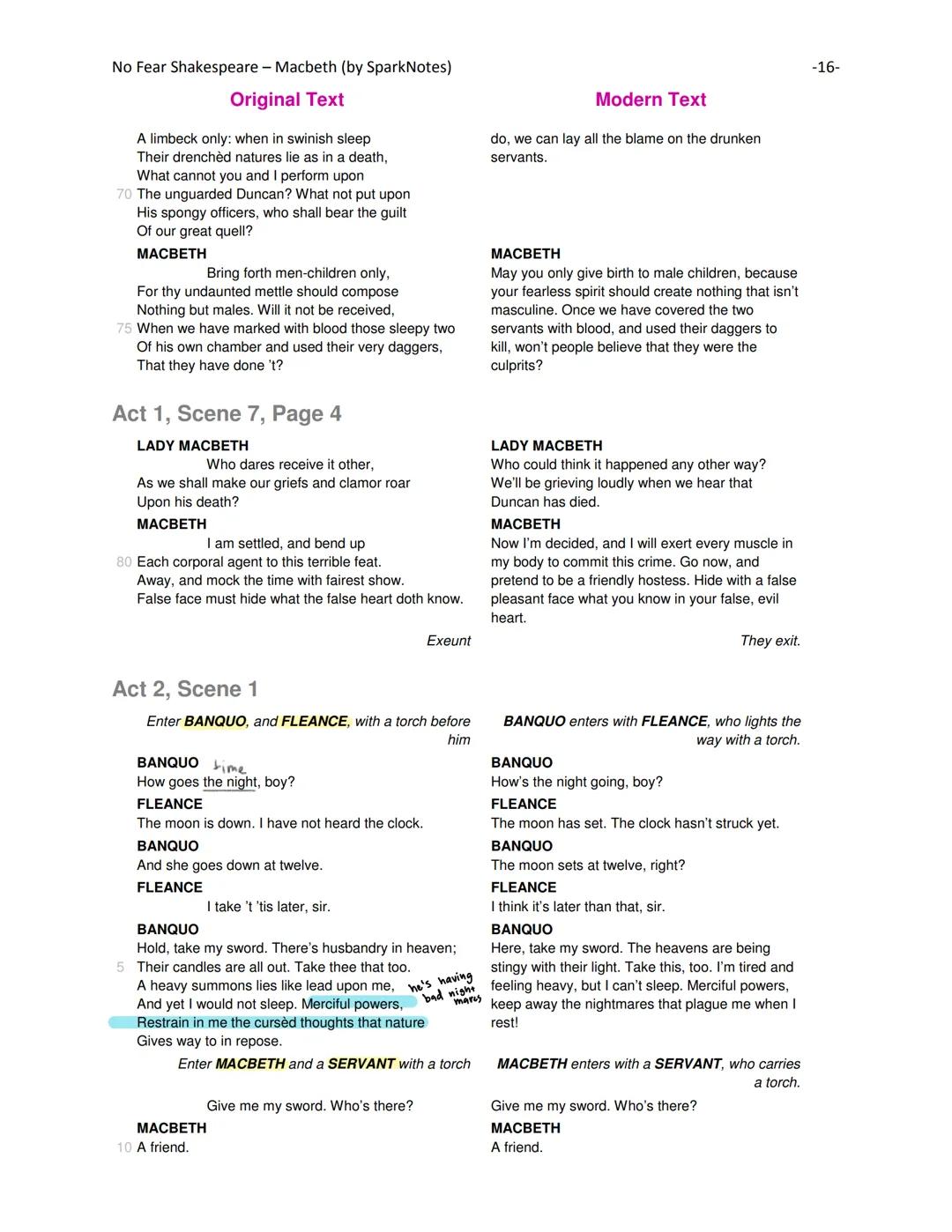
The Murder Plan Unfolds
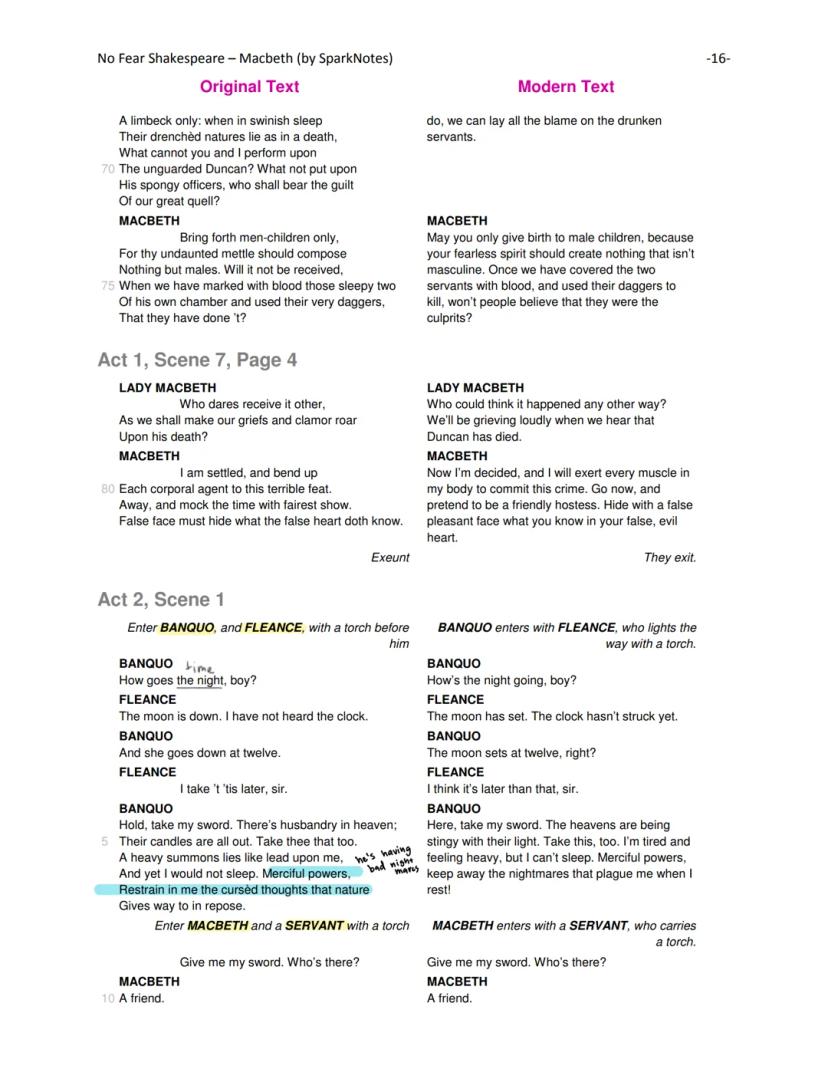
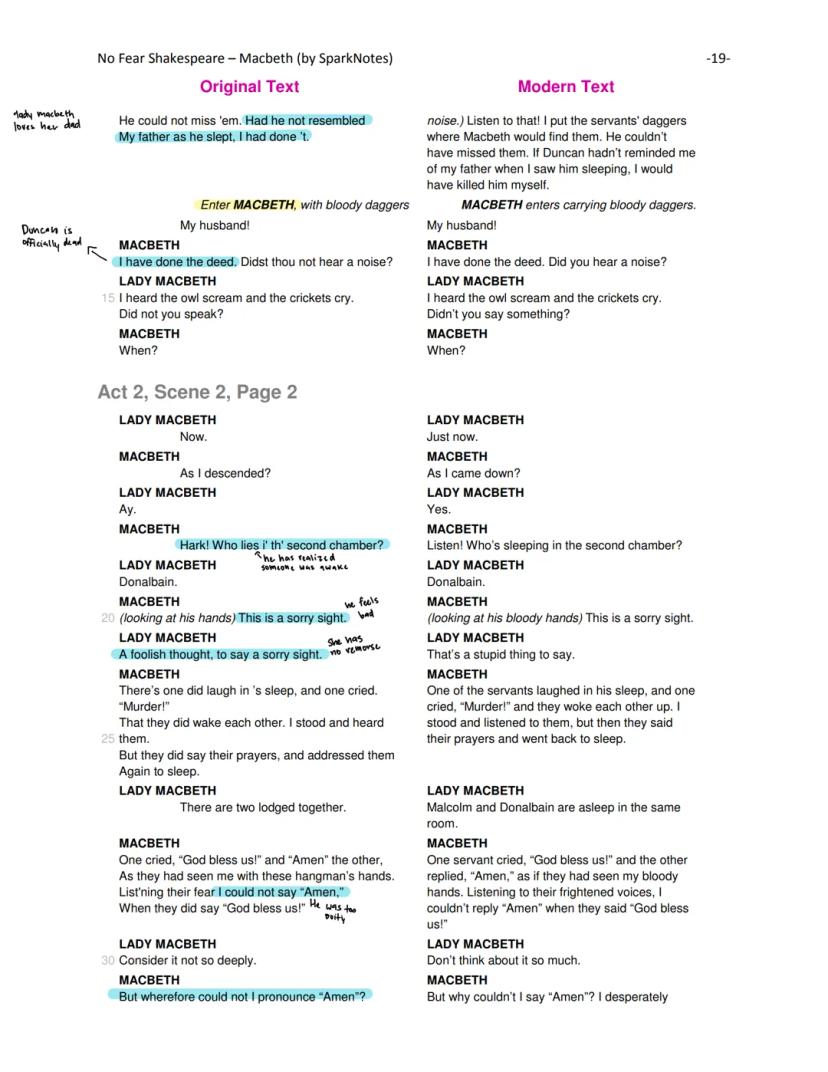
Lady Macbeth and Macbeth finalize their deadly plot against King Duncan. Lady Macbeth has drugged the king's guards, leaving Duncan vulnerable to attack. She tells Macbeth that she would have killed Duncan herself if he hadn't resembled her father as he slept.
Macbeth is clearly unsettled but committed to the plan. Lady Macbeth bolsters his courage, showing her ruthless nature when she declares, "May you only give birth to male children, because your fearless spirit should create nothing that isn't masculine." Her words reveal her belief that feminine qualities like mercy would be weakness.
Think about this: Lady Macbeth tells Macbeth they'll blame the murder on the guards. Notice how she manipulates Macbeth when he hesitates, calling his uncertainty unmanly.
The scene ends with Macbeth fully committed, saying he will "exert every muscle" to commit the crime. He acknowledges the deception they must maintain: "Hide with a false pleasant face what you know in your false, evil heart." This foreshadows the psychological toll their actions will take.
2
of 10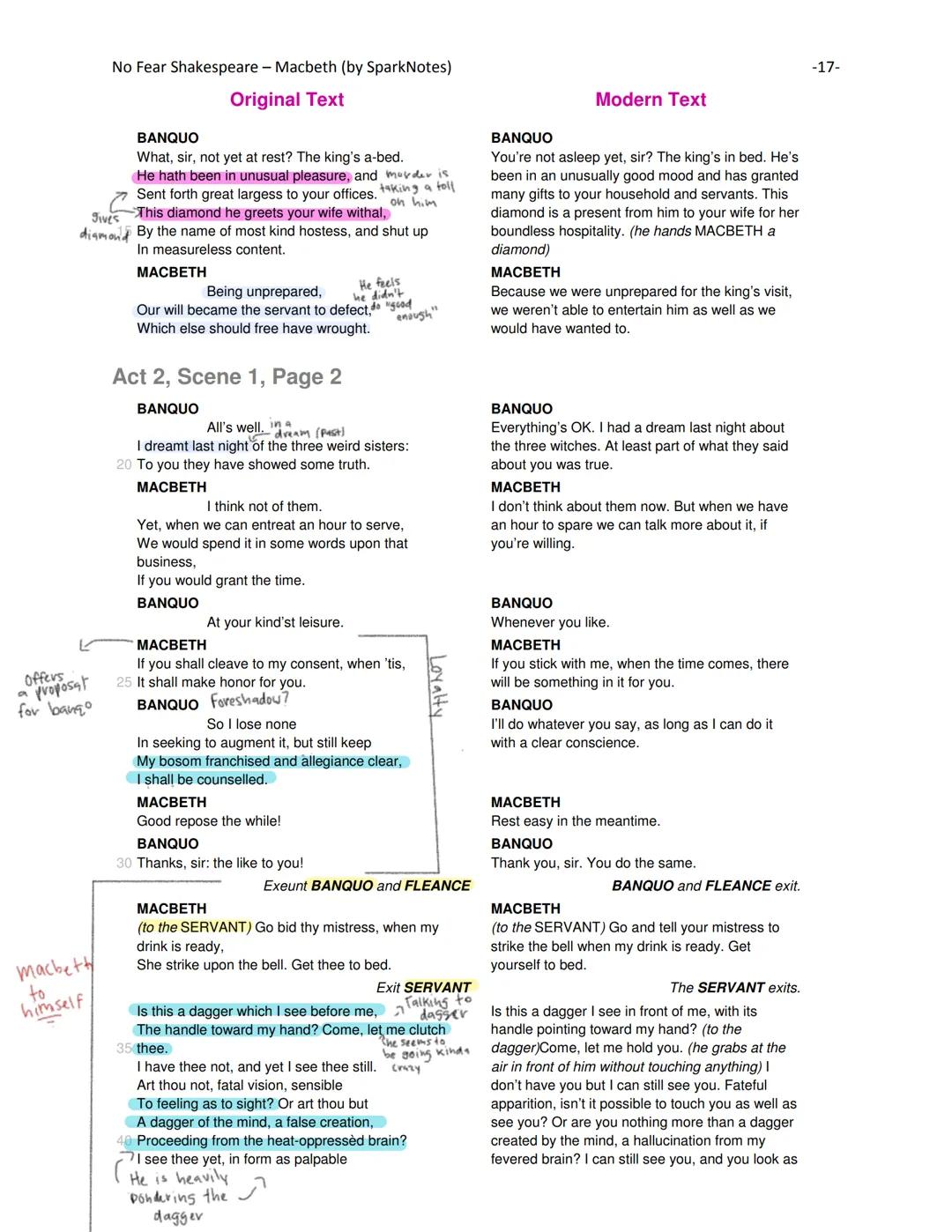
Hallucinations and Hesitation
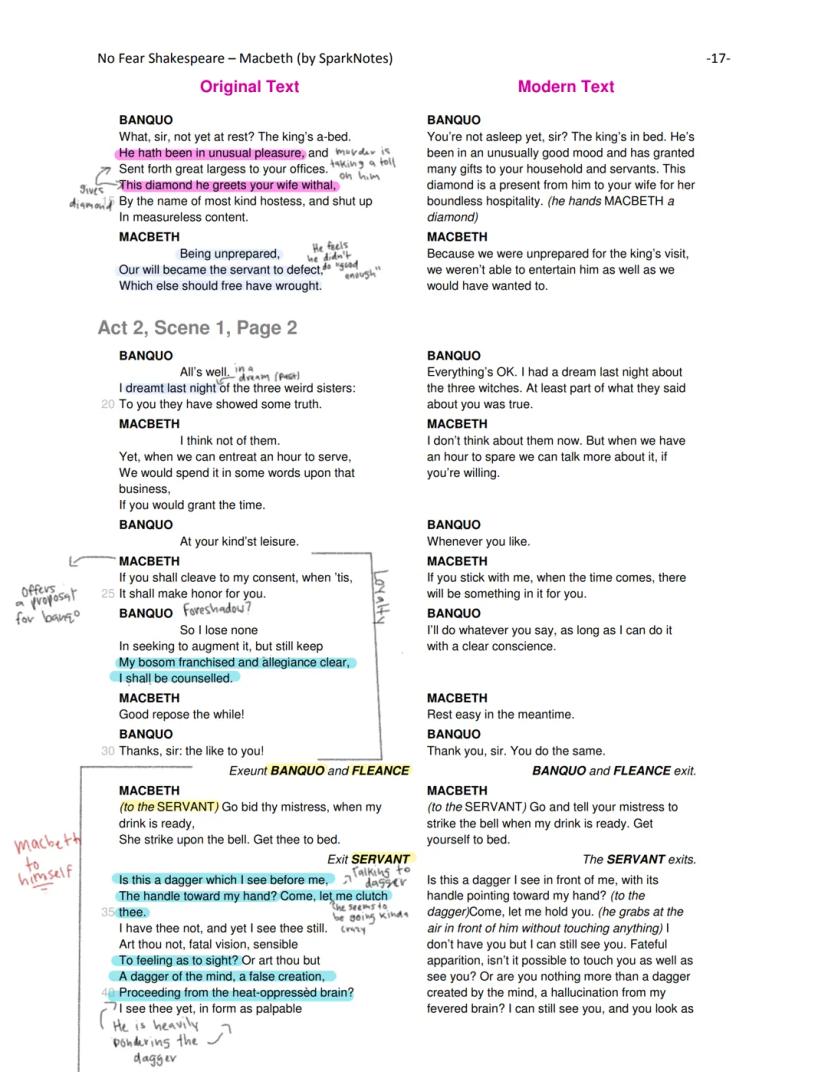
Banquo and his son Fleance walk through Macbeth's castle at night, unaware of the brewing tragedy. Banquo mentions having "cursed thoughts" and nightmares, suggesting he might suspect Macbeth's dark intentions.
When Macbeth appears, Banquo mentions dreaming about the witches, saying "they have showed some truth" to Macbeth. This reminds Macbeth of the prophecies, including that Banquo's children will be kings, not his own.
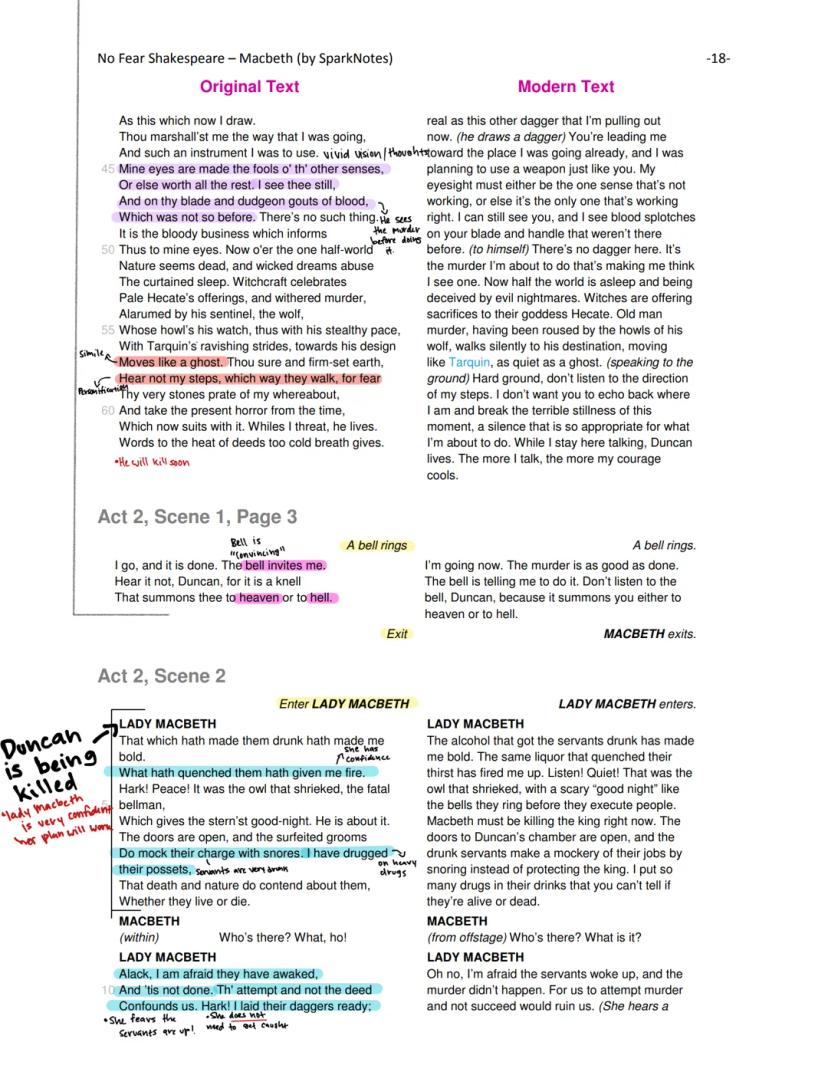
Left alone, Macbeth experiences a powerful hallucination – a floating dagger pointing toward Duncan's chamber. He questions his senses: "Is this a dagger I see in front of me, with its handle pointing toward my hand?" Unable to grasp it, he realizes it's "a dagger of the mind, a hallucination from my fevered brain."
Remember this: The dagger vision shows Macbeth's troubled conscience before committing murder. Even as he sees blood appearing on the blade, he still chooses to follow through with his plan.
The hallucination becomes more vivid, with Macbeth seeing blood appearing on the blade. When a bell rings, Macbeth accepts it as his signal to kill Duncan, saying, "I'm going now. The murder is as good as done."
3
of 10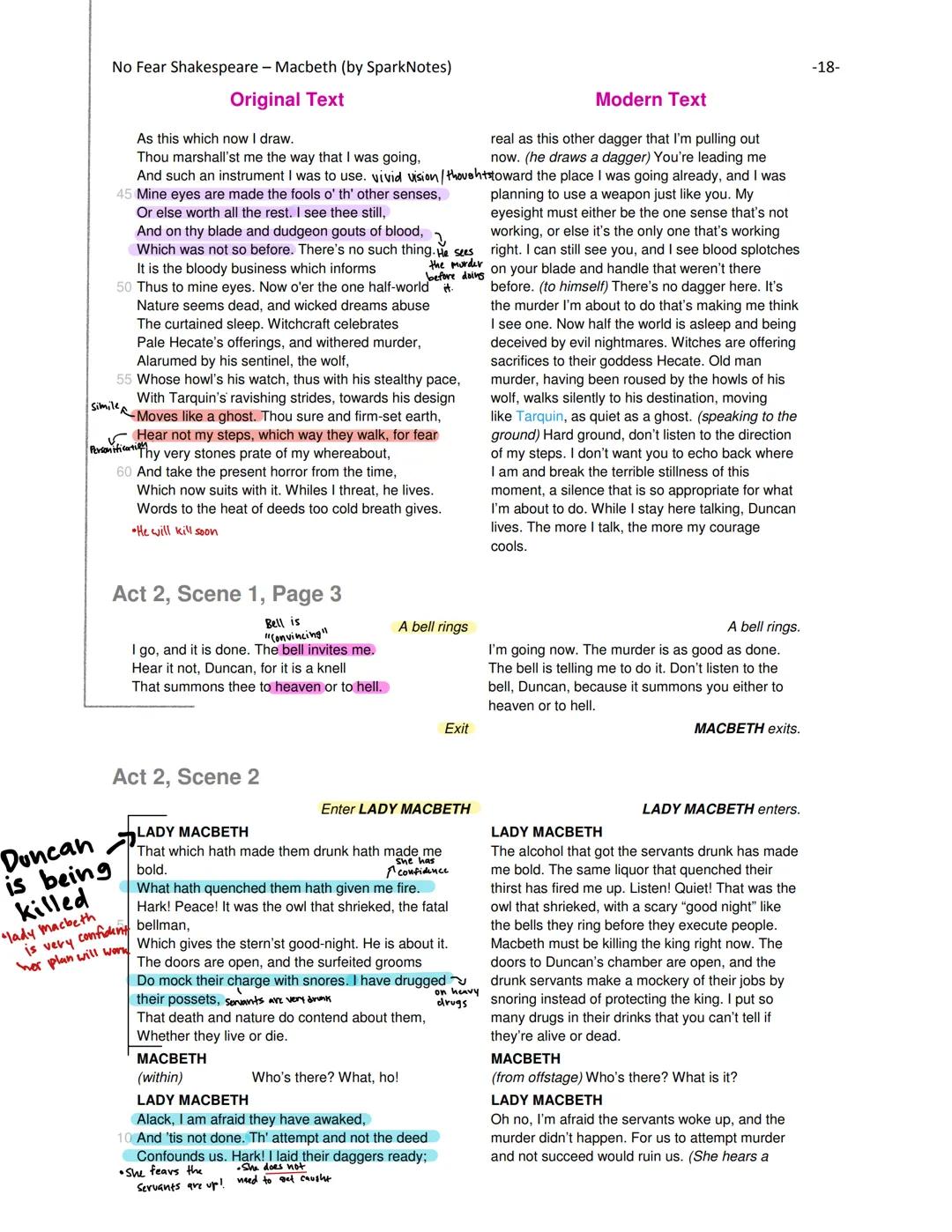
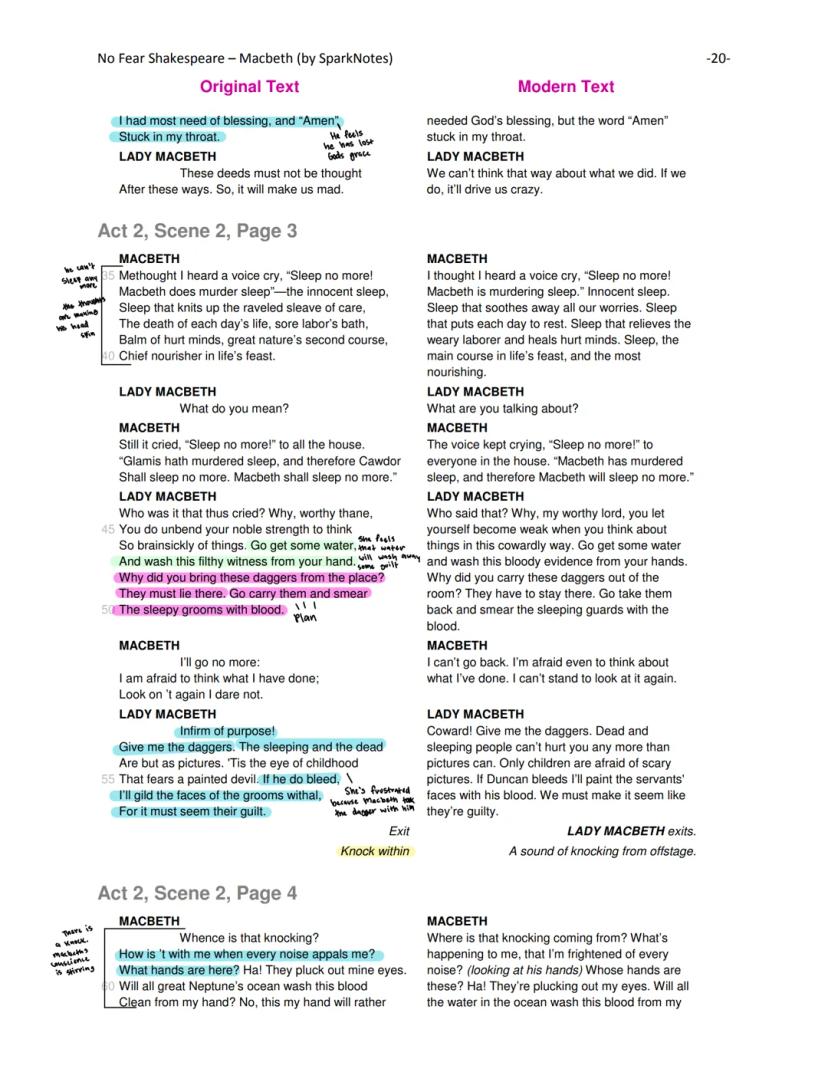
The Deed is Done
Lady Macbeth waits anxiously while Macbeth murders King Duncan. She's given herself courage through alcohol, saying "The alcohol that got the servants drunk has made me bold." Her confidence is chilling as she describes drugging the guards so heavily "you can't tell if they're alive or dead."
Macbeth returns carrying bloody daggers – a critical mistake. Instead of leaving them with the guards to frame them, he's brought the murder weapons with him. He appears deeply disturbed, looking at his hands and calling them "a sorry sight."
His psychological torment begins immediately. Macbeth describes hearing a voice cry, "Sleep no more! Macbeth is murdering sleep." This metaphor suggests he'll never again find peace or rest after committing this crime.
Crucial moment: When Macbeth refuses to return the daggers to the crime scene, Lady Macbeth calls him a "coward" and does it herself, showing her initially stronger resolve.
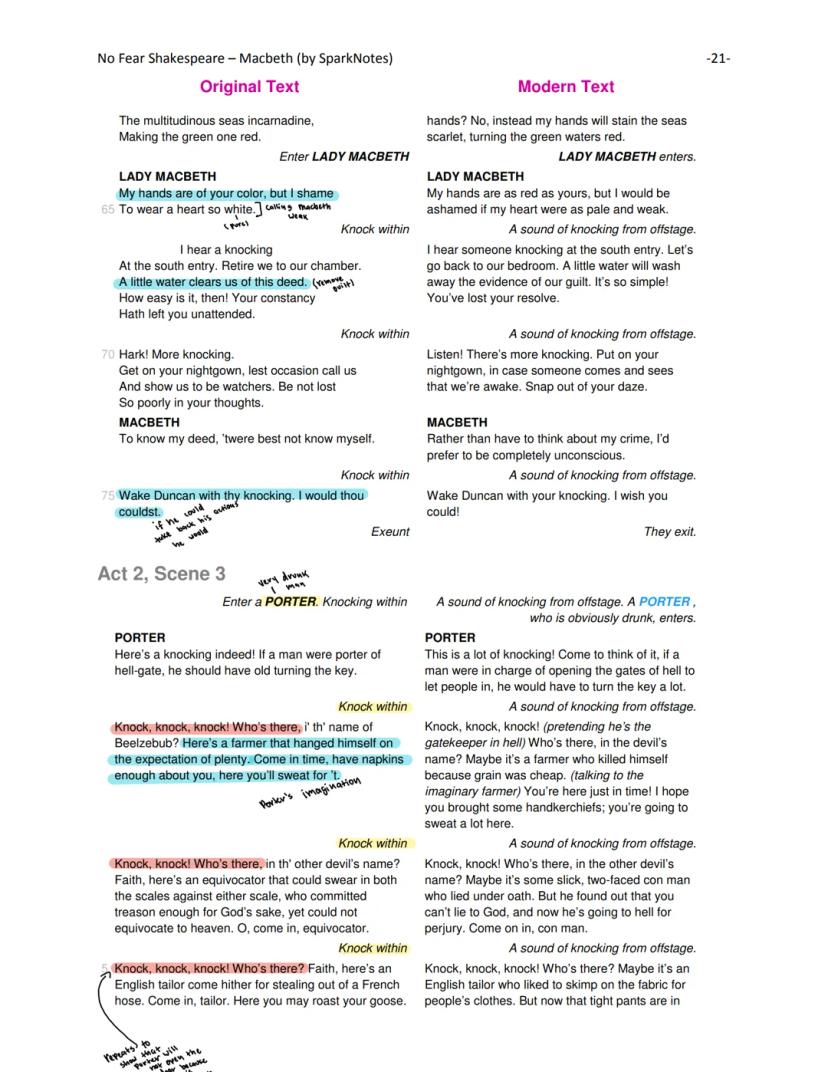
Macbeth's famous line reveals his understanding that his hands will never be clean again: "Will all the water in the ocean wash this blood from my hands? No, instead my hands will stain the seas scarlet, turning the green waters red." This powerful image shows he knows some stains can never be washed away.
4
of 10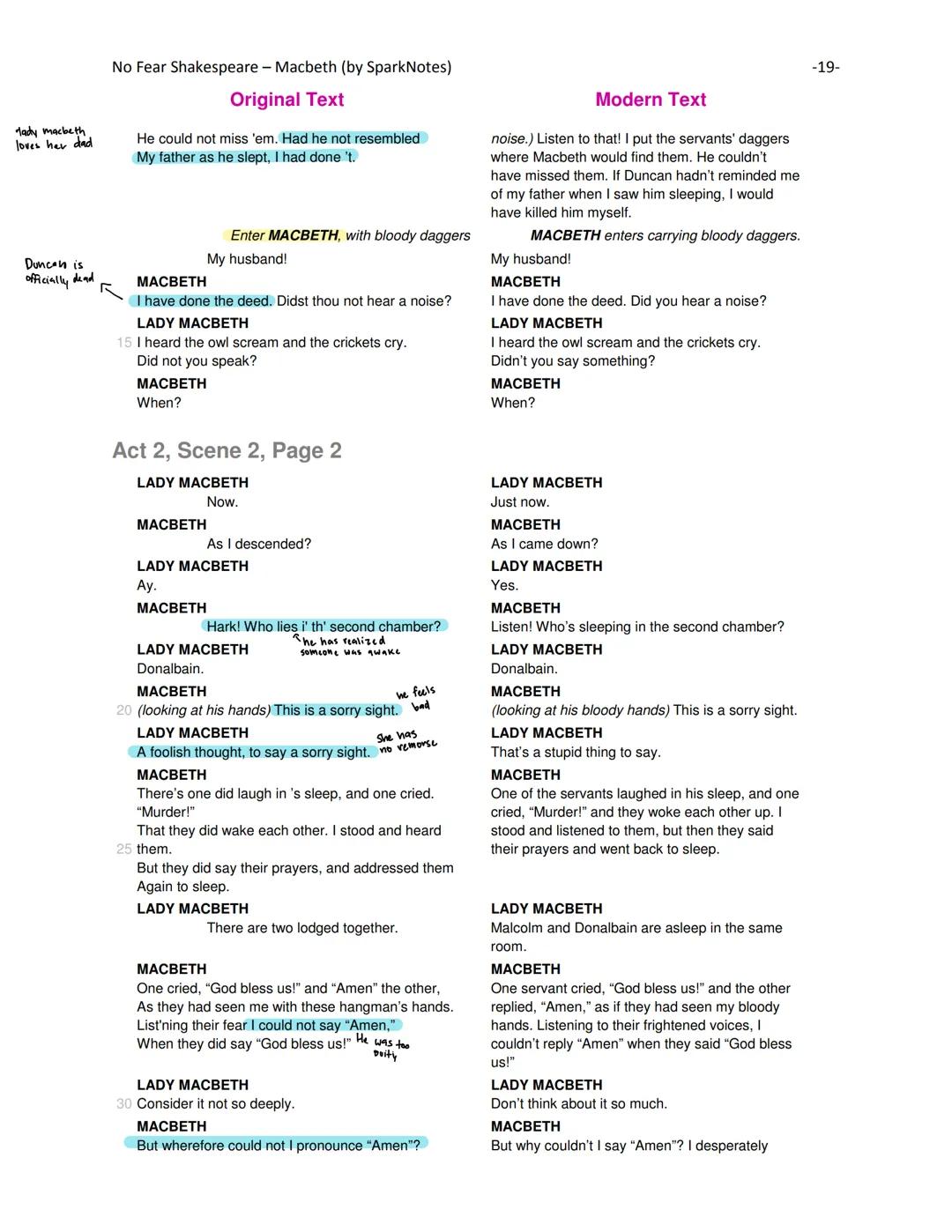
Guilt and Discovery
Macbeth is falling apart psychologically while Lady Macbeth remains practical. She tells him, "A little water will wash away the evidence of our guilt. It's so simple!" – showing how differently they respond to murder.
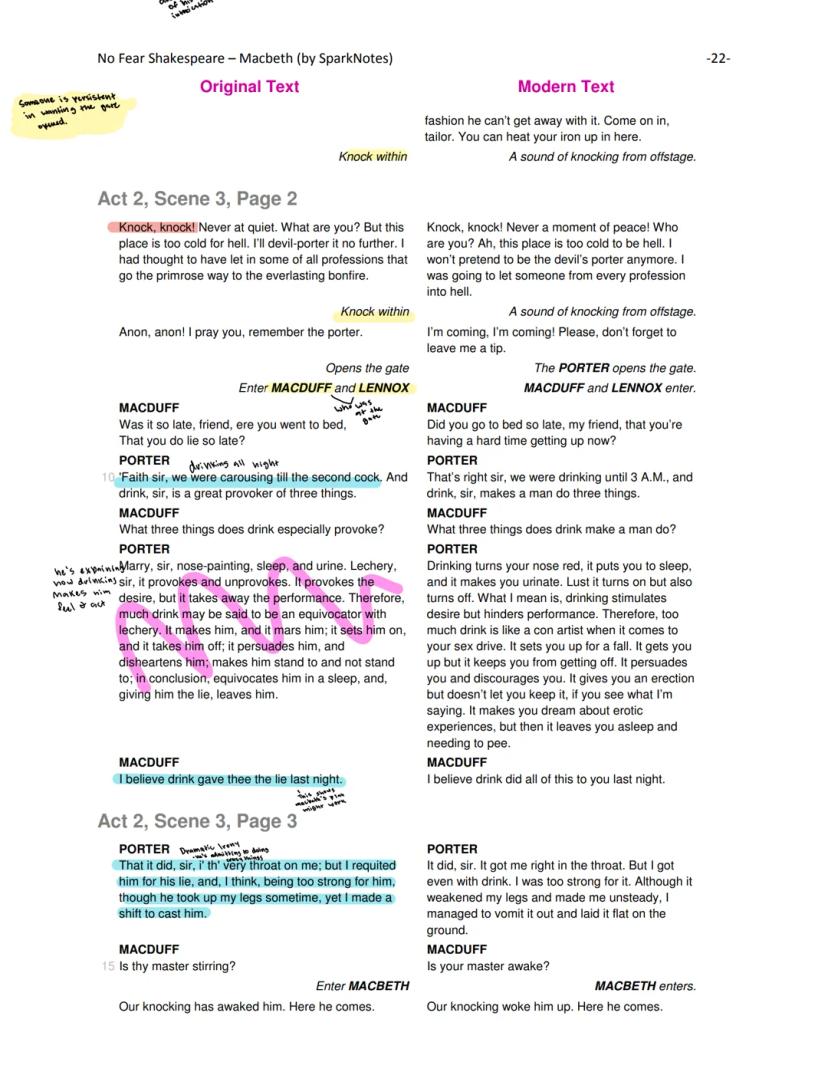
Meanwhile, a drunken porter provides brief comic relief as he pretends to be the gatekeeper of hell. His ramblings about sinners knocking at hell's gate ironically mirror what's happening in the castle, where a terrible sin has just been committed.
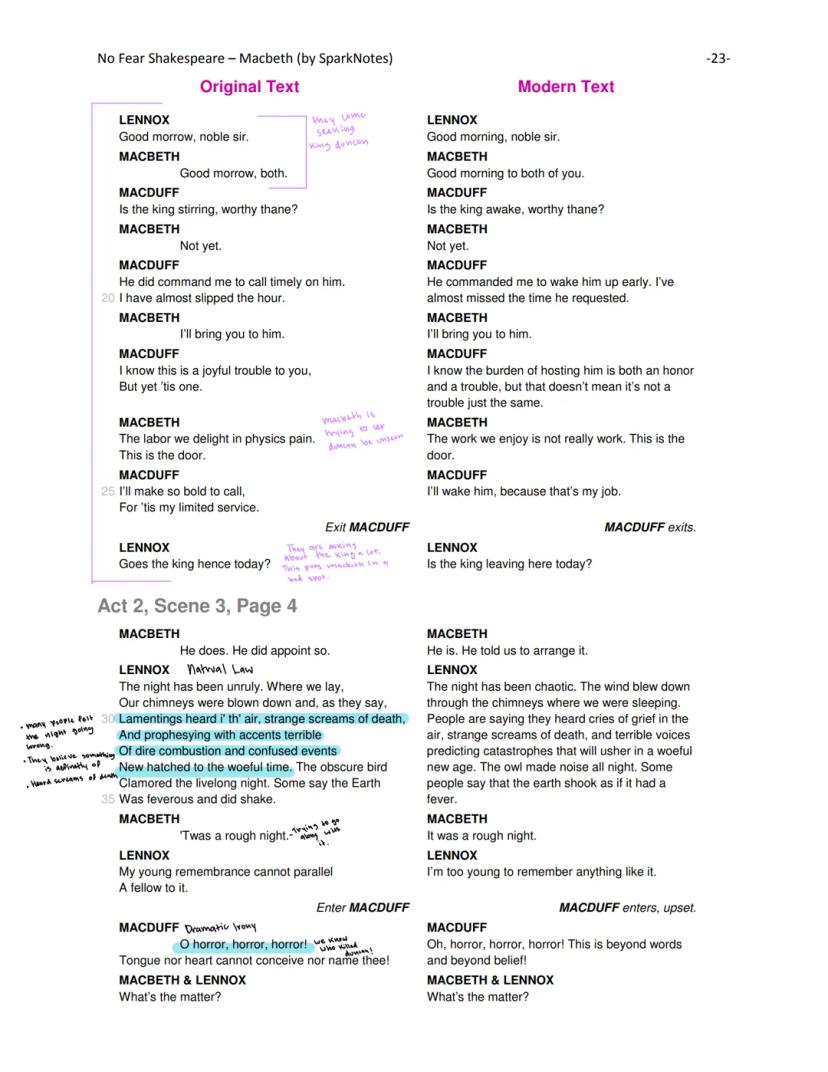
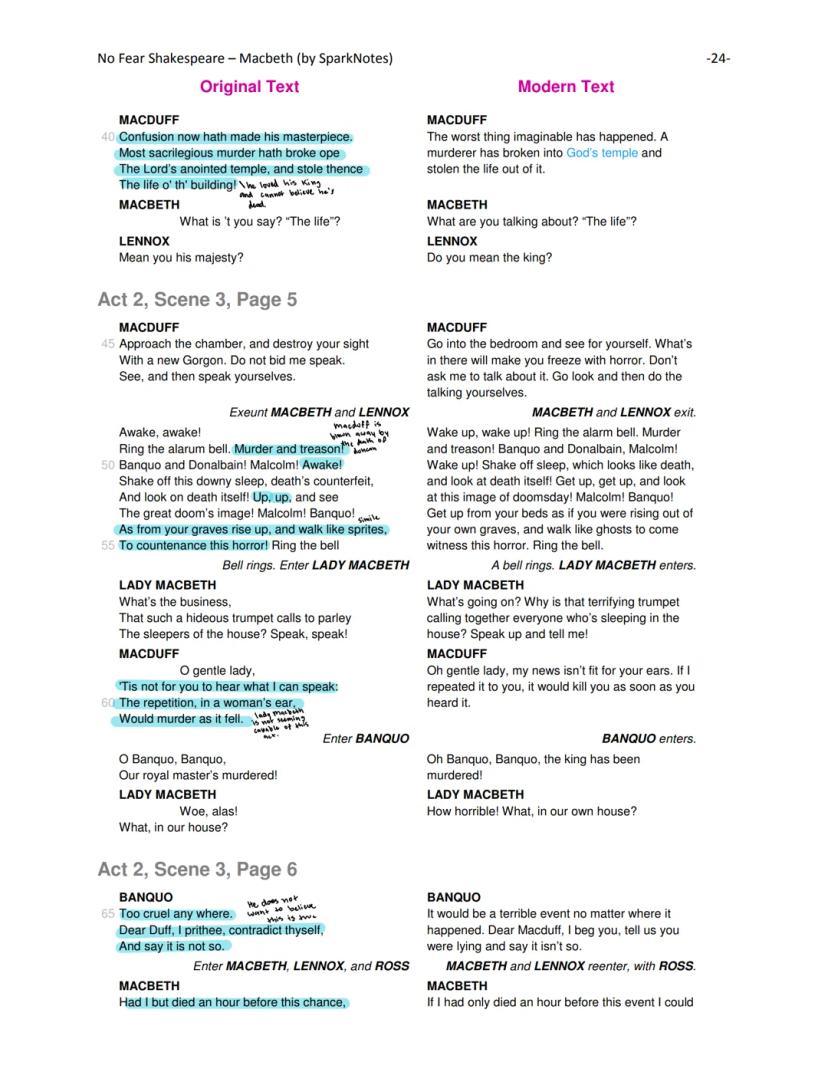
Macduff arrives to wake the king, unaware of what awaits him. Macbeth acts innocent when Macduff asks if Duncan is awake, saying he'll show him to the king's chamber.
While waiting, Lennox mentions strange occurrences during the night: "The night has been chaotic... people heard cries of grief in the air, strange screams of death." These supernatural elements suggest nature itself is disturbed by Duncan's murder.
Notice: When Macduff discovers Duncan's body, he uses religious language, calling it "sacrilegious murder" that "broke open God's temple." This frames the crime as not just murder, but blasphemy.
The scene builds to the horrific discovery as Macduff returns, crying "Oh, horror, horror, horror!" His reaction is so visceral that words cannot express what he's seen. The discovery of Duncan's murder creates immediate chaos and suspicion.
5
of 10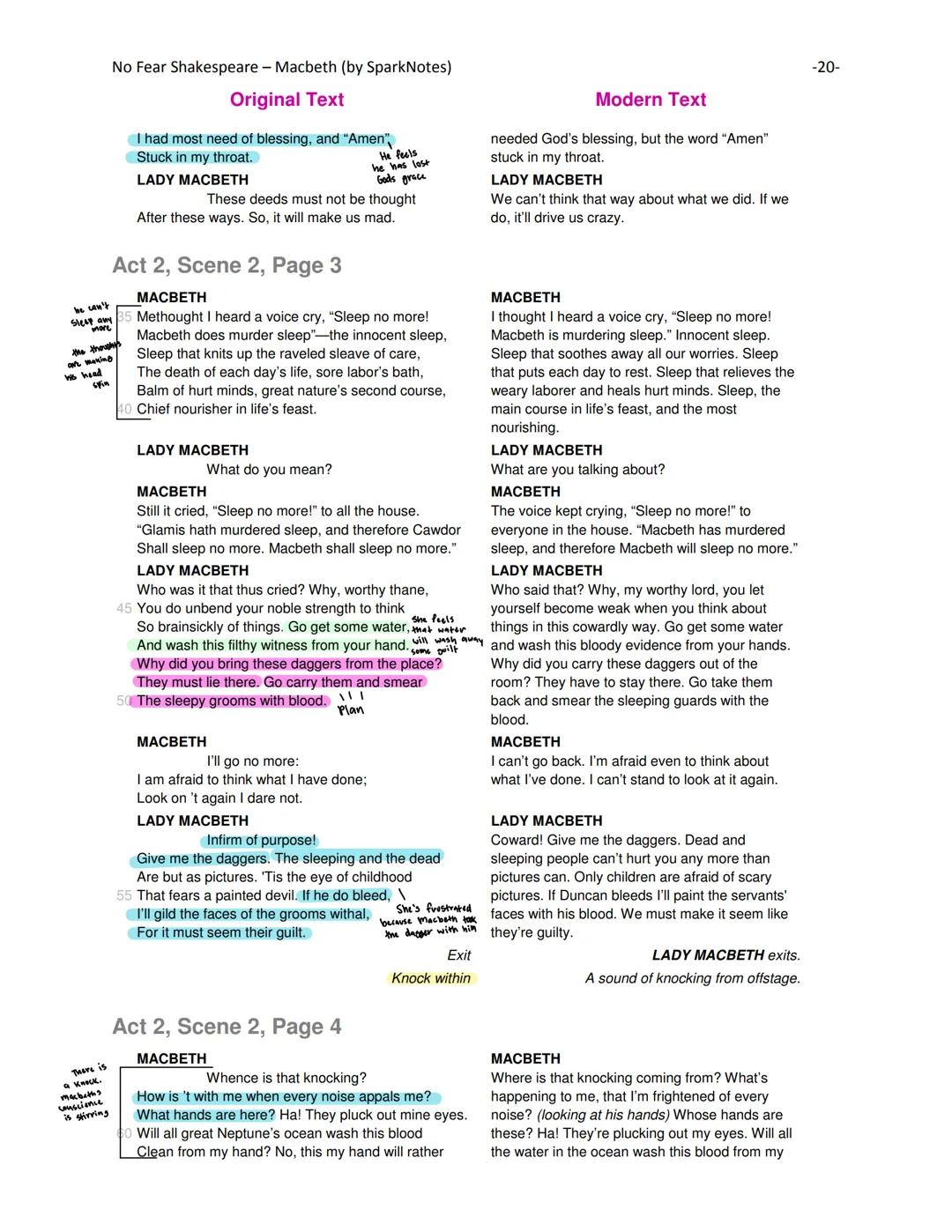
Cover-up and Suspicion
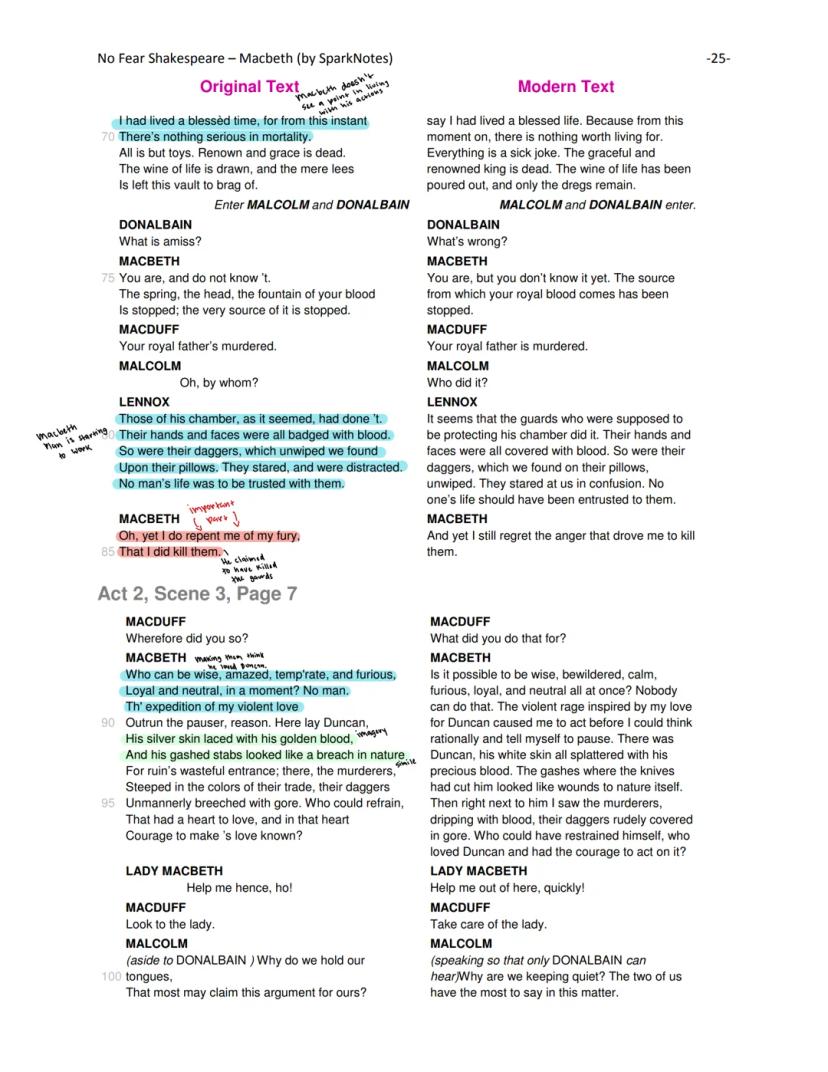
Macbeth begins constructing his cover story. When asked what happened, Lennox explains that the guards' "hands and faces were all covered with blood" along with their daggers. This makes them look guilty, exactly as Lady Macbeth planned.
In a surprising move, Macbeth reveals he killed the guards in a supposed fit of rage over Duncan's death. When Macduff asks why, Macbeth delivers an elaborate, poetic speech about finding Duncan's body: "His silver skin laced with his golden blood, and his gashed stabs looked like a breach in nature." His excessive language suggests he's trying too hard to seem innocent.
Lady Macbeth suddenly faints, creating a distraction at the precise moment Macduff begins to question Macbeth's actions. This convenient timing suggests her "fainting spell" might be another calculated performance.
Think critically: Is Lady Macbeth's fainting real or fake? It happens right when Macbeth is being questioned about killing the guards, providing a convenient distraction.
Meanwhile, Malcolm and Donalbain, the king's sons, decide to flee separately – Malcolm to England and Donalbain to Ireland. They wisely recognize the danger, with Donalbain noting, "Where we are, there's daggers in men's smiles." Their escape, however, makes them look suspicious, as Macduff later points out.
6
of 10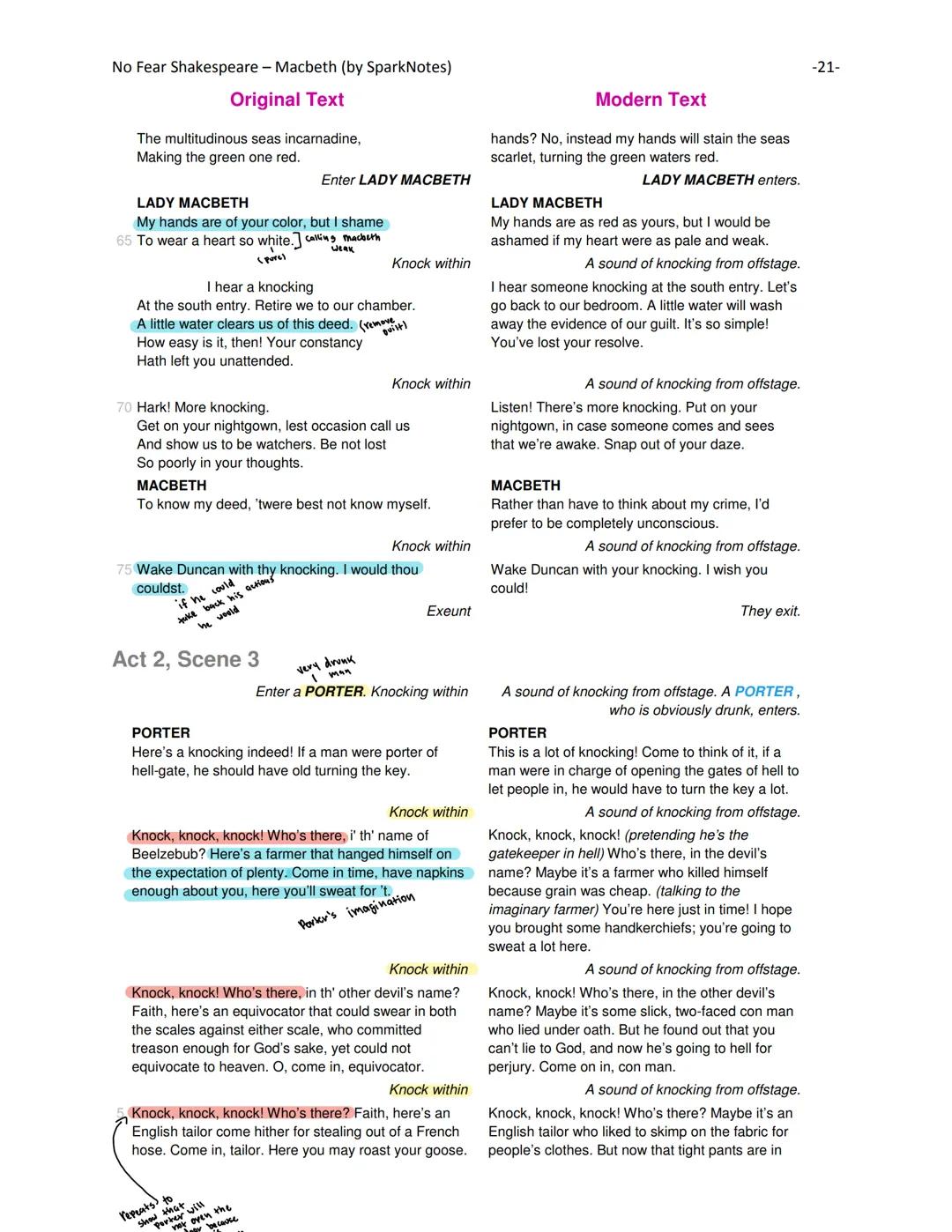
Unnatural Events
Strange happenings follow Duncan's murder, suggesting the natural world itself reacts to this terrible crime. Ross and an old man discuss the bizarre events: darkness during daytime, a falcon killed by an owl, and Duncan's horses eating each other.
The old man observes, "It's unnatural, just like the murder that has been committed." These supernatural disturbances reflect the play's central theme that killing a rightful king violates the natural order of things.
Ross learns from Macduff that suspicion has fallen on Malcolm and Donalbain because they fled: "The servants Macbeth killed" are blamed for the actual murder, while "Malcolm and Donalbain, the king's two sons... puts upon them suspicion of the deed."
Important development: Macbeth has been "named king and has left for Scone to be crowned," showing how quickly he's seized power while everyone else is still processing Duncan's death.
The scene ends with subtle expressions of doubt. Macduff declines to attend Macbeth's coronation, and his parting words contain a warning: "Let's hope things don't get worse." The old man's blessing—"May God's blessing go with you and with all who turn bad into good, and enemies into friends!"—suggests the challenges that lie ahead.
7
of 10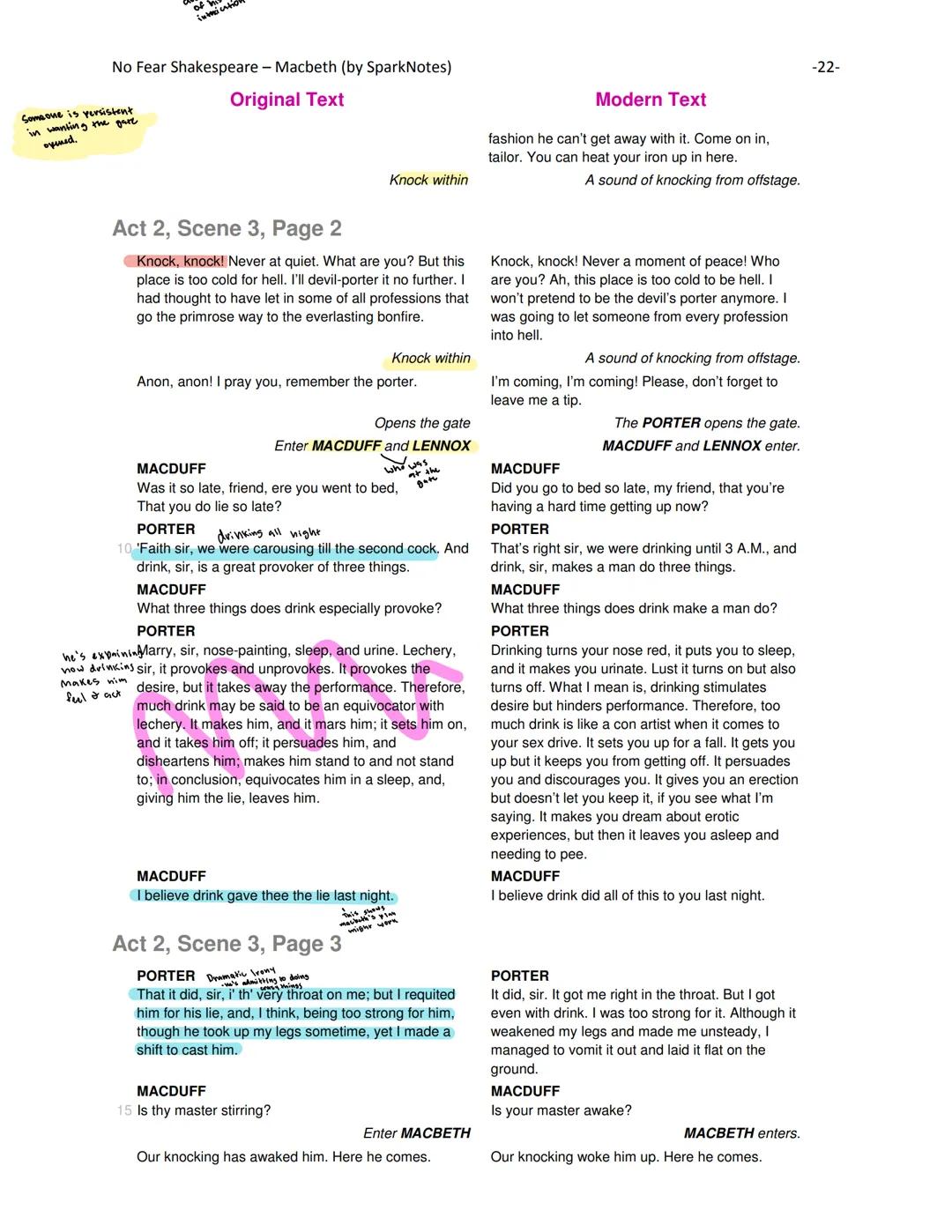
Banquo's Suspicions
Banquo, now alone, reflects on how the witches' prophecies have come true for Macbeth: "Now you have it all: you're the king, the thane of Cawdor, and the thane of Glamis, just like the weird women promised you."
More importantly, Banquo admits his suspicion that Macbeth achieved the crown through foul play: "And I suspect you cheated to win these titles." This shows Banquo isn't fooled by Macbeth's performance of innocent grief.
Banquo recalls the witches also prophesied that his descendants, not Macbeth's, would inherit the throne. This creates dramatic tension since we know Macbeth is now aware of this threat to his legacy.
Critical insight: Banquo stands at a crossroads—he suspects Macbeth of murder but hasn't acted on this knowledge. His silence makes him both a potential threat to Macbeth and morally compromised himself.
This brief soliloquy sets up Banquo as Macbeth's next target. Macbeth has secured the crown, but Banquo represents two threats: he knows too much about the prophecies, and his descendants are predicted to take Macbeth's throne. The cycle of violence that began with Duncan's murder is about to continue.
8
of 10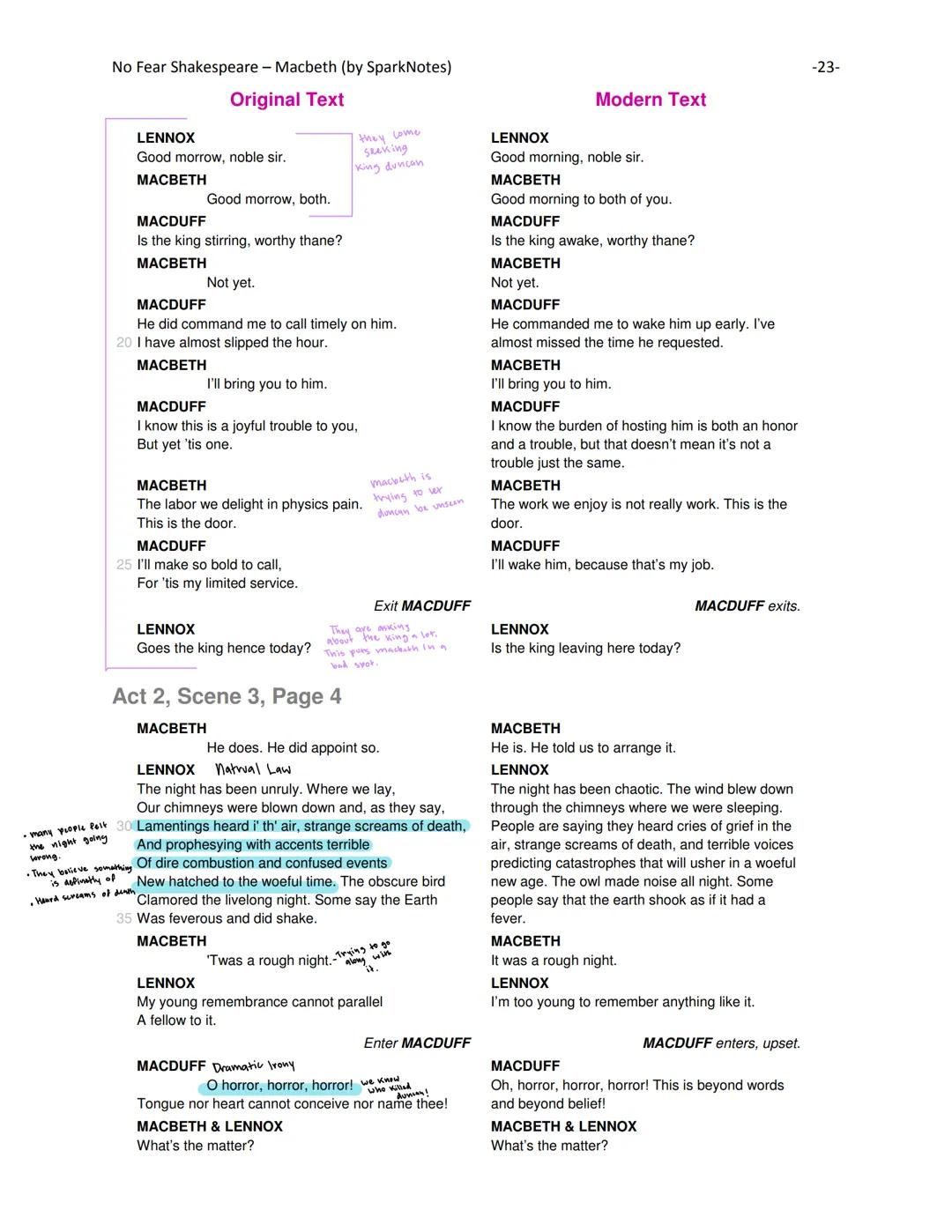
9
of 10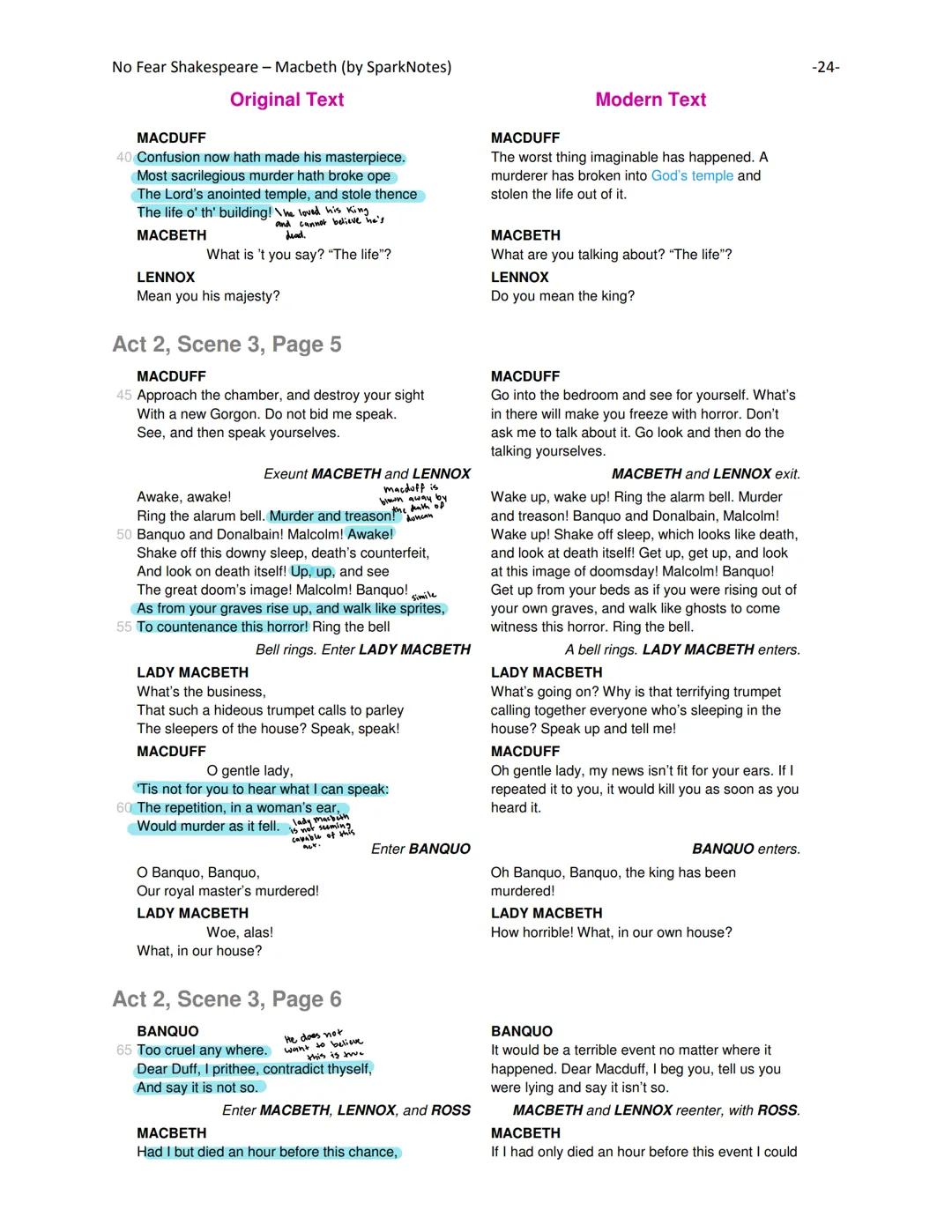
10
of 10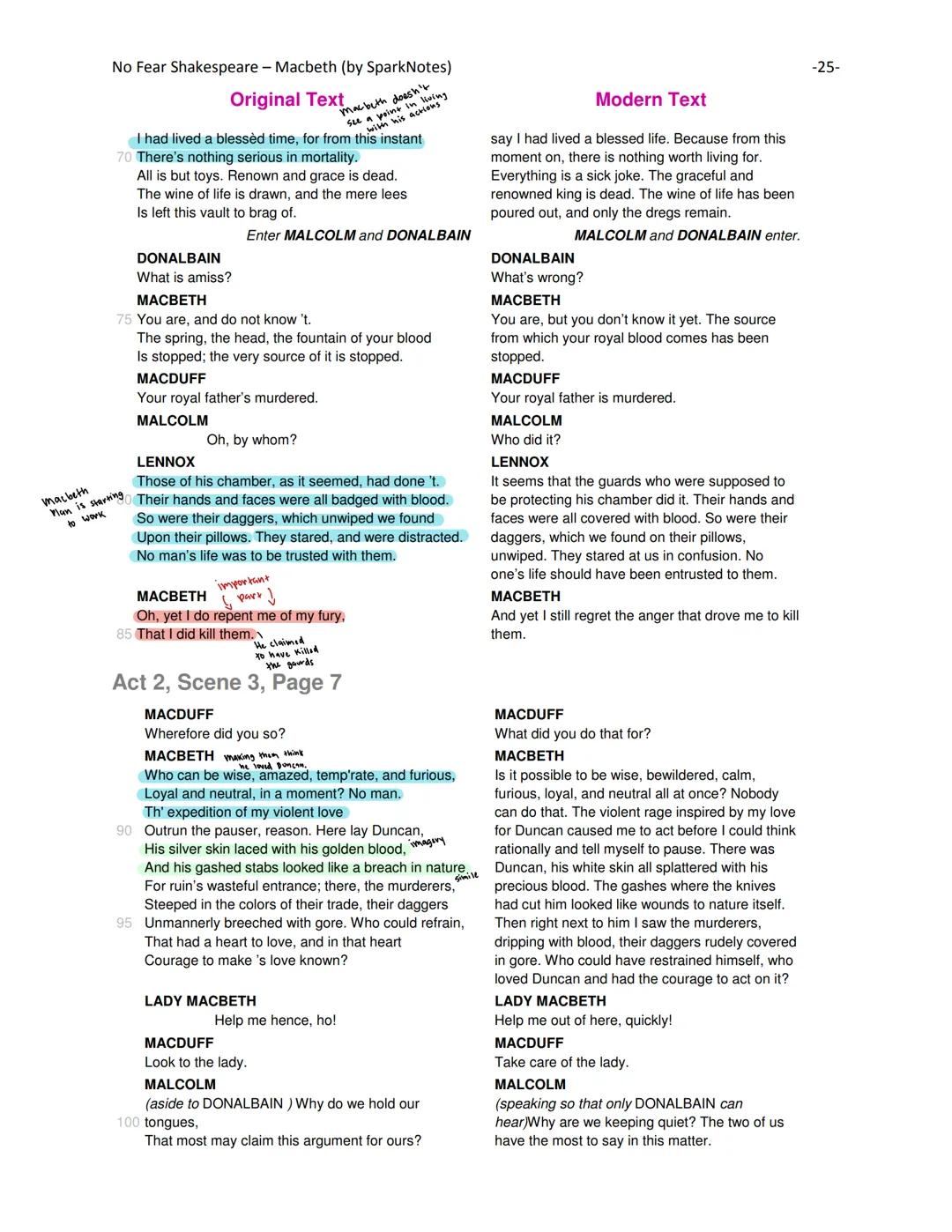
We thought you’d never ask...
What is the Knowunity AI companion?
Our AI companion is specifically built for the needs of students. Based on the millions of content pieces we have on the platform we can provide truly meaningful and relevant answers to students. But its not only about answers, the companion is even more about guiding students through their daily learning challenges, with personalised study plans, quizzes or content pieces in the chat and 100% personalisation based on the students skills and developments.
Where can I download the Knowunity app?
You can download the app in the Google Play Store and in the Apple App Store.
Is Knowunity really free of charge?
That's right! Enjoy free access to study content, connect with fellow students, and get instant help – all at your fingertips.
Similar Content
Most popular content in English
9Most popular content
9Can't find what you're looking for? Explore other subjects.
Students love us — and so will you.
4.6/5App Store
4.7/5Google Play
The app is very easy to use and well designed. I have found everything I was looking for so far and have been able to learn a lot from the presentations! I will definitely use the app for a class assignment! And of course it also helps a lot as an inspiration.
Stefan SiOS user
This app is really great. There are so many study notes and help [...]. My problem subject is French, for example, and the app has so many options for help. Thanks to this app, I have improved my French. I would recommend it to anyone.
Samantha KlichAndroid user
Wow, I am really amazed. I just tried the app because I've seen it advertised many times and was absolutely stunned. This app is THE HELP you want for school and above all, it offers so many things, such as workouts and fact sheets, which have been VERY helpful to me personally.
AnnaiOS user
English764 views·Updated May 29, 2026·13 pagesDetailed Annotations for Macbeth Act 2
A
addison @addison_teit
Macbeth is Shakespeare's intense tragedy about ambition, power, and the destructive path of violence. The play follows Macbeth's descent into darkness after he murders King Duncan, showing how one evil deed leads to countless others as he tries to secure... Show more
1
of 10Sign up to see the content. It's free!
- Access to all documents
- Improve your grades
- Join milions of students
The Murder Plan Unfolds
Lady Macbeth and Macbeth finalize their deadly plot against King Duncan. Lady Macbeth has drugged the king's guards, leaving Duncan vulnerable to attack. She tells Macbeth that she would have killed Duncan herself if he hadn't resembled her father as he slept.
Macbeth is clearly unsettled but committed to the plan. Lady Macbeth bolsters his courage, showing her ruthless nature when she declares, "May you only give birth to male children, because your fearless spirit should create nothing that isn't masculine." Her words reveal her belief that feminine qualities like mercy would be weakness.
Think about this: Lady Macbeth tells Macbeth they'll blame the murder on the guards. Notice how she manipulates Macbeth when he hesitates, calling his uncertainty unmanly.
The scene ends with Macbeth fully committed, saying he will "exert every muscle" to commit the crime. He acknowledges the deception they must maintain: "Hide with a false pleasant face what you know in your false, evil heart." This foreshadows the psychological toll their actions will take.
2
of 10Sign up to see the content. It's free!
- Access to all documents
- Improve your grades
- Join milions of students
Hallucinations and Hesitation
Banquo and his son Fleance walk through Macbeth's castle at night, unaware of the brewing tragedy. Banquo mentions having "cursed thoughts" and nightmares, suggesting he might suspect Macbeth's dark intentions.
When Macbeth appears, Banquo mentions dreaming about the witches, saying "they have showed some truth" to Macbeth. This reminds Macbeth of the prophecies, including that Banquo's children will be kings, not his own.
Left alone, Macbeth experiences a powerful hallucination – a floating dagger pointing toward Duncan's chamber. He questions his senses: "Is this a dagger I see in front of me, with its handle pointing toward my hand?" Unable to grasp it, he realizes it's "a dagger of the mind, a hallucination from my fevered brain."
Remember this: The dagger vision shows Macbeth's troubled conscience before committing murder. Even as he sees blood appearing on the blade, he still chooses to follow through with his plan.
The hallucination becomes more vivid, with Macbeth seeing blood appearing on the blade. When a bell rings, Macbeth accepts it as his signal to kill Duncan, saying, "I'm going now. The murder is as good as done."
3
of 10Sign up to see the content. It's free!
- Access to all documents
- Improve your grades
- Join milions of students
The Deed is Done
Lady Macbeth waits anxiously while Macbeth murders King Duncan. She's given herself courage through alcohol, saying "The alcohol that got the servants drunk has made me bold." Her confidence is chilling as she describes drugging the guards so heavily "you can't tell if they're alive or dead."
Macbeth returns carrying bloody daggers – a critical mistake. Instead of leaving them with the guards to frame them, he's brought the murder weapons with him. He appears deeply disturbed, looking at his hands and calling them "a sorry sight."
His psychological torment begins immediately. Macbeth describes hearing a voice cry, "Sleep no more! Macbeth is murdering sleep." This metaphor suggests he'll never again find peace or rest after committing this crime.
Crucial moment: When Macbeth refuses to return the daggers to the crime scene, Lady Macbeth calls him a "coward" and does it herself, showing her initially stronger resolve.
Macbeth's famous line reveals his understanding that his hands will never be clean again: "Will all the water in the ocean wash this blood from my hands? No, instead my hands will stain the seas scarlet, turning the green waters red." This powerful image shows he knows some stains can never be washed away.
4
of 10Sign up to see the content. It's free!
- Access to all documents
- Improve your grades
- Join milions of students
Guilt and Discovery
Macbeth is falling apart psychologically while Lady Macbeth remains practical. She tells him, "A little water will wash away the evidence of our guilt. It's so simple!" – showing how differently they respond to murder.
Meanwhile, a drunken porter provides brief comic relief as he pretends to be the gatekeeper of hell. His ramblings about sinners knocking at hell's gate ironically mirror what's happening in the castle, where a terrible sin has just been committed.
Macduff arrives to wake the king, unaware of what awaits him. Macbeth acts innocent when Macduff asks if Duncan is awake, saying he'll show him to the king's chamber.
While waiting, Lennox mentions strange occurrences during the night: "The night has been chaotic... people heard cries of grief in the air, strange screams of death." These supernatural elements suggest nature itself is disturbed by Duncan's murder.
Notice: When Macduff discovers Duncan's body, he uses religious language, calling it "sacrilegious murder" that "broke open God's temple." This frames the crime as not just murder, but blasphemy.
The scene builds to the horrific discovery as Macduff returns, crying "Oh, horror, horror, horror!" His reaction is so visceral that words cannot express what he's seen. The discovery of Duncan's murder creates immediate chaos and suspicion.
5
of 10Sign up to see the content. It's free!
- Access to all documents
- Improve your grades
- Join milions of students
Cover-up and Suspicion
Macbeth begins constructing his cover story. When asked what happened, Lennox explains that the guards' "hands and faces were all covered with blood" along with their daggers. This makes them look guilty, exactly as Lady Macbeth planned.
In a surprising move, Macbeth reveals he killed the guards in a supposed fit of rage over Duncan's death. When Macduff asks why, Macbeth delivers an elaborate, poetic speech about finding Duncan's body: "His silver skin laced with his golden blood, and his gashed stabs looked like a breach in nature." His excessive language suggests he's trying too hard to seem innocent.
Lady Macbeth suddenly faints, creating a distraction at the precise moment Macduff begins to question Macbeth's actions. This convenient timing suggests her "fainting spell" might be another calculated performance.
Think critically: Is Lady Macbeth's fainting real or fake? It happens right when Macbeth is being questioned about killing the guards, providing a convenient distraction.
Meanwhile, Malcolm and Donalbain, the king's sons, decide to flee separately – Malcolm to England and Donalbain to Ireland. They wisely recognize the danger, with Donalbain noting, "Where we are, there's daggers in men's smiles." Their escape, however, makes them look suspicious, as Macduff later points out.
6
of 10Sign up to see the content. It's free!
- Access to all documents
- Improve your grades
- Join milions of students
Unnatural Events
Strange happenings follow Duncan's murder, suggesting the natural world itself reacts to this terrible crime. Ross and an old man discuss the bizarre events: darkness during daytime, a falcon killed by an owl, and Duncan's horses eating each other.
The old man observes, "It's unnatural, just like the murder that has been committed." These supernatural disturbances reflect the play's central theme that killing a rightful king violates the natural order of things.
Ross learns from Macduff that suspicion has fallen on Malcolm and Donalbain because they fled: "The servants Macbeth killed" are blamed for the actual murder, while "Malcolm and Donalbain, the king's two sons... puts upon them suspicion of the deed."
Important development: Macbeth has been "named king and has left for Scone to be crowned," showing how quickly he's seized power while everyone else is still processing Duncan's death.
The scene ends with subtle expressions of doubt. Macduff declines to attend Macbeth's coronation, and his parting words contain a warning: "Let's hope things don't get worse." The old man's blessing—"May God's blessing go with you and with all who turn bad into good, and enemies into friends!"—suggests the challenges that lie ahead.
7
of 10Sign up to see the content. It's free!
- Access to all documents
- Improve your grades
- Join milions of students
Banquo's Suspicions
Banquo, now alone, reflects on how the witches' prophecies have come true for Macbeth: "Now you have it all: you're the king, the thane of Cawdor, and the thane of Glamis, just like the weird women promised you."
More importantly, Banquo admits his suspicion that Macbeth achieved the crown through foul play: "And I suspect you cheated to win these titles." This shows Banquo isn't fooled by Macbeth's performance of innocent grief.
Banquo recalls the witches also prophesied that his descendants, not Macbeth's, would inherit the throne. This creates dramatic tension since we know Macbeth is now aware of this threat to his legacy.
Critical insight: Banquo stands at a crossroads—he suspects Macbeth of murder but hasn't acted on this knowledge. His silence makes him both a potential threat to Macbeth and morally compromised himself.
This brief soliloquy sets up Banquo as Macbeth's next target. Macbeth has secured the crown, but Banquo represents two threats: he knows too much about the prophecies, and his descendants are predicted to take Macbeth's throne. The cycle of violence that began with Duncan's murder is about to continue.
8
of 10Sign up to see the content. It's free!
- Access to all documents
- Improve your grades
- Join milions of students
9
of 10Sign up to see the content. It's free!
- Access to all documents
- Improve your grades
- Join milions of students
10
of 10Sign up to see the content. It's free!
- Access to all documents
- Improve your grades
- Join milions of students
We thought you’d never ask...
What is the Knowunity AI companion?
Our AI companion is specifically built for the needs of students. Based on the millions of content pieces we have on the platform we can provide truly meaningful and relevant answers to students. But its not only about answers, the companion is even more about guiding students through their daily learning challenges, with personalised study plans, quizzes or content pieces in the chat and 100% personalisation based on the students skills and developments.
Where can I download the Knowunity app?
You can download the app in the Google Play Store and in the Apple App Store.
Is Knowunity really free of charge?
That's right! Enjoy free access to study content, connect with fellow students, and get instant help – all at your fingertips.
Similar Content
Most popular content in English
9Most popular content
9Can't find what you're looking for? Explore other subjects.
Students love us — and so will you.
4.6/5App Store
4.7/5Google Play
The app is very easy to use and well designed. I have found everything I was looking for so far and have been able to learn a lot from the presentations! I will definitely use the app for a class assignment! And of course it also helps a lot as an inspiration.
Stefan SiOS user
This app is really great. There are so many study notes and help [...]. My problem subject is French, for example, and the app has so many options for help. Thanks to this app, I have improved my French. I would recommend it to anyone.
Samantha KlichAndroid user
Wow, I am really amazed. I just tried the app because I've seen it advertised many times and was absolutely stunned. This app is THE HELP you want for school and above all, it offers so many things, such as workouts and fact sheets, which have been VERY helpful to me personally.
AnnaiOS user