
Engels kan soms lastig zijn met alle verschillende woorden en...
 Engels259 views·Updated Jun 21, 2026·4 pages
Engelse Grammatica Uitleg
M
Mats Dorrestijn@matsdorrestijn


1 / 4
1
of 4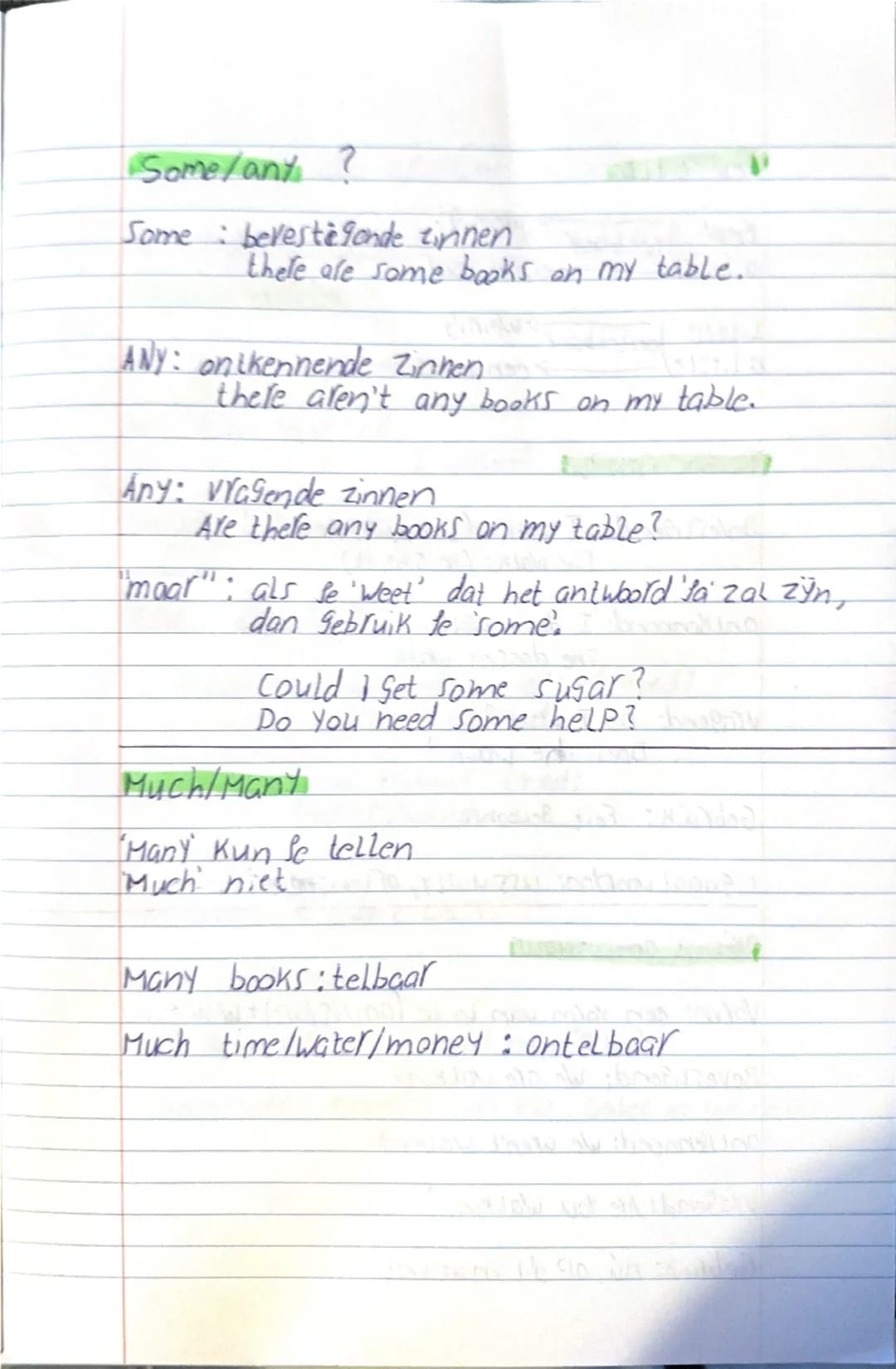
Some/Any en Much/Many
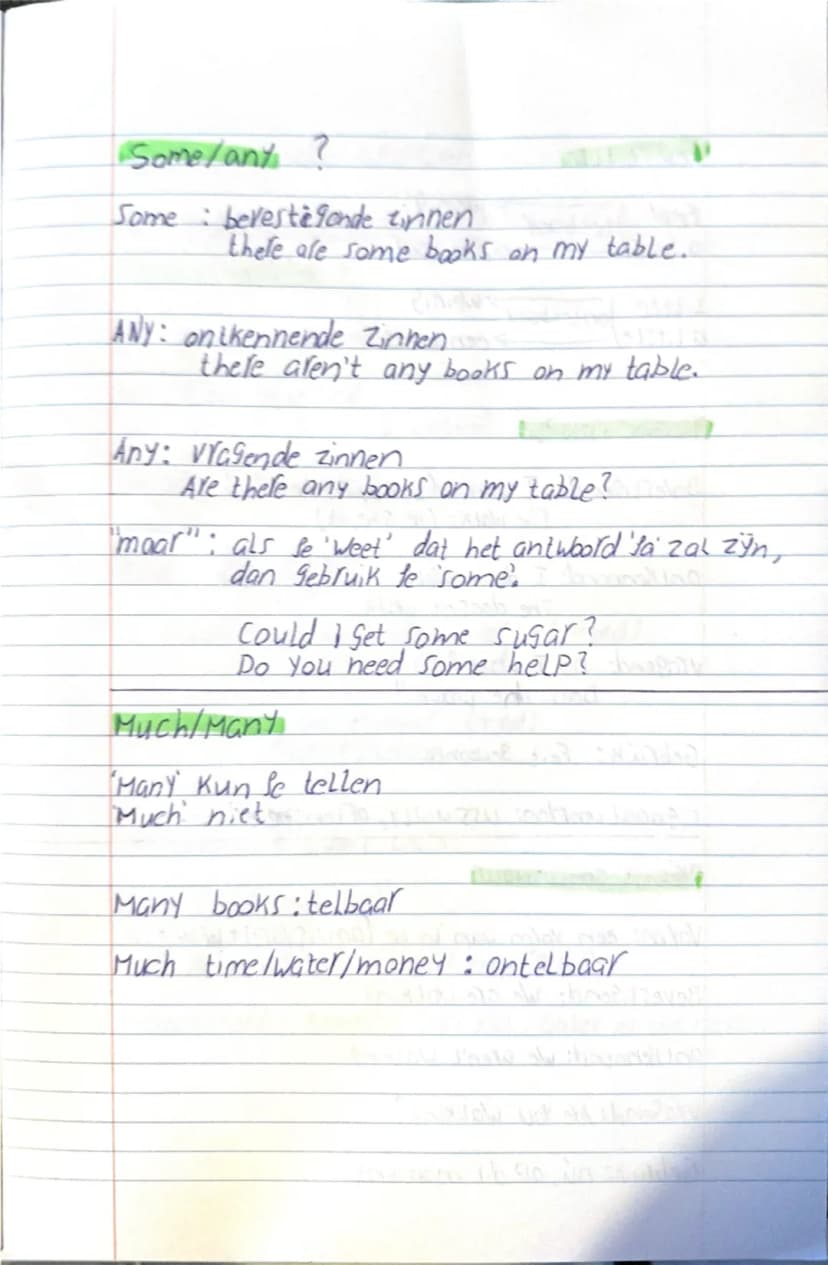
Some gebruik je in gewone zinnen waar je iets bevestigt: "There are some books on my table." Bij any denk je aan ontkenning en vragen. In ontkennende zinnen zeg je "There aren't any books" en bij vragen "Are there any books?"
Er is één uitzondering die handig is om te weten. Als je al weet dat het antwoord 'ja' wordt, gebruik je some in vragen. Denk aan "Could I get some sugar?" - je verwacht dat ze suiker hebben.
Many is voor dingen die je kunt tellen, zoals "many books". Much gebruik je voor spul dat je niet kunt tellen, zoals "much time, water of money". Dit onderscheid helpt je altijd de juiste keuze maken.
Onthoud: Some = bevestiging, Any = ontkenning/vragen, Many = telbaar, Much = ontelbaar
2
of 4
Few/Little en Present Simple
Few betekent 'weinig' voor telbare dingen, little voor ontelbare. Met a few bedoel je 'een paar' en met a little bedoel je 'een beetje' - dit klinkt veel positiever dan zonder het woordje 'a'.
De Present Simple gebruik je voor feiten en gewoontes. Je herkent het aan signaalwoorden zoals usually, often, never. Bij he/she/it voeg je een 's' toe: "She walks."
Voor ontkenning gebruik je don't/doesn't: "I don't walk" of "She doesn't walk." Let op dat het hoofdwerkwoord dan weer zonder 's' komt! Bij vragen gebruik je do/does: "Do I walk?" of "Does she walk?"
Test tip: Signaalwoorden zoals 'usually' en 'often' betekenen altijd Present Simple
3
of 4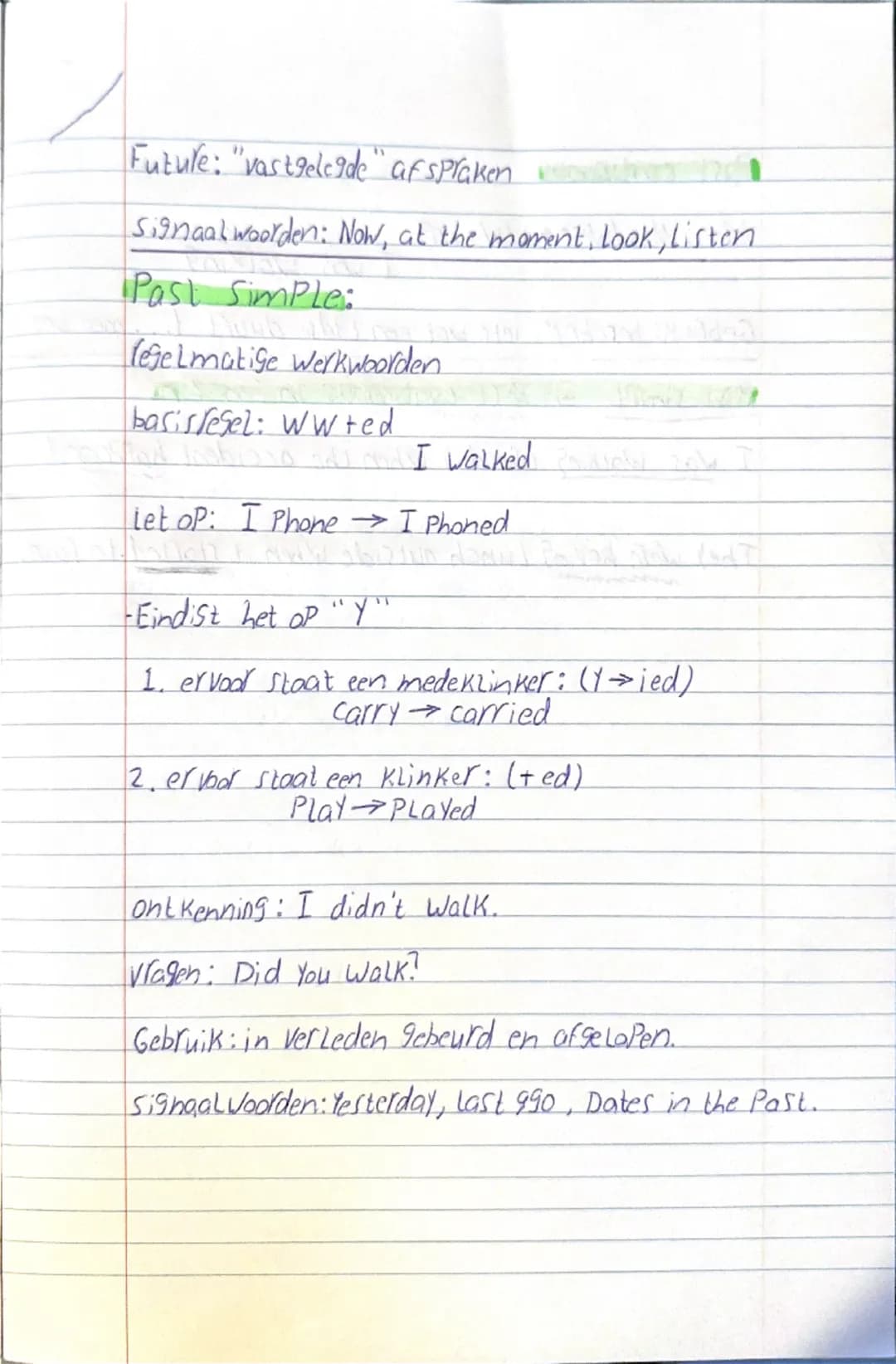
Present Continuous en Past Simple
De Present Continuous gebruik je voor dingen die NU gebeuren. Je maakt het met am/is/are + werkwoord + ing. "We are walking" wordt "We aren't walking" (ontkenning) en "Are you walking?" (vraag).
Signaalwoorden zoals now, at the moment, look en listen verraden dat je Present Continuous nodig hebt. Het gaat altijd om iets wat op dit moment bezig is.
Past Simple is voor dingen die in het verleden zijn gebeurd en afgelopen. Bij regelmatige werkwoorden voeg je -ed toe: "I walked". Let op: eindigt het werkwoord op 'y' met een medeklinker ervoor? Dan wordt het -ied: "carry → carried".
Voor ontkenning en vragen gebruik je didn't: "I didn't walk" en "Did you walk?" Signaalwoorden zijn yesterday, last year en data uit het verleden.
Handige truc: Hoor je 'now' of 'at the moment'? Dan is het Present Continuous!
4
of 4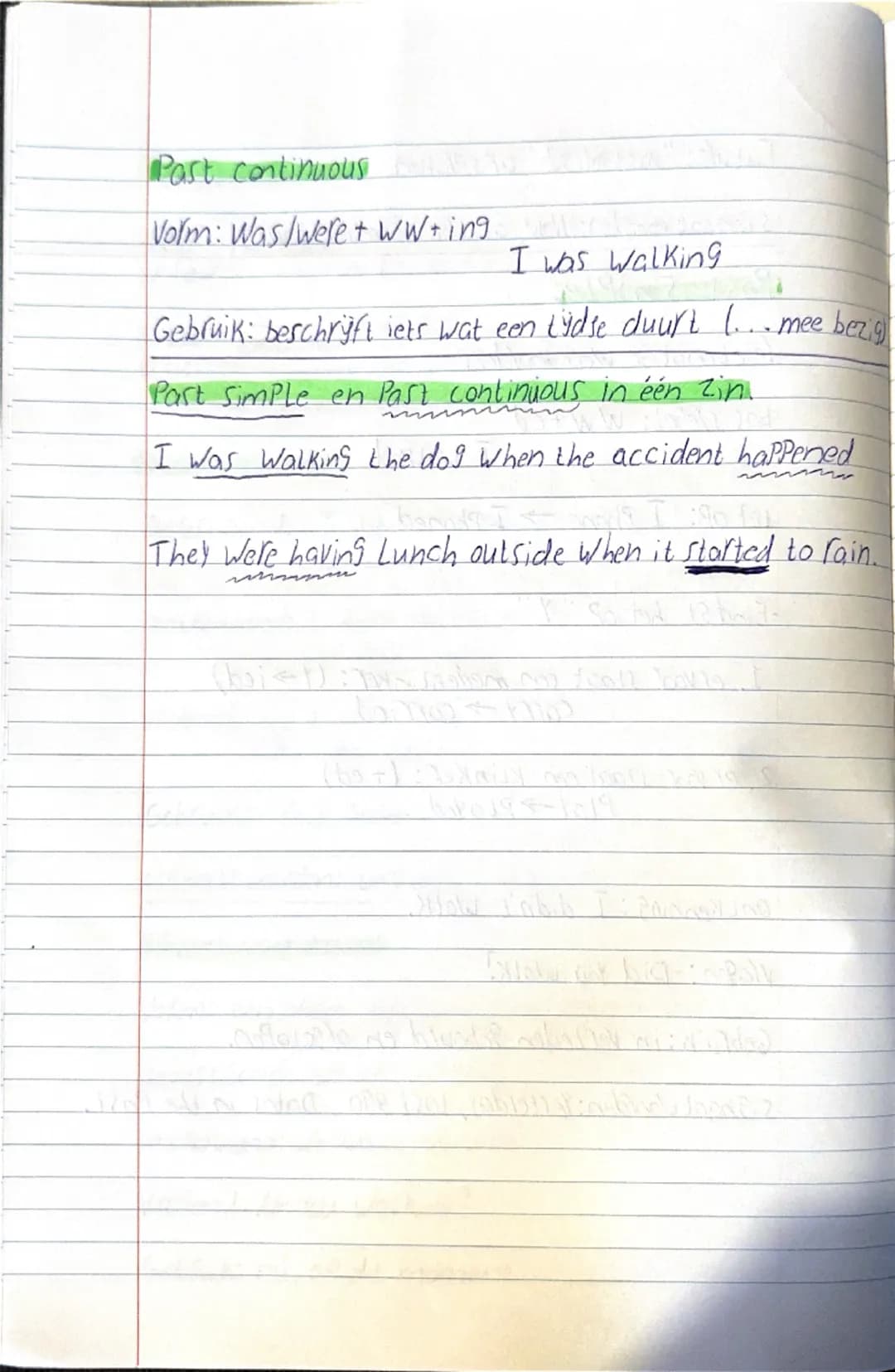
Past Continuous
De Past Continuous beschrijft iets wat een tijdje duurde in het verleden - je was ergens mee bezig. Je maakt het met was/were + werkwoord + ing: "I was walking".
Het wordt echt interessant als je Past Simple en Past Continuous combineert in één zin. Dan gebeurt er iets (Past Simple) terwijl je met iets anders bezig was (Past Continuous).
Kijk naar deze voorbeelden: "I was walking the dog when the accident happened" of "They were having lunch outside when it started to rain." Het gedeelte met 'when' is altijd Past Simple.
Ezelsbruggetje: Past Continuous = je was ergens mee BEZIG, Past Simple = er gebeurde iets INEENS
We thought you’d never ask...
Our AI companion is specifically built for the needs of students. Based on the millions of content pieces we have on the platform we can provide truly meaningful and relevant answers to students. But its not only about answers, the companion is even more about guiding students through their daily learning challenges, with personalised study plans, quizzes or content pieces in the chat and 100% personalisation based on the students skills and developments.
You can download the app in the Google Play Store and in the Apple App Store.
That's right! Enjoy free access to study content, connect with fellow students, and get instant help – all at your fingertips.
Similar Content
 Lenguaje y Comunicación
 Otros
Otros Duits
Duits English Grammar
Most popular content: Language
9 Nederlands
Zakelijke e-mail schrijven
Instructie over een zakelijke e-mail schrijven voor nederland
K1861
EngelsOnregelmatige werkwoorden Engels
Duidelijk overzicht van alle onregelmatige werkwoorden in het Engels, uitwerkt in alle tijden
K4922
 Frans
FransWoorden Frans, beginner
Woorden + betekenis Frans 1vwo (ook te gebruiken voor andere klassen uiteraard)
K11070
FransFrans werkwoorden
De uitgangen van de regelmatige werkwoorden, van het werkwoord êtré, van het werkwoord avoir, van het werkwoord faire en van het werkwoord aller
K3550
FransFrans – Basisgrammatica en Woordenschat (Leerjaar 1, mavo-havo)
Tuurlijk! Hier is een korte introductie die je voor je samenvatting kan gebruiken. 👇 --- Introductie In dit schrift staat alle belangrijke Franse grammatica en woordenschat die je moet kennen in het eerste leerjaar van mavo-havo (leerjaar 1)
K11371
FransGramatiek Frans lidwoorden
Frans lidwoorden
K12352
NederlandsNederlands grammatica
Verwijswoorden theorie
K4682
NederlandsNederlands - meer dan lezen
samenvattingen van hoofdstuk 1 meer dan lezen.
11th822
NederlandsGrammatica Nederland samenvatting
Samenvatting over verschillende grammatica regels
K1380
Most popular content in Engels
3Most popular content
9 Biologie
Biologie Havo 4 thema regeling H5
Samenvatting van alle stof van hoofdstuk 5 regeling, boek biologie voor jou 4B
K42956
 Geschiedenis
Geschiedenis Koude oorlog
Alles wat je moet weten over de koude oorlog!
K41420
GeschiedenisSamenvatting koude oorlog
Samenvatting over de Koude oorlog
K31493
 Maatschappijleer
Maatschappijleer samenvatting h4
Maatschappijleer samenvatting h4
K42127
GeschiedenisGeschiedenis tijdvak 5 samenvatting
Geschiedenis tijdvak 5 samenvatting
K456215
GeschiedenisTweede wereldoorlog alles
alles over de tweede wereldoorlog van 3vwo hoofdstuk 3
K31924
BiologieBiologie hoofdstuk 4
Samenvatting over sex en dingetjes
K41778
MaatschappijleerMaatschappijleer hoofdstuk 3
Samenvatting hoofdstuk 3
K41,28127
BiologieKleine&grote bloedsomloop
Bloedsomloop
K32001
Students love us — and so will you.
4.6/5App Store
4.7/5Google Play
The app is very easy to use and well designed. I have found everything I was looking for so far and have been able to learn a lot from the presentations! I will definitely use the app for a class assignment! And of course it also helps a lot as an inspiration.
Stefan SiOS user
This app is really great. There are so many study notes and help [...]. My problem subject is French, for example, and the app has so many options for help. Thanks to this app, I have improved my French. I would recommend it to anyone.
Samantha KlichAndroid user
Wow, I am really amazed. I just tried the app because I've seen it advertised many times and was absolutely stunned. This app is THE HELP you want for school and above all, it offers so many things, such as workouts and fact sheets, which have been VERY helpful to me personally.
AnnaiOS user
Engels259 views·Updated Jun 21, 2026·4 pagesEngelse Grammatica Uitleg
M
Mats Dorrestijn@matsdorrestijn
Engels kan soms lastig zijn met alle verschillende woorden en tijden. Hier leer je de belangrijkste trucjes voor some/any, much/many, en de vier meest gebruikte tijden die je echt moet kennen voor je toetsen.
1
of 4
Sign up to see the content. It's free!
- Access to all documents
- Improve your grades
- Join milions of students
Some/Any en Much/Many
Some gebruik je in gewone zinnen waar je iets bevestigt: "There are some books on my table." Bij any denk je aan ontkenning en vragen. In ontkennende zinnen zeg je "There aren't any books" en bij vragen "Are there any books?"
Er is één uitzondering die handig is om te weten. Als je al weet dat het antwoord 'ja' wordt, gebruik je some in vragen. Denk aan "Could I get some sugar?" - je verwacht dat ze suiker hebben.
Many is voor dingen die je kunt tellen, zoals "many books". Much gebruik je voor spul dat je niet kunt tellen, zoals "much time, water of money". Dit onderscheid helpt je altijd de juiste keuze maken.
Onthoud: Some = bevestiging, Any = ontkenning/vragen, Many = telbaar, Much = ontelbaar
2
of 4Sign up to see the content. It's free!
- Access to all documents
- Improve your grades
- Join milions of students
Few/Little en Present Simple
Few betekent 'weinig' voor telbare dingen, little voor ontelbare. Met a few bedoel je 'een paar' en met a little bedoel je 'een beetje' - dit klinkt veel positiever dan zonder het woordje 'a'.
De Present Simple gebruik je voor feiten en gewoontes. Je herkent het aan signaalwoorden zoals usually, often, never. Bij he/she/it voeg je een 's' toe: "She walks."
Voor ontkenning gebruik je don't/doesn't: "I don't walk" of "She doesn't walk." Let op dat het hoofdwerkwoord dan weer zonder 's' komt! Bij vragen gebruik je do/does: "Do I walk?" of "Does she walk?"
Test tip: Signaalwoorden zoals 'usually' en 'often' betekenen altijd Present Simple
3
of 4Sign up to see the content. It's free!
- Access to all documents
- Improve your grades
- Join milions of students
Present Continuous en Past Simple
De Present Continuous gebruik je voor dingen die NU gebeuren. Je maakt het met am/is/are + werkwoord + ing. "We are walking" wordt "We aren't walking" (ontkenning) en "Are you walking?" (vraag).
Signaalwoorden zoals now, at the moment, look en listen verraden dat je Present Continuous nodig hebt. Het gaat altijd om iets wat op dit moment bezig is.
Past Simple is voor dingen die in het verleden zijn gebeurd en afgelopen. Bij regelmatige werkwoorden voeg je -ed toe: "I walked". Let op: eindigt het werkwoord op 'y' met een medeklinker ervoor? Dan wordt het -ied: "carry → carried".
Voor ontkenning en vragen gebruik je didn't: "I didn't walk" en "Did you walk?" Signaalwoorden zijn yesterday, last year en data uit het verleden.
Handige truc: Hoor je 'now' of 'at the moment'? Dan is het Present Continuous!
4
of 4Sign up to see the content. It's free!
- Access to all documents
- Improve your grades
- Join milions of students
Past Continuous
De Past Continuous beschrijft iets wat een tijdje duurde in het verleden - je was ergens mee bezig. Je maakt het met was/were + werkwoord + ing: "I was walking".
Het wordt echt interessant als je Past Simple en Past Continuous combineert in één zin. Dan gebeurt er iets (Past Simple) terwijl je met iets anders bezig was (Past Continuous).
Kijk naar deze voorbeelden: "I was walking the dog when the accident happened" of "They were having lunch outside when it started to rain." Het gedeelte met 'when' is altijd Past Simple.
Ezelsbruggetje: Past Continuous = je was ergens mee BEZIG, Past Simple = er gebeurde iets INEENS
We thought you’d never ask...
Our AI companion is specifically built for the needs of students. Based on the millions of content pieces we have on the platform we can provide truly meaningful and relevant answers to students. But its not only about answers, the companion is even more about guiding students through their daily learning challenges, with personalised study plans, quizzes or content pieces in the chat and 100% personalisation based on the students skills and developments.
You can download the app in the Google Play Store and in the Apple App Store.
That's right! Enjoy free access to study content, connect with fellow students, and get instant help – all at your fingertips.
Similar Content
Most popular content: Language
9NederlandsZakelijke e-mail schrijven
Instructie over een zakelijke e-mail schrijven voor nederland
K1861
EngelsOnregelmatige werkwoorden Engels
Duidelijk overzicht van alle onregelmatige werkwoorden in het Engels, uitwerkt in alle tijden
K4922
FransWoorden Frans, beginner
Woorden + betekenis Frans 1vwo (ook te gebruiken voor andere klassen uiteraard)
K11070
FransFrans werkwoorden
De uitgangen van de regelmatige werkwoorden, van het werkwoord êtré, van het werkwoord avoir, van het werkwoord faire en van het werkwoord aller
K3550
FransFrans – Basisgrammatica en Woordenschat (Leerjaar 1, mavo-havo)
Tuurlijk! Hier is een korte introductie die je voor je samenvatting kan gebruiken. 👇 --- Introductie In dit schrift staat alle belangrijke Franse grammatica en woordenschat die je moet kennen in het eerste leerjaar van mavo-havo (leerjaar 1)
K11371
FransGramatiek Frans lidwoorden
Frans lidwoorden
K12352
NederlandsNederlands grammatica
Verwijswoorden theorie
K4682
NederlandsNederlands - meer dan lezen
samenvattingen van hoofdstuk 1 meer dan lezen.
11th822
NederlandsGrammatica Nederland samenvatting
Samenvatting over verschillende grammatica regels
K1380
Most popular content in Engels
3Most popular content
9BiologieBiologie Havo 4 thema regeling H5
Samenvatting van alle stof van hoofdstuk 5 regeling, boek biologie voor jou 4B
K42956
GeschiedenisGeschiedenis Koude oorlog
Alles wat je moet weten over de koude oorlog!
K41420
GeschiedenisSamenvatting koude oorlog
Samenvatting over de Koude oorlog
K31493
MaatschappijleerMaatschappijleer samenvatting h4
Maatschappijleer samenvatting h4
K42127
GeschiedenisGeschiedenis tijdvak 5 samenvatting
Geschiedenis tijdvak 5 samenvatting
K456215
GeschiedenisTweede wereldoorlog alles
alles over de tweede wereldoorlog van 3vwo hoofdstuk 3
K31924
BiologieBiologie hoofdstuk 4
Samenvatting over sex en dingetjes
K41778
MaatschappijleerMaatschappijleer hoofdstuk 3
Samenvatting hoofdstuk 3
K41,28127
BiologieKleine&grote bloedsomloop
Bloedsomloop
K32001
Students love us — and so will you.
4.6/5App Store
4.7/5Google Play
The app is very easy to use and well designed. I have found everything I was looking for so far and have been able to learn a lot from the presentations! I will definitely use the app for a class assignment! And of course it also helps a lot as an inspiration.
Stefan SiOS user
This app is really great. There are so many study notes and help [...]. My problem subject is French, for example, and the app has so many options for help. Thanks to this app, I have improved my French. I would recommend it to anyone.
Samantha KlichAndroid user
Wow, I am really amazed. I just tried the app because I've seen it advertised many times and was absolutely stunned. This app is THE HELP you want for school and above all, it offers so many things, such as workouts and fact sheets, which have been VERY helpful to me personally.
AnnaiOS user