
The heart is a powerful organ with specialized chambers, valves,...
 Health & Medicine88 views·Updated Jul 13, 2026·1 page
Understanding the Heart: Aorta, Pulmonary Artery, and Veins

Amelia@aperson_2
1
of 1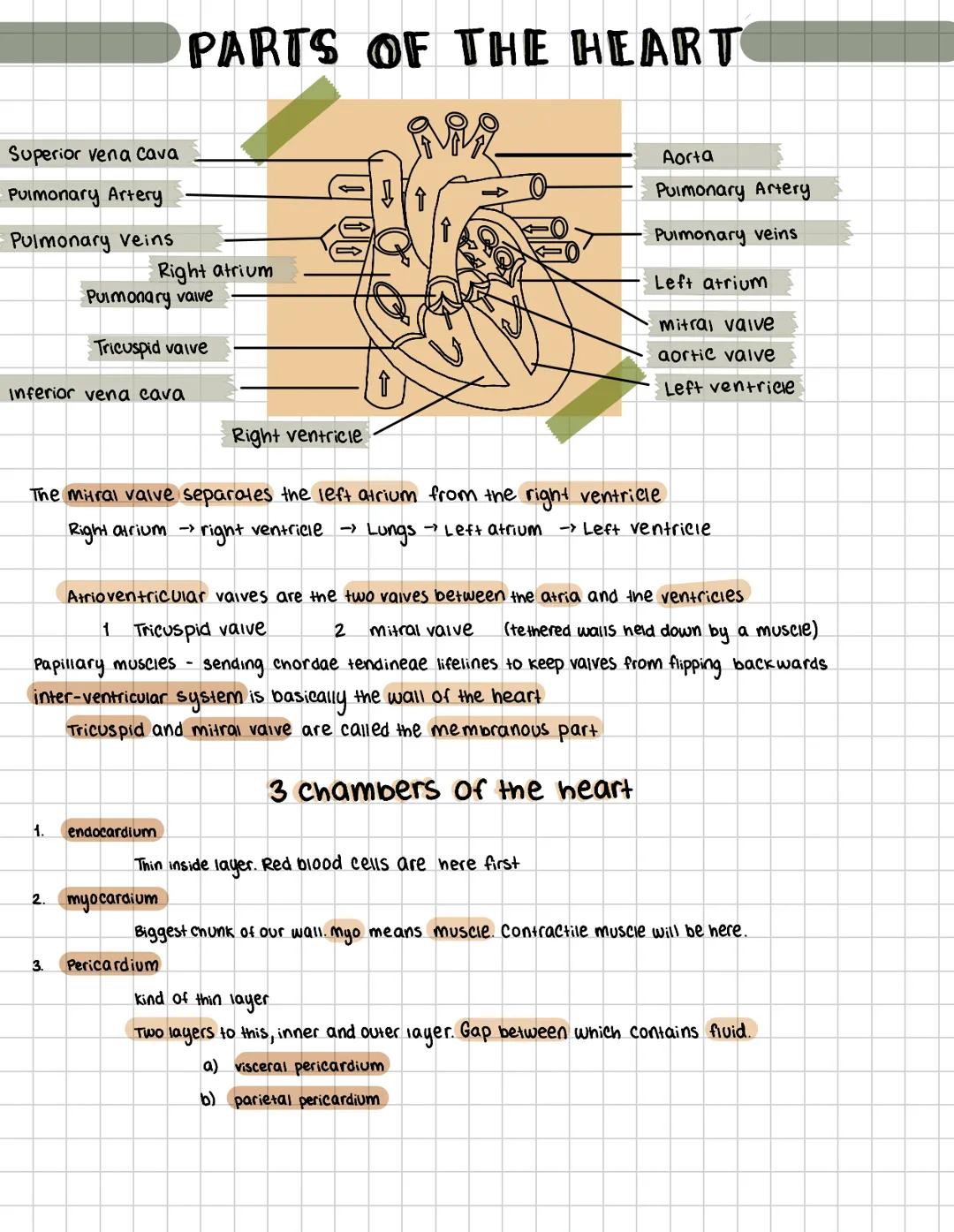
Parts of the Heart
Your heart has four main chambers that blood flows through. The right atrium receives oxygen-poor blood from the body through the superior and inferior vena cava, which then passes through the tricuspid valve into the right ventricle. From there, blood flows through the pulmonary valve into the pulmonary arteries to your lungs for oxygenation.
On the left side, the left atrium receives oxygen-rich blood from the lungs via pulmonary veins. This blood passes through the mitral valve (also called the bicuspid valve) into the left ventricle, which pumps it through the aortic valve into the aorta to supply your entire body. The mitral and tricuspid valves are called atrioventricular valves because they sit between the atria and ventricles.
The heart wall itself has three distinct layers. The innermost layer is the endocardium, which directly contacts blood. The middle and thickest layer is the myocardium, which contains the powerful contractile muscles that pump blood. The outer layer, the pericardium, has two parts: the visceral pericardium (inner layer) and parietal pericardium (outer layer), with fluid between them that allows the heart to beat without friction.
Fun Fact: The papillary muscles inside your heart send string-like structures called chordae tendineae to prevent the heart valves from flipping backward. They're like little lifelines that keep your blood flowing in the right direction!
We thought you’d never ask...
Our AI companion is specifically built for the needs of students. Based on the millions of content pieces we have on the platform we can provide truly meaningful and relevant answers to students. But its not only about answers, the companion is even more about guiding students through their daily learning challenges, with personalised study plans, quizzes or content pieces in the chat and 100% personalisation based on the students skills and developments.
You can download the app in the Google Play Store and in the Apple App Store.
That's right! Enjoy free access to study content, connect with fellow students, and get instant help – all at your fingertips.
Similar Content
Most popular content: Heart
1Most popular content in Health & Medicine
9M
Health & MedicineMedical Terminology Quiz
key concepts in med terminology
11th2090
Health & MedicineMark Klimek Nclex Review
Comphrensive Nclex Review
College821
Health & MedicineED 101 Lesson 2
The Child and Adolescence Learners and Learning Principles
College1592
 Fun Stuff
Anatomy and Physiology Chapter 1
Chpater 1 : The orientation of the body / College Level Anatomy and Physiology
86538
Health & MedicineHow to give CPR
How to give CPR
956
Health & MedicinePharmacology - Descriptions and Terms
Medical Terminology - Learn about descriptions of things related to pharmacology and additional terms about medications.
College1177
Health & Medicinetfn
theoretical foundation in nursing
College1450
Health & Medicinemedical terminology #1
this is the first page of medical abbreviations used as a nurse/doctor.
12th39034
Health & MedicineAnatomical Terminology
Understanding the language of anatomy and directional terms used to describe body structures and cavities for medical professionals and students.
10th892
Most popular content
9O
 AP US History
Origins and Dynamics of the Columbian Exchange
Analyze the ecological and economic motivations behind the initial transfer of goods, people, and diseases between the Old and New Worlds.
9th3,1280
I
AP US HistoryIntroduction to Early Cultural Interactions
Analyze the initial social and religious encounters between Europeans, Africans, and Indigenous peoples in the colonial Americas.
9th2,7730
O
 AP World History
Origins of Ancient River Civilizations
Analyze the environmental factors and technological innovations that led to the rise of early states in Mesopotamia, Egypt, and the Indus Valley.
9th3,1870
M
AP US HistoryMotivations for European Exploration
Analyze the economic, religious, and political factors that drove European powers to the Americas during the 15th and 16th centuries.
9th1,7780
F
 AP Psychology
Foundations of Ethical Guidelines in Research
Practice the core principles of the APA ethical code including informed consent, debriefing, and the role of Institutional Review Boards.
9th1,3360
I
AP US HistoryIntroduction to Native American Societies
Examine the diverse social, political, and economic structures of North American indigenous groups prior to European contact.
9th1,1100
I
AP US HistoryIntroduction to the Spanish Encomienda System
Explore the fundamental economic and social structures of the Spanish colonial system, focusing on the encomienda and the casta social hierarchy.
9th8890
I
 AP Biology
Introduction to Biological Elements of Life
Practice identifying the essential elements including carbon, nitrogen, phosphorus, and sulfur that compose biological macromolecules.
9th1,7410
O
AP US Government & PoliticsOrigins of the Articles of Confederation
Practice identifying the motivations for a weak central government and the specific powers granted to the states under the first U.S. constitution.
9th9370
Students love us — and so will you.
4.6/5App Store
4.7/5Google Play
The app is very easy to use and well designed. I have found everything I was looking for so far and have been able to learn a lot from the presentations! I will definitely use the app for a class assignment! And of course it also helps a lot as an inspiration.
Stefan SiOS user
This app is really great. There are so many study notes and help [...]. My problem subject is French, for example, and the app has so many options for help. Thanks to this app, I have improved my French. I would recommend it to anyone.
Samantha KlichAndroid user
Wow, I am really amazed. I just tried the app because I've seen it advertised many times and was absolutely stunned. This app is THE HELP you want for school and above all, it offers so many things, such as workouts and fact sheets, which have been VERY helpful to me personally.
AnnaiOS user
Health & Medicine88 views·Updated Jul 13, 2026·1 pageUnderstanding the Heart: Aorta, Pulmonary Artery, and Veins
Amelia@aperson_2
The heart is a powerful organ with specialized chambers, valves, and muscular layers that work together to pump blood throughout your body. Understanding these components helps you grasp how this vital organ functions continuously to keep you alive.
1
of 1
Sign up to see the content. It's free!
- Access to all documents
- Improve your grades
- Join milions of students
Parts of the Heart
Your heart has four main chambers that blood flows through. The right atrium receives oxygen-poor blood from the body through the superior and inferior vena cava, which then passes through the tricuspid valve into the right ventricle. From there, blood flows through the pulmonary valve into the pulmonary arteries to your lungs for oxygenation.
On the left side, the left atrium receives oxygen-rich blood from the lungs via pulmonary veins. This blood passes through the mitral valve (also called the bicuspid valve) into the left ventricle, which pumps it through the aortic valve into the aorta to supply your entire body. The mitral and tricuspid valves are called atrioventricular valves because they sit between the atria and ventricles.
The heart wall itself has three distinct layers. The innermost layer is the endocardium, which directly contacts blood. The middle and thickest layer is the myocardium, which contains the powerful contractile muscles that pump blood. The outer layer, the pericardium, has two parts: the visceral pericardium (inner layer) and parietal pericardium (outer layer), with fluid between them that allows the heart to beat without friction.
Fun Fact: The papillary muscles inside your heart send string-like structures called chordae tendineae to prevent the heart valves from flipping backward. They're like little lifelines that keep your blood flowing in the right direction!
We thought you’d never ask...
Our AI companion is specifically built for the needs of students. Based on the millions of content pieces we have on the platform we can provide truly meaningful and relevant answers to students. But its not only about answers, the companion is even more about guiding students through their daily learning challenges, with personalised study plans, quizzes or content pieces in the chat and 100% personalisation based on the students skills and developments.
You can download the app in the Google Play Store and in the Apple App Store.
That's right! Enjoy free access to study content, connect with fellow students, and get instant help – all at your fingertips.
Similar Content
Most popular content: Heart
1Most popular content in Health & Medicine
9M
Health & MedicineMedical Terminology Quiz
key concepts in med terminology
11th2090
Health & MedicineMark Klimek Nclex Review
Comphrensive Nclex Review
College821
Health & MedicineED 101 Lesson 2
The Child and Adolescence Learners and Learning Principles
College1592
Fun StuffAnatomy and Physiology Chapter 1
Chpater 1 : The orientation of the body / College Level Anatomy and Physiology
86538
Health & MedicineHow to give CPR
How to give CPR
956
Health & MedicinePharmacology - Descriptions and Terms
Medical Terminology - Learn about descriptions of things related to pharmacology and additional terms about medications.
College1177
Health & Medicinetfn
theoretical foundation in nursing
College1450
Health & Medicinemedical terminology #1
this is the first page of medical abbreviations used as a nurse/doctor.
12th39034
Health & MedicineAnatomical Terminology
Understanding the language of anatomy and directional terms used to describe body structures and cavities for medical professionals and students.
10th892
Most popular content
9O
AP US HistoryOrigins and Dynamics of the Columbian Exchange
Analyze the ecological and economic motivations behind the initial transfer of goods, people, and diseases between the Old and New Worlds.
9th3,1280
I
AP US HistoryIntroduction to Early Cultural Interactions
Analyze the initial social and religious encounters between Europeans, Africans, and Indigenous peoples in the colonial Americas.
9th2,7730
O
AP World HistoryOrigins of Ancient River Civilizations
Analyze the environmental factors and technological innovations that led to the rise of early states in Mesopotamia, Egypt, and the Indus Valley.
9th3,1870
M
AP US HistoryMotivations for European Exploration
Analyze the economic, religious, and political factors that drove European powers to the Americas during the 15th and 16th centuries.
9th1,7780
F
AP PsychologyFoundations of Ethical Guidelines in Research
Practice the core principles of the APA ethical code including informed consent, debriefing, and the role of Institutional Review Boards.
9th1,3360
I
AP US HistoryIntroduction to Native American Societies
Examine the diverse social, political, and economic structures of North American indigenous groups prior to European contact.
9th1,1100
I
AP US HistoryIntroduction to the Spanish Encomienda System
Explore the fundamental economic and social structures of the Spanish colonial system, focusing on the encomienda and the casta social hierarchy.
9th8890
I
AP BiologyIntroduction to Biological Elements of Life
Practice identifying the essential elements including carbon, nitrogen, phosphorus, and sulfur that compose biological macromolecules.
9th1,7410
O
AP US Government & PoliticsOrigins of the Articles of Confederation
Practice identifying the motivations for a weak central government and the specific powers granted to the states under the first U.S. constitution.
9th9370
Students love us — and so will you.
4.6/5App Store
4.7/5Google Play
The app is very easy to use and well designed. I have found everything I was looking for so far and have been able to learn a lot from the presentations! I will definitely use the app for a class assignment! And of course it also helps a lot as an inspiration.
Stefan SiOS user
This app is really great. There are so many study notes and help [...]. My problem subject is French, for example, and the app has so many options for help. Thanks to this app, I have improved my French. I would recommend it to anyone.
Samantha KlichAndroid user
Wow, I am really amazed. I just tried the app because I've seen it advertised many times and was absolutely stunned. This app is THE HELP you want for school and above all, it offers so many things, such as workouts and fact sheets, which have been VERY helpful to me personally.
AnnaiOS user