
Dive into the fascinating world of olfaction - your sense... Show more
 Biology15 views·Updated May 29, 2026·4 pages
Understanding Olfactory Neuroscience: The Science of Smell

moonsbby .@moonsbby._agqe
1 / 4
1
of 4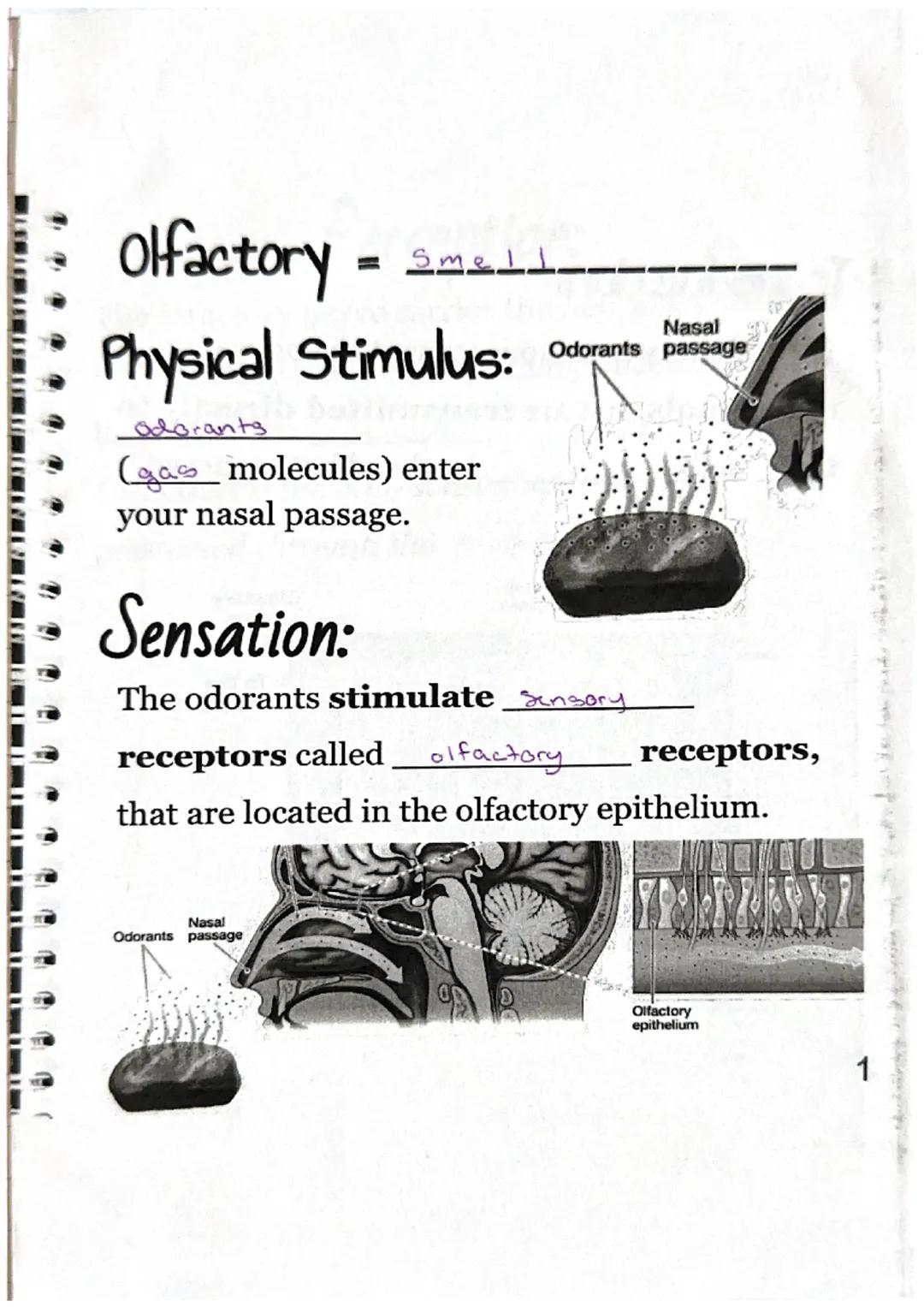
The Beginning of Smell
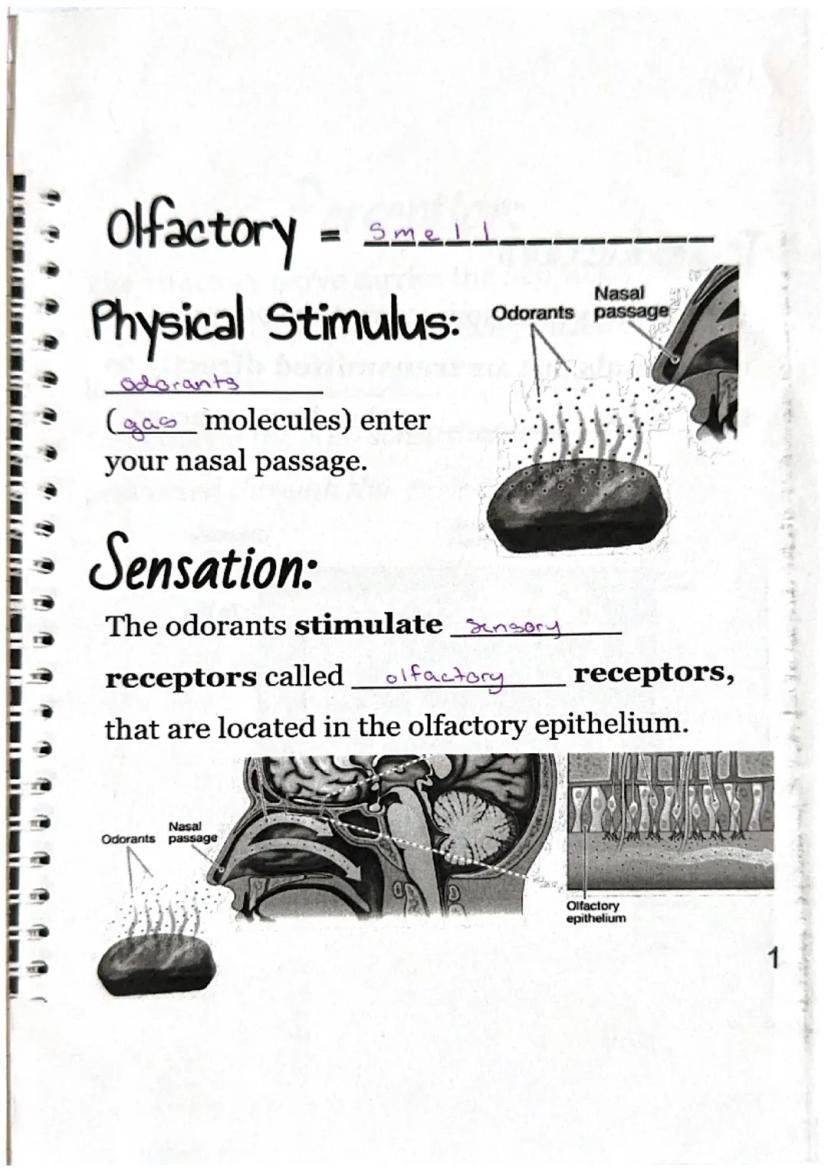
Your sense of smell starts when gas molecules called odorants enter your nasal passage. These tiny molecules float through the air and make their way up your nose when you breathe.
Once inside, these odorants reach a specialized area called the olfactory epithelium, which lines part of your nasal cavity. This small patch of tissue contains millions of olfactory receptors - specialized sensory cells designed to detect different chemical compounds.
Fun Fact: Your nose can detect thousands of different odors, from the comforting smell of freshly baked cookies to the warning scent of something burning!
2
of 4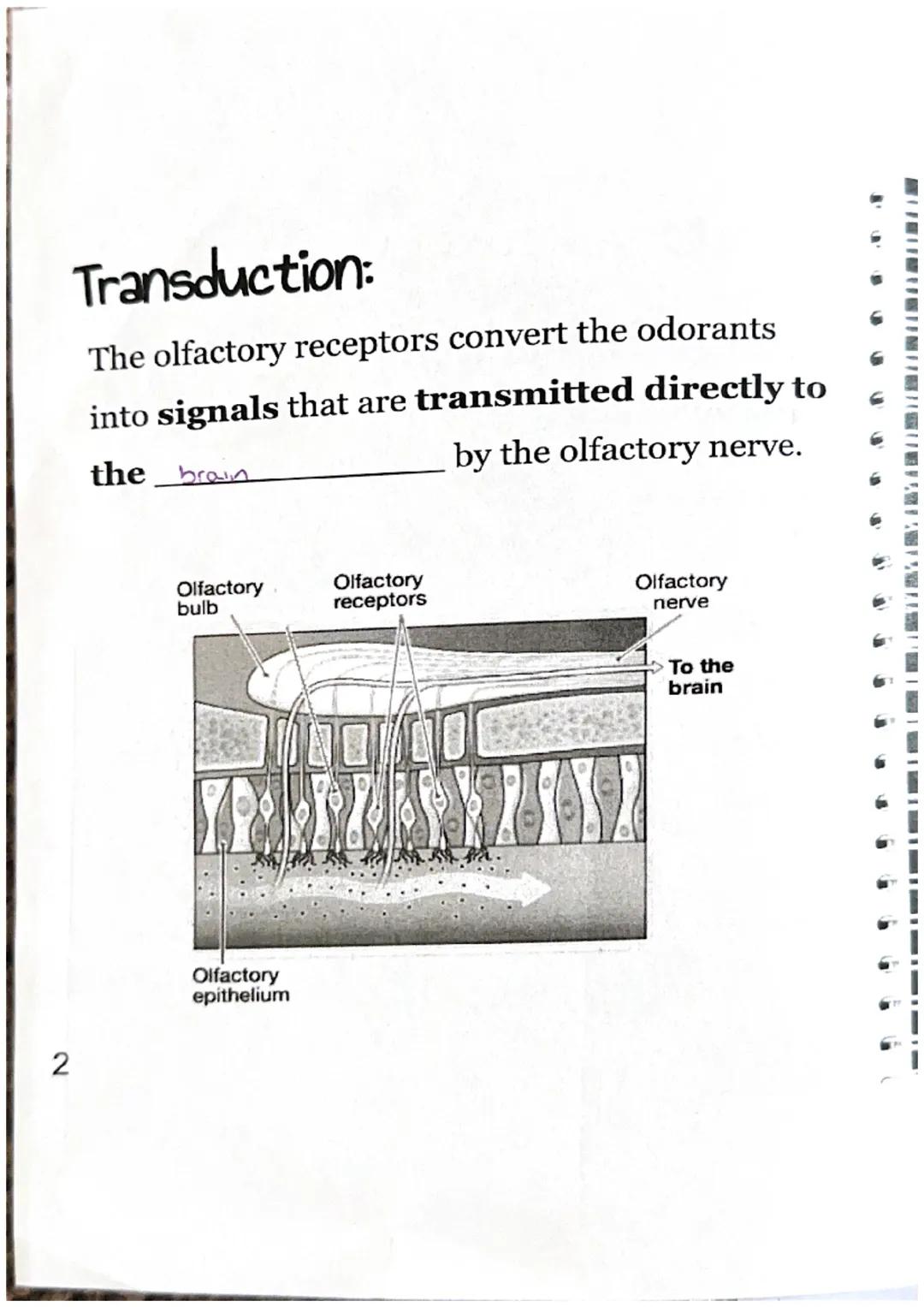
From Nose to Brain
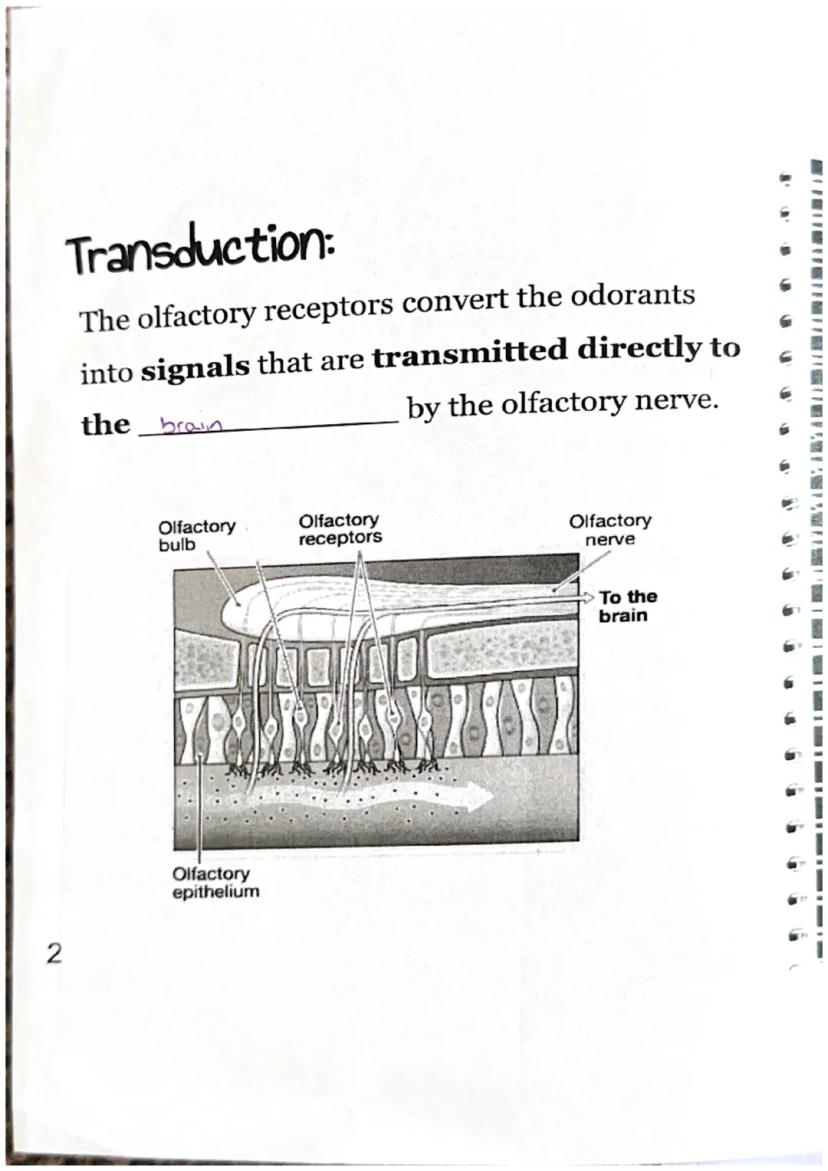
When odorants meet your olfactory receptors, the magic of transduction begins. This process converts chemical information (the odor molecules) into electrical signals your brain can understand.
These electrical signals travel through the olfactory nerve fibers, which connect directly to the olfactory bulb at the base of your brain. Think of this as your brain's smell-processing headquarters!
Unlike your other senses, smell information takes a direct route to your brain, which explains why smells can trigger such immediate reactions.
3
of 4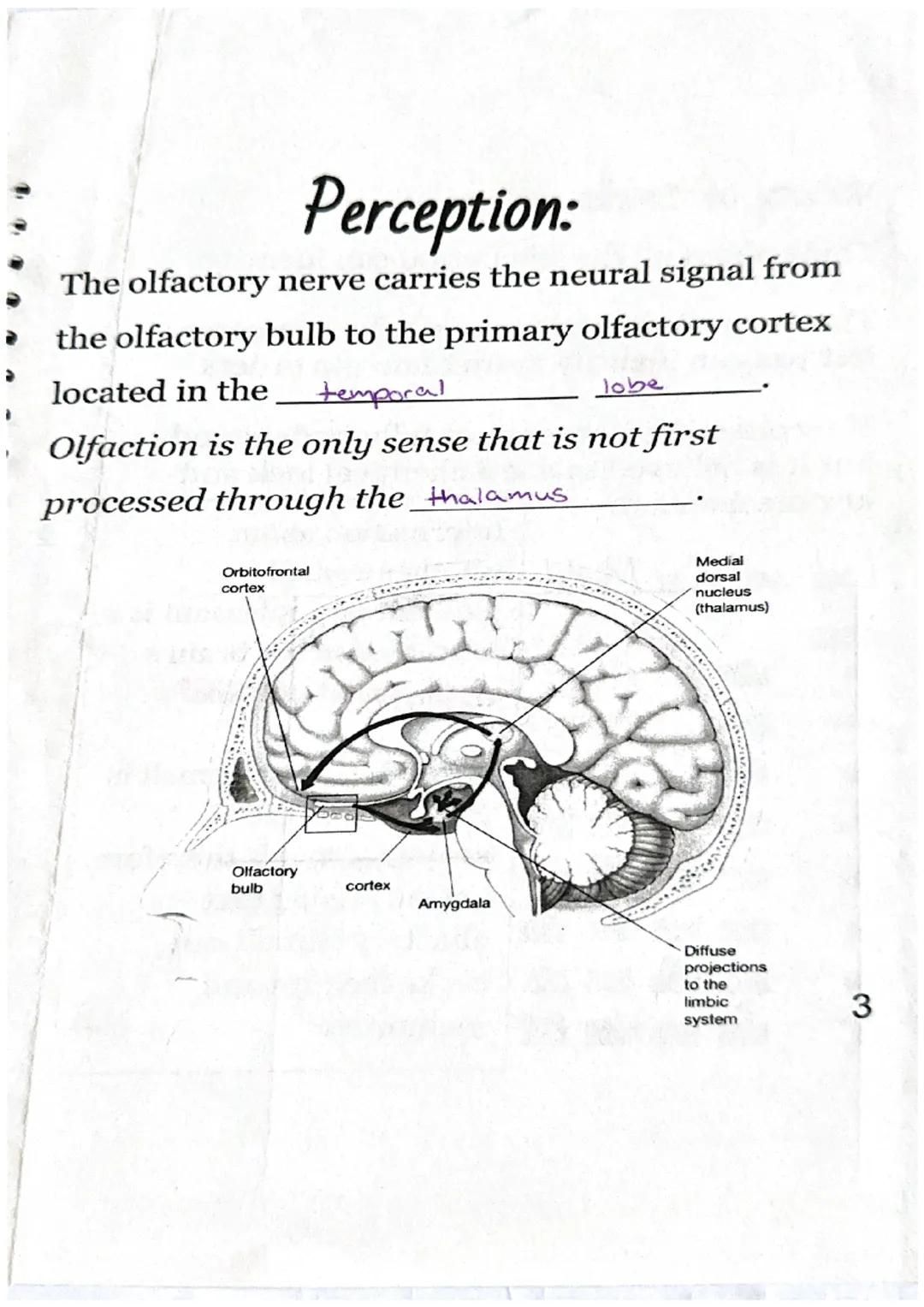
How Your Brain Processes Smell
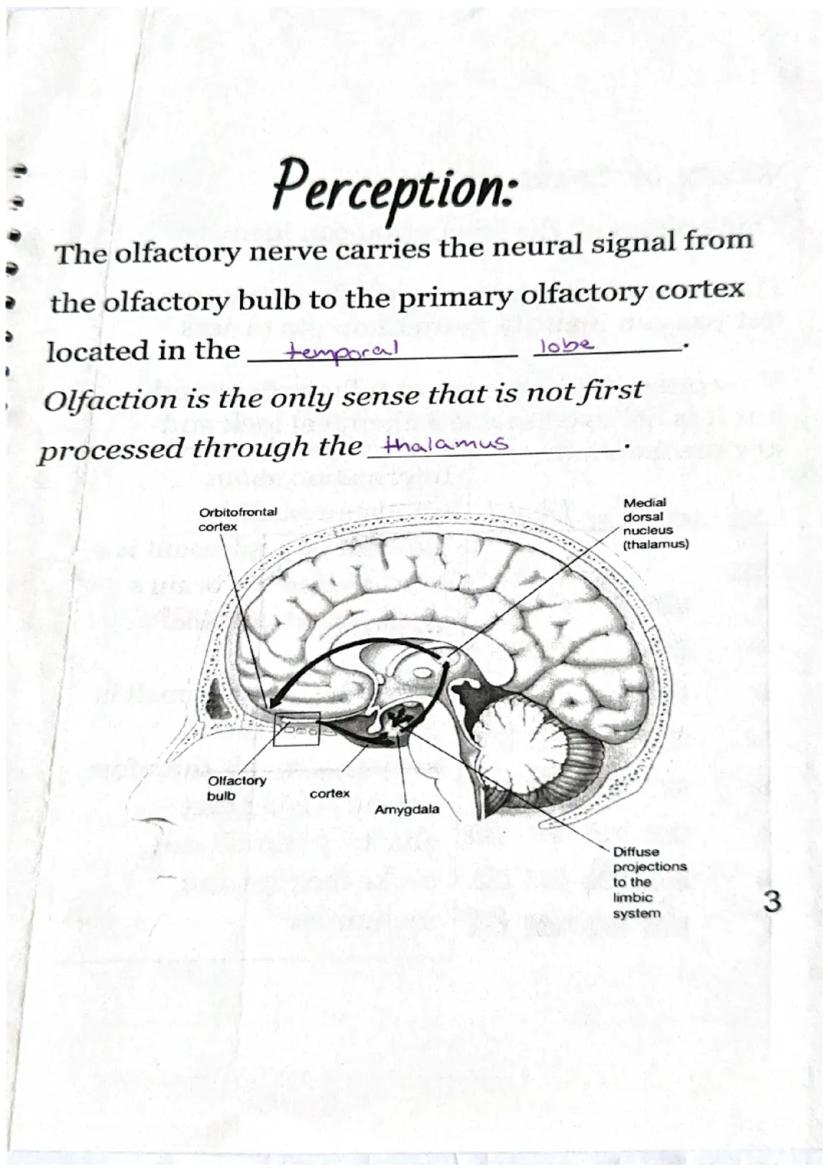
Your olfactory nerve carries smell signals from the olfactory bulb to the primary olfactory cortex in your temporal lobe. What makes smell unique is that it's the only sense that doesn't first pass through the thalamus (your brain's sensory relay station).
Instead, smell information travels directly to brain regions including the orbitofrontal cortex and the amygdala. These areas are part of your limbic system, which processes emotions and memories.
Remember This: The direct connection between smell and your brain's emotion centers explains why certain scents can instantly trigger powerful memories or feelings!
4
of 4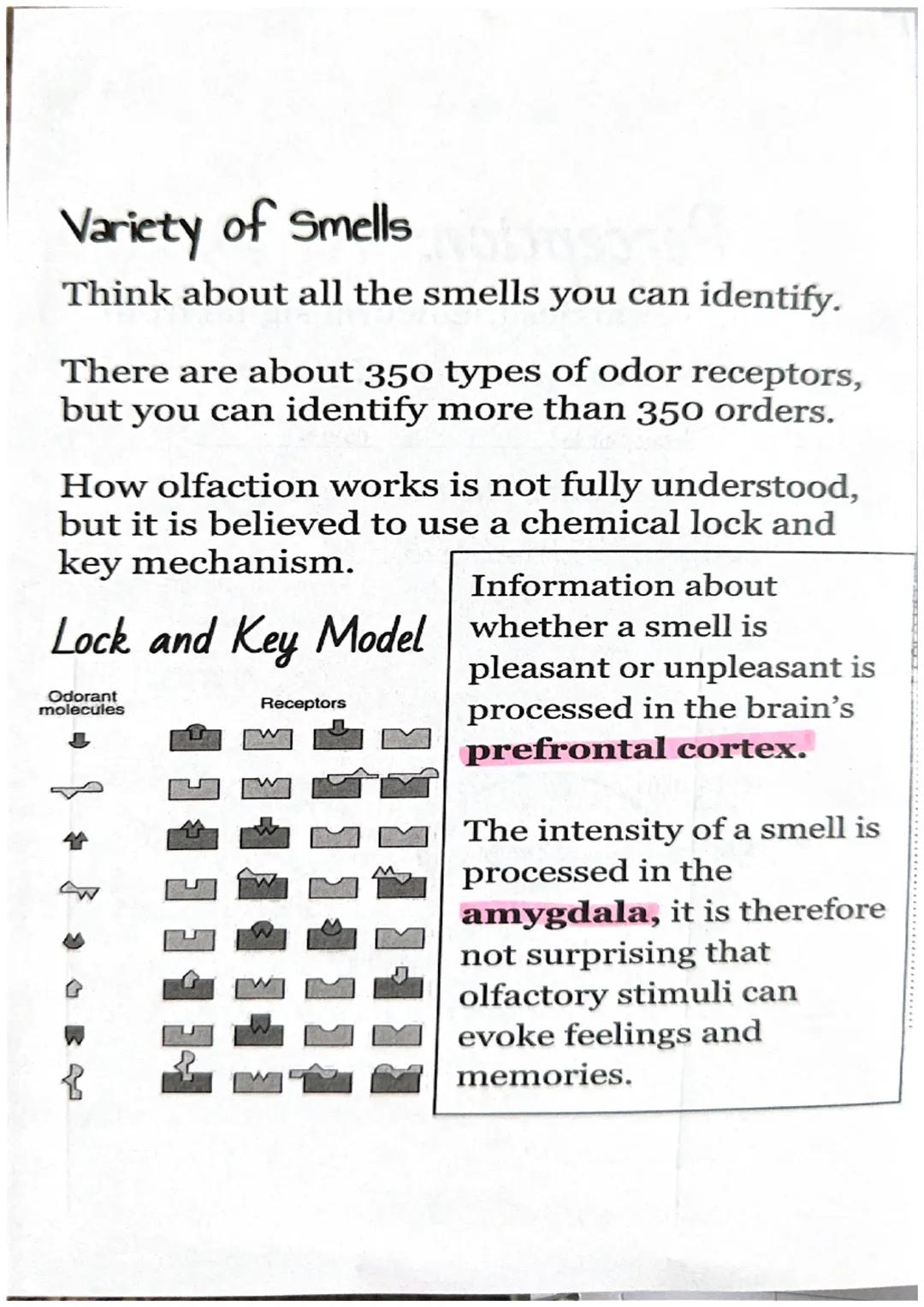
The Complexity of Smell
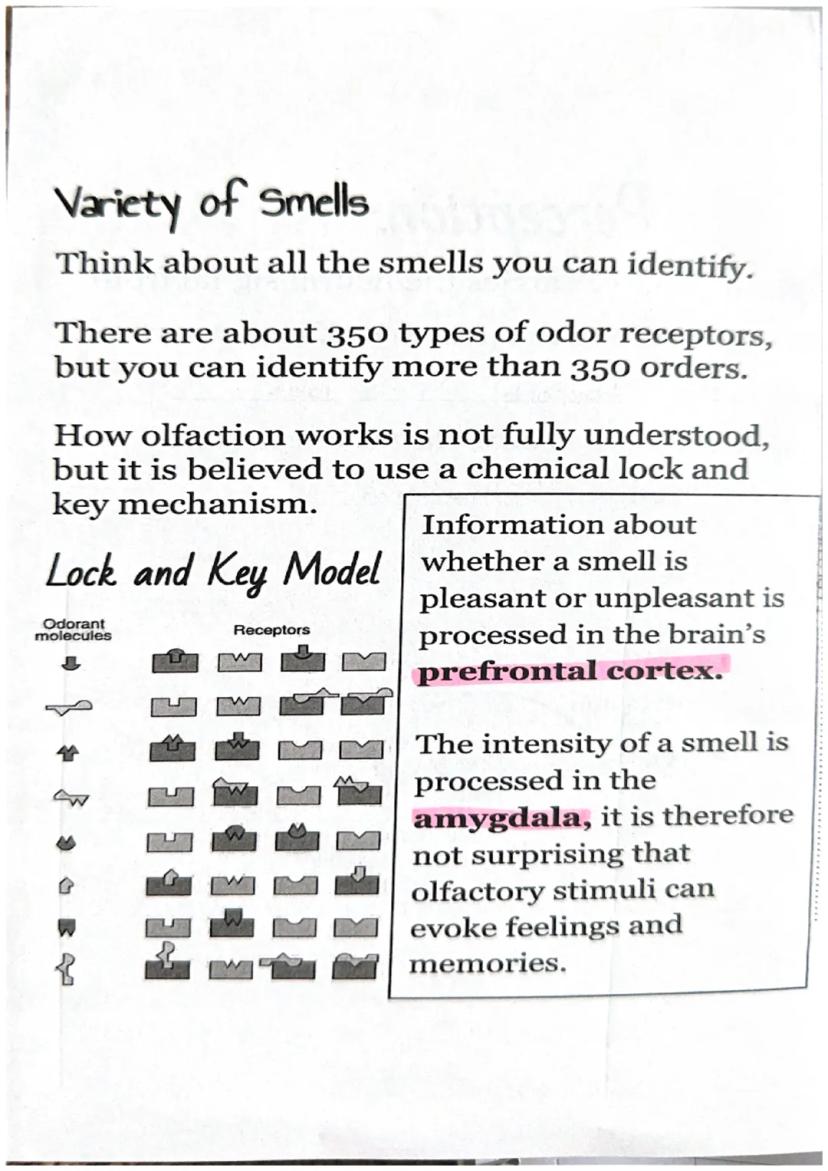
Amazingly, although you have only about 350 types of odor receptors, you can identify thousands of different smells. This works through a pattern recognition system, similar to how different combinations of musical notes create countless songs.
Scientists believe smell works through a lock and key mechanism where specific odor molecules fit into matching receptors, similar to how a key fits into a lock. When the right molecule finds its matching receptor, it triggers a signal.
Whether a smell seems pleasant or unpleasant gets processed in your brain's prefrontal cortex, while the smell's intensity is processed in the amygdala. This explains why powerful scents can instantly evoke strong emotions or vivid memories from your past.
We thought you’d never ask...
What is the Knowunity AI companion?
Our AI companion is specifically built for the needs of students. Based on the millions of content pieces we have on the platform we can provide truly meaningful and relevant answers to students. But its not only about answers, the companion is even more about guiding students through their daily learning challenges, with personalised study plans, quizzes or content pieces in the chat and 100% personalisation based on the students skills and developments.
Where can I download the Knowunity app?
You can download the app in the Google Play Store and in the Apple App Store.
Is Knowunity really free of charge?
That's right! Enjoy free access to study content, connect with fellow students, and get instant help – all at your fingertips.
Similar Content
Most popular content in Biology
9Most popular content
9Can't find what you're looking for? Explore other subjects.
Students love us — and so will you.
4.6/5App Store
4.7/5Google Play
The app is very easy to use and well designed. I have found everything I was looking for so far and have been able to learn a lot from the presentations! I will definitely use the app for a class assignment! And of course it also helps a lot as an inspiration.
Stefan SiOS user
This app is really great. There are so many study notes and help [...]. My problem subject is French, for example, and the app has so many options for help. Thanks to this app, I have improved my French. I would recommend it to anyone.
Samantha KlichAndroid user
Wow, I am really amazed. I just tried the app because I've seen it advertised many times and was absolutely stunned. This app is THE HELP you want for school and above all, it offers so many things, such as workouts and fact sheets, which have been VERY helpful to me personally.
AnnaiOS user
Biology15 views·Updated May 29, 2026·4 pagesUnderstanding Olfactory Neuroscience: The Science of Smell
moonsbby .@moonsbby._agqe
Dive into the fascinating world of olfaction - your sense of smell! This powerful sense not only helps you identify countless odors but also strongly connects to your emotions and memories. Understanding how smell works reveals why certain scents can... Show more
1
of 4Sign up to see the content. It's free!
- Access to all documents
- Improve your grades
- Join milions of students
The Beginning of Smell
Your sense of smell starts when gas molecules called odorants enter your nasal passage. These tiny molecules float through the air and make their way up your nose when you breathe.
Once inside, these odorants reach a specialized area called the olfactory epithelium, which lines part of your nasal cavity. This small patch of tissue contains millions of olfactory receptors - specialized sensory cells designed to detect different chemical compounds.
Fun Fact: Your nose can detect thousands of different odors, from the comforting smell of freshly baked cookies to the warning scent of something burning!
2
of 4Sign up to see the content. It's free!
- Access to all documents
- Improve your grades
- Join milions of students
From Nose to Brain
When odorants meet your olfactory receptors, the magic of transduction begins. This process converts chemical information (the odor molecules) into electrical signals your brain can understand.
These electrical signals travel through the olfactory nerve fibers, which connect directly to the olfactory bulb at the base of your brain. Think of this as your brain's smell-processing headquarters!
Unlike your other senses, smell information takes a direct route to your brain, which explains why smells can trigger such immediate reactions.
3
of 4Sign up to see the content. It's free!
- Access to all documents
- Improve your grades
- Join milions of students
How Your Brain Processes Smell
Your olfactory nerve carries smell signals from the olfactory bulb to the primary olfactory cortex in your temporal lobe. What makes smell unique is that it's the only sense that doesn't first pass through the thalamus (your brain's sensory relay station).
Instead, smell information travels directly to brain regions including the orbitofrontal cortex and the amygdala. These areas are part of your limbic system, which processes emotions and memories.
Remember This: The direct connection between smell and your brain's emotion centers explains why certain scents can instantly trigger powerful memories or feelings!
4
of 4Sign up to see the content. It's free!
- Access to all documents
- Improve your grades
- Join milions of students
The Complexity of Smell
Amazingly, although you have only about 350 types of odor receptors, you can identify thousands of different smells. This works through a pattern recognition system, similar to how different combinations of musical notes create countless songs.
Scientists believe smell works through a lock and key mechanism where specific odor molecules fit into matching receptors, similar to how a key fits into a lock. When the right molecule finds its matching receptor, it triggers a signal.
Whether a smell seems pleasant or unpleasant gets processed in your brain's prefrontal cortex, while the smell's intensity is processed in the amygdala. This explains why powerful scents can instantly evoke strong emotions or vivid memories from your past.
We thought you’d never ask...
What is the Knowunity AI companion?
Our AI companion is specifically built for the needs of students. Based on the millions of content pieces we have on the platform we can provide truly meaningful and relevant answers to students. But its not only about answers, the companion is even more about guiding students through their daily learning challenges, with personalised study plans, quizzes or content pieces in the chat and 100% personalisation based on the students skills and developments.
Where can I download the Knowunity app?
You can download the app in the Google Play Store and in the Apple App Store.
Is Knowunity really free of charge?
That's right! Enjoy free access to study content, connect with fellow students, and get instant help – all at your fingertips.
Similar Content
Most popular content in Biology
9Most popular content
9Can't find what you're looking for? Explore other subjects.
Students love us — and so will you.
4.6/5App Store
4.7/5Google Play
The app is very easy to use and well designed. I have found everything I was looking for so far and have been able to learn a lot from the presentations! I will definitely use the app for a class assignment! And of course it also helps a lot as an inspiration.
Stefan SiOS user
This app is really great. There are so many study notes and help [...]. My problem subject is French, for example, and the app has so many options for help. Thanks to this app, I have improved my French. I would recommend it to anyone.
Samantha KlichAndroid user
Wow, I am really amazed. I just tried the app because I've seen it advertised many times and was absolutely stunned. This app is THE HELP you want for school and above all, it offers so many things, such as workouts and fact sheets, which have been VERY helpful to me personally.
AnnaiOS user