

Ever wondered how your body keeps you alive and functioning?... Show more
 Biology61 views·Updated May 22, 2026·4 pages
Understanding the Human Body Systems


1 / 4
1
of 4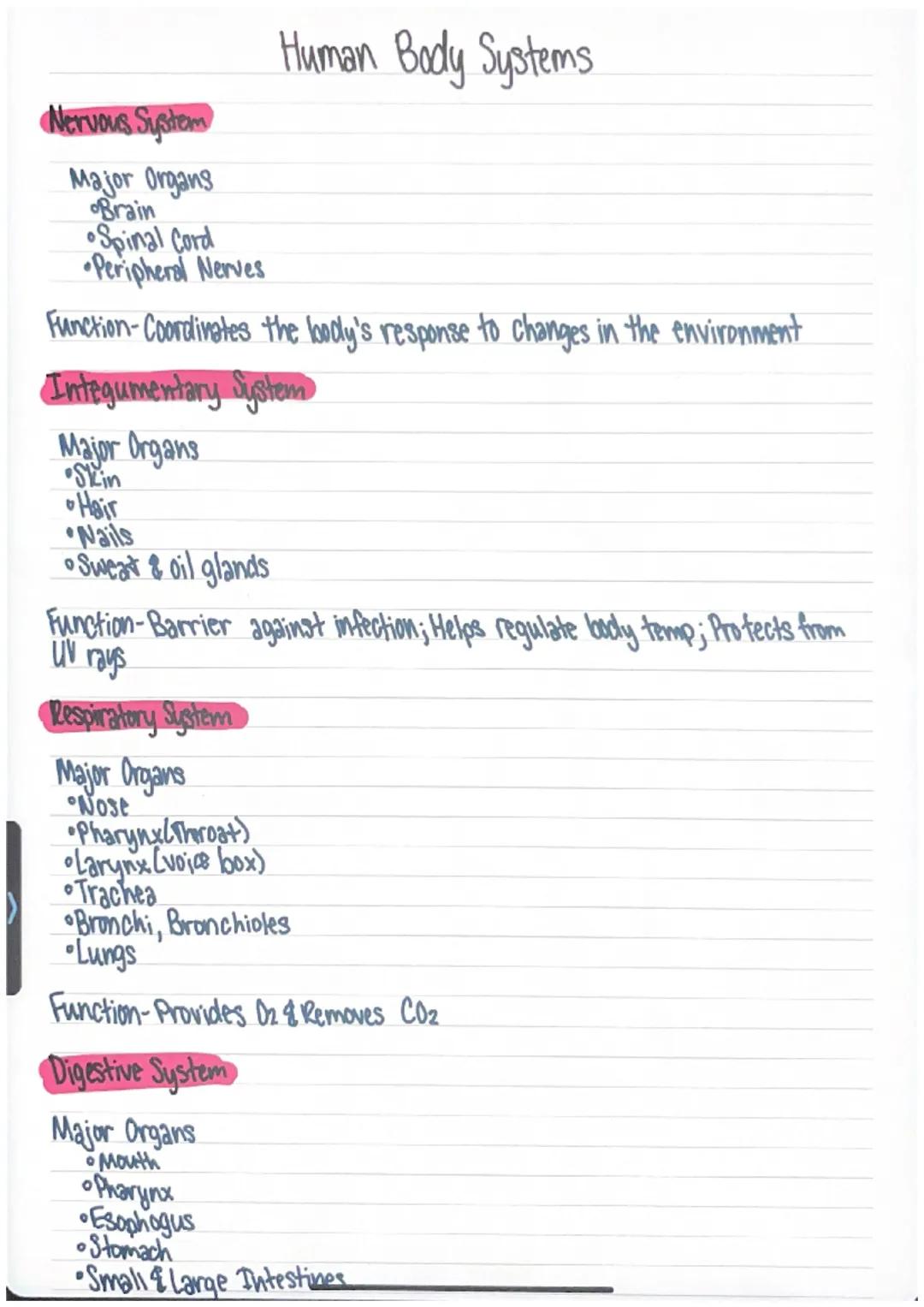
Human Body Systems: Part 1
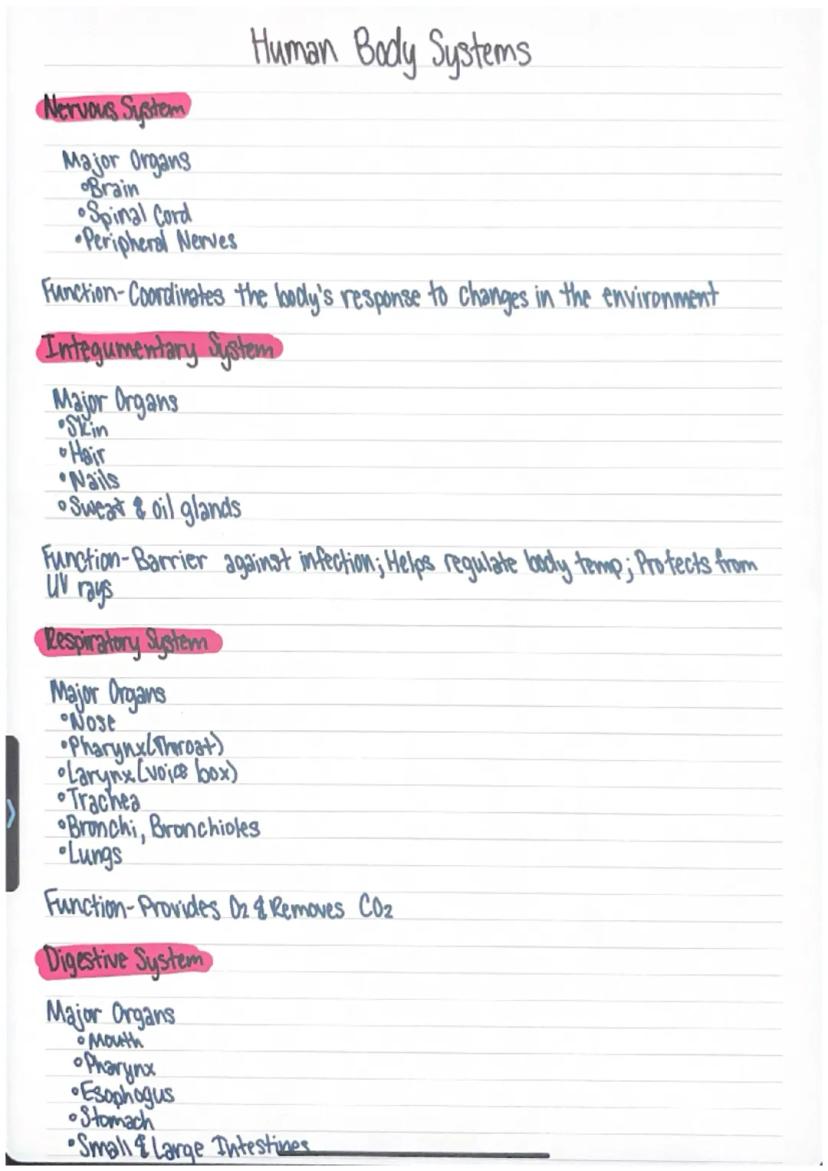
The nervous system acts as your body's command center. Your brain, spinal cord, and peripheral nerves coordinate how you respond to your environment, from feeling pain to controlling your movements.
Your integumentary system is more than just skin deep. This system forms a protective barrier against infection, regulates your body temperature through sweat, and shields you from harmful UV rays.
The respiratory system keeps you breathing. Through your nose, throat, voice box, trachea, and lungs, this system brings oxygen into your body and removes carbon dioxide – essentially powering all your cells.
When you eat, your digestive system takes over. Starting at your mouth and continuing through your esophagus, stomach, and intestines, this system breaks down food into nutrients your body can actually use.
Fun Fact: Your skin (part of the integumentary system) is actually your body's largest organ, covering about 20 square feet for the average adult!
2
of 4
Human Body Systems: Part 2
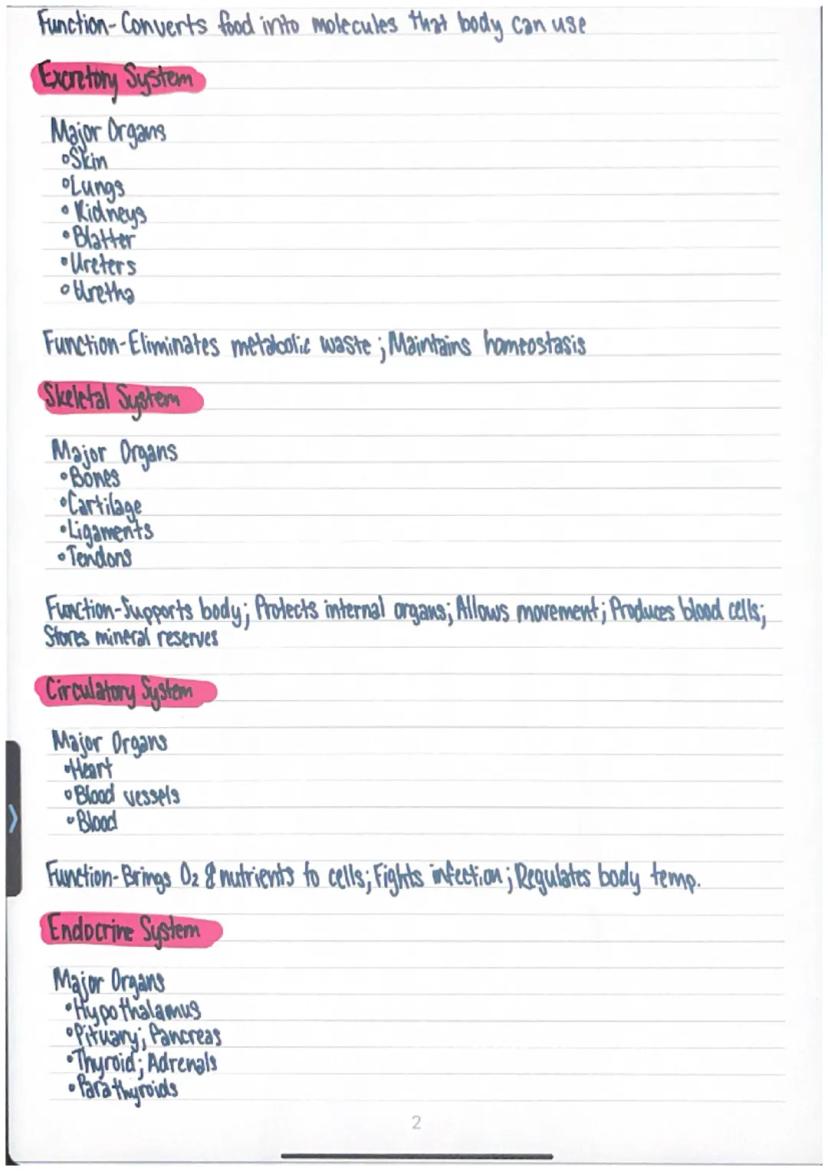
The excretory system works like your body's cleanup crew. Your skin, lungs, kidneys, and bladder team up to eliminate waste products and maintain the right balance of water and minerals in your body.
Your skeletal system isn't just for Halloween decorations! The 206 bones in your body, along with cartilage, ligaments, and tendons, provide structure, protect vital organs, enable movement, produce blood cells, and store essential minerals.
The circulatory system is your body's delivery service. Your heart pumps blood through vessels to bring oxygen and nutrients to cells, fight infections, and regulate body temperature.
Your endocrine system is like a chemical messenger network. Glands like the pituitary, thyroid, and pancreas release hormones that control growth, metabolism, development, and reproduction.
Remember: The circulatory and respiratory systems work closely together - your heart pumps blood to your lungs to pick up oxygen, which is then delivered to all your cells!
3
of 4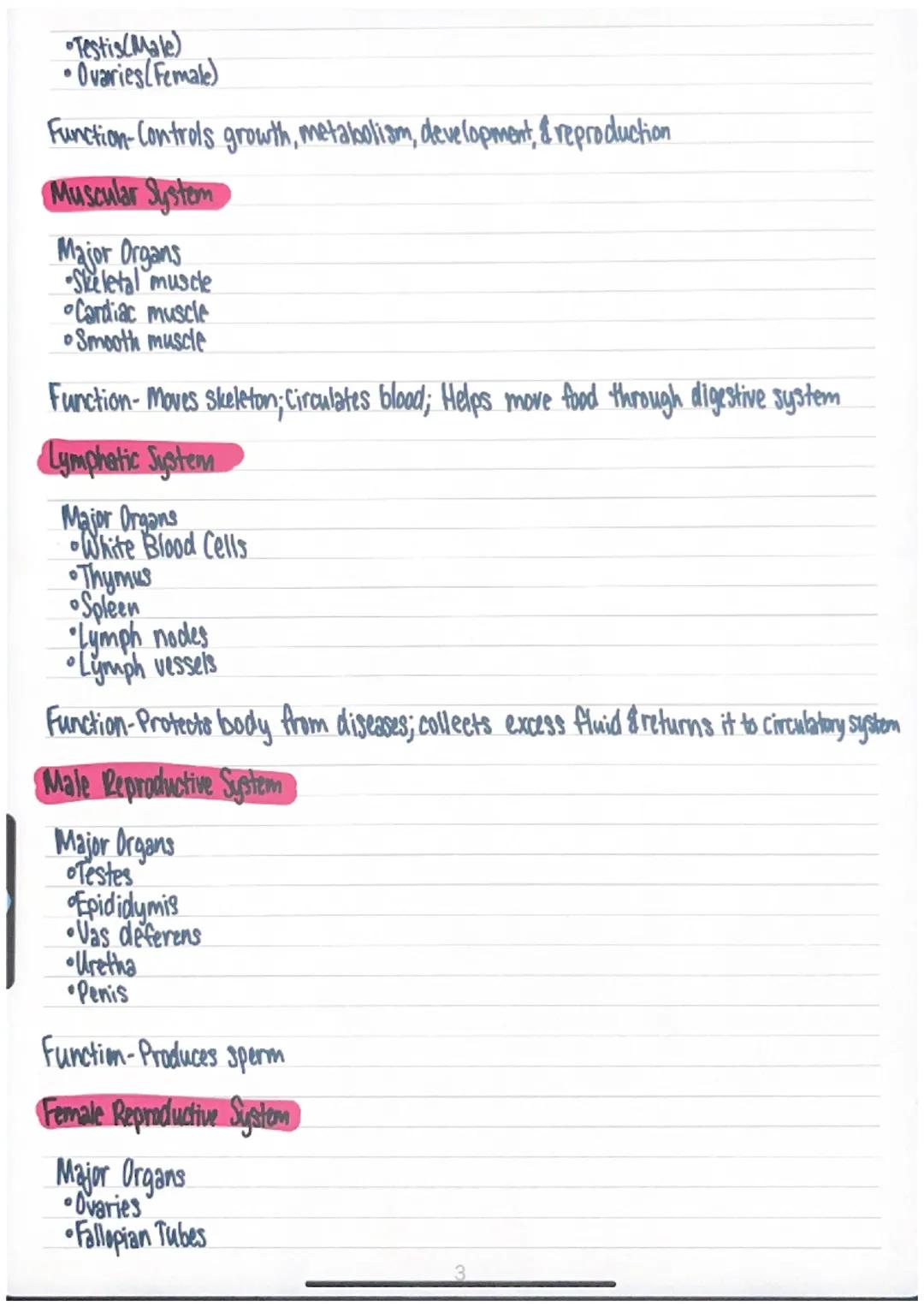
Human Body Systems: Part 3
The muscular system puts the "move" in your movements. Made up of skeletal muscle (which moves your bones), cardiac muscle (in your heart), and smooth muscle (in organs), this system enables everything from walking to digesting food.
Your lymphatic system serves as your body's defense department. White blood cells, the thymus, spleen, lymph nodes, and vessels work together to protect you from diseases and return excess fluid to your bloodstream.
The male reproductive system is designed for reproduction. The testes produce sperm, which travel through the epididymis, vas deferens, and urethra before leaving the body through the penis.
Did You Know? Your muscular system includes about 600 muscles that make up approximately 40% of your body weight!
4
of 4
Human Body Systems: Part 4
The female reproductive system completes our tour of body systems. Ovaries produce egg cells, which can travel through the fallopian tubes to the uterus. This remarkable system not only creates eggs but also provides protection and nourishment for developing embryos.
Both reproductive systems are essential for human continuation, though they function quite differently. While the male system continuously produces sperm, the female system releases eggs cyclically and has the capacity to support a growing human life.
Understanding how these systems work together helps explain how your body functions as a unified whole. Each system depends on others to keep you healthy, growing, and alive.
Amazing Fact: The female body is already born with all the egg cells it will ever have , unlike males who produce new sperm throughout their lives!
We thought you’d never ask...
What is the Knowunity AI companion?
Our AI companion is specifically built for the needs of students. Based on the millions of content pieces we have on the platform we can provide truly meaningful and relevant answers to students. But its not only about answers, the companion is even more about guiding students through their daily learning challenges, with personalised study plans, quizzes or content pieces in the chat and 100% personalisation based on the students skills and developments.
Where can I download the Knowunity app?
You can download the app in the Google Play Store and in the Apple App Store.
Is Knowunity really free of charge?
That's right! Enjoy free access to study content, connect with fellow students, and get instant help – all at your fingertips.
Similar Content
Most popular content in Biology
9Most popular content
9Can't find what you're looking for? Explore other subjects.
Students love us — and so will you.
4.6/5App Store
4.7/5Google Play
The app is very easy to use and well designed. I have found everything I was looking for so far and have been able to learn a lot from the presentations! I will definitely use the app for a class assignment! And of course it also helps a lot as an inspiration.
Stefan SiOS user
This app is really great. There are so many study notes and help [...]. My problem subject is French, for example, and the app has so many options for help. Thanks to this app, I have improved my French. I would recommend it to anyone.
Samantha KlichAndroid user
Wow, I am really amazed. I just tried the app because I've seen it advertised many times and was absolutely stunned. This app is THE HELP you want for school and above all, it offers so many things, such as workouts and fact sheets, which have been VERY helpful to me personally.
AnnaiOS user
Biology61 views·Updated May 22, 2026·4 pagesUnderstanding the Human Body Systems
Ever wondered how your body keeps you alive and functioning? The human body is made up of interconnected systems, each with specific organs and functions. Understanding these systems helps us see how our bodies work together like a well-coordinated team.
1
of 4Sign up to see the content. It's free!
- Access to all documents
- Improve your grades
- Join milions of students
Human Body Systems: Part 1
The nervous system acts as your body's command center. Your brain, spinal cord, and peripheral nerves coordinate how you respond to your environment, from feeling pain to controlling your movements.
Your integumentary system is more than just skin deep. This system forms a protective barrier against infection, regulates your body temperature through sweat, and shields you from harmful UV rays.
The respiratory system keeps you breathing. Through your nose, throat, voice box, trachea, and lungs, this system brings oxygen into your body and removes carbon dioxide – essentially powering all your cells.
When you eat, your digestive system takes over. Starting at your mouth and continuing through your esophagus, stomach, and intestines, this system breaks down food into nutrients your body can actually use.
Fun Fact: Your skin (part of the integumentary system) is actually your body's largest organ, covering about 20 square feet for the average adult!
2
of 4Sign up to see the content. It's free!
- Access to all documents
- Improve your grades
- Join milions of students
Human Body Systems: Part 2
The excretory system works like your body's cleanup crew. Your skin, lungs, kidneys, and bladder team up to eliminate waste products and maintain the right balance of water and minerals in your body.
Your skeletal system isn't just for Halloween decorations! The 206 bones in your body, along with cartilage, ligaments, and tendons, provide structure, protect vital organs, enable movement, produce blood cells, and store essential minerals.
The circulatory system is your body's delivery service. Your heart pumps blood through vessels to bring oxygen and nutrients to cells, fight infections, and regulate body temperature.
Your endocrine system is like a chemical messenger network. Glands like the pituitary, thyroid, and pancreas release hormones that control growth, metabolism, development, and reproduction.
Remember: The circulatory and respiratory systems work closely together - your heart pumps blood to your lungs to pick up oxygen, which is then delivered to all your cells!
3
of 4Sign up to see the content. It's free!
- Access to all documents
- Improve your grades
- Join milions of students
Human Body Systems: Part 3
The muscular system puts the "move" in your movements. Made up of skeletal muscle (which moves your bones), cardiac muscle (in your heart), and smooth muscle (in organs), this system enables everything from walking to digesting food.
Your lymphatic system serves as your body's defense department. White blood cells, the thymus, spleen, lymph nodes, and vessels work together to protect you from diseases and return excess fluid to your bloodstream.
The male reproductive system is designed for reproduction. The testes produce sperm, which travel through the epididymis, vas deferens, and urethra before leaving the body through the penis.
Did You Know? Your muscular system includes about 600 muscles that make up approximately 40% of your body weight!
4
of 4Sign up to see the content. It's free!
- Access to all documents
- Improve your grades
- Join milions of students
Human Body Systems: Part 4
The female reproductive system completes our tour of body systems. Ovaries produce egg cells, which can travel through the fallopian tubes to the uterus. This remarkable system not only creates eggs but also provides protection and nourishment for developing embryos.
Both reproductive systems are essential for human continuation, though they function quite differently. While the male system continuously produces sperm, the female system releases eggs cyclically and has the capacity to support a growing human life.
Understanding how these systems work together helps explain how your body functions as a unified whole. Each system depends on others to keep you healthy, growing, and alive.
Amazing Fact: The female body is already born with all the egg cells it will ever have , unlike males who produce new sperm throughout their lives!
We thought you’d never ask...
What is the Knowunity AI companion?
Our AI companion is specifically built for the needs of students. Based on the millions of content pieces we have on the platform we can provide truly meaningful and relevant answers to students. But its not only about answers, the companion is even more about guiding students through their daily learning challenges, with personalised study plans, quizzes or content pieces in the chat and 100% personalisation based on the students skills and developments.
Where can I download the Knowunity app?
You can download the app in the Google Play Store and in the Apple App Store.
Is Knowunity really free of charge?
That's right! Enjoy free access to study content, connect with fellow students, and get instant help – all at your fingertips.
Similar Content
Most popular content in Biology
9Most popular content
9Can't find what you're looking for? Explore other subjects.
Students love us — and so will you.
4.6/5App Store
4.7/5Google Play
The app is very easy to use and well designed. I have found everything I was looking for so far and have been able to learn a lot from the presentations! I will definitely use the app for a class assignment! And of course it also helps a lot as an inspiration.
Stefan SiOS user
This app is really great. There are so many study notes and help [...]. My problem subject is French, for example, and the app has so many options for help. Thanks to this app, I have improved my French. I would recommend it to anyone.
Samantha KlichAndroid user
Wow, I am really amazed. I just tried the app because I've seen it advertised many times and was absolutely stunned. This app is THE HELP you want for school and above all, it offers so many things, such as workouts and fact sheets, which have been VERY helpful to me personally.
AnnaiOS user