
Dive into the fascinating world of cells and their life... Show more
 Biology126 views·Updated May 19, 2026·4 pages
Understanding the Cell Cycle and Cancer Risks: Biology Unit 5 Case Study

Annika@amoreiousme
1 / 4
1
of 4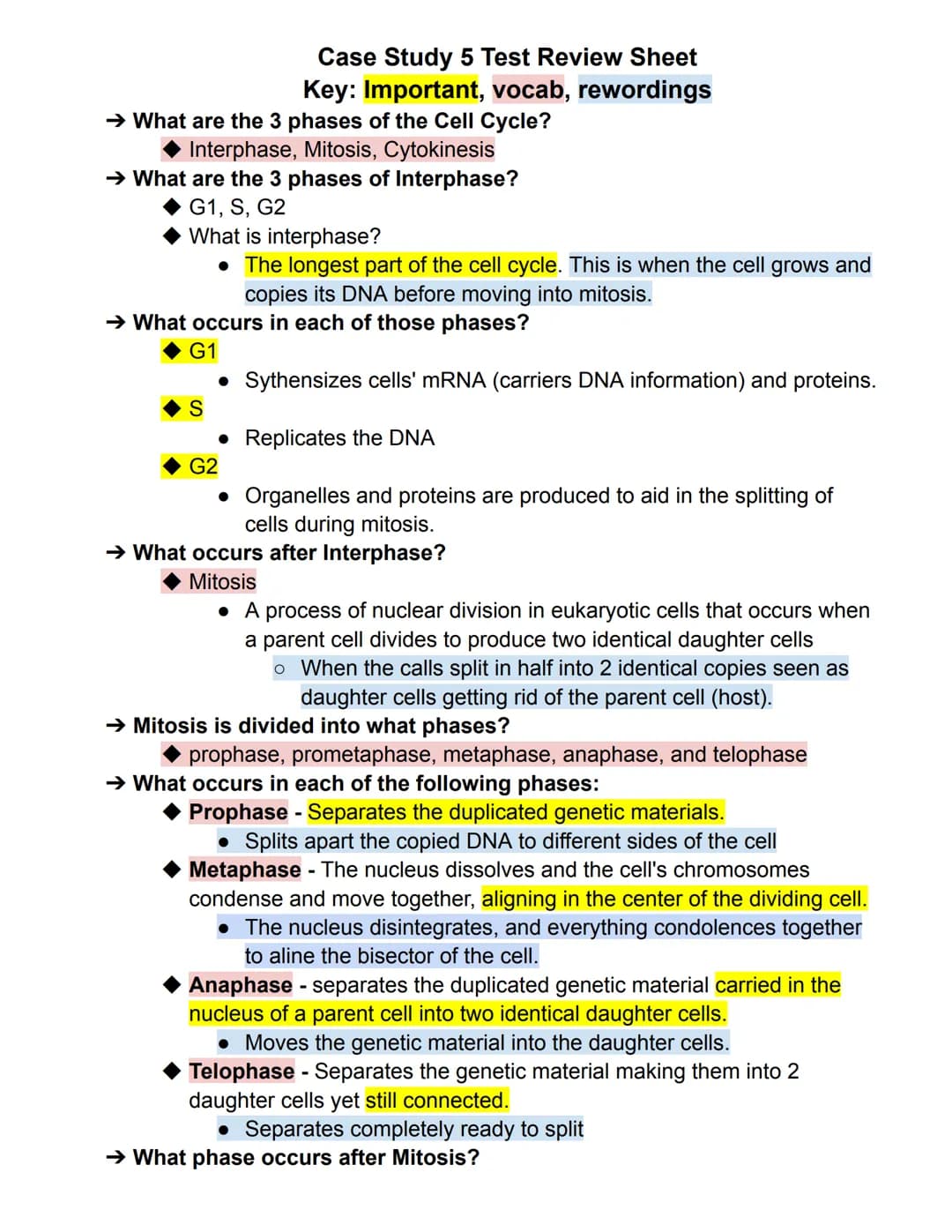
The Cell Cycle and Mitosis
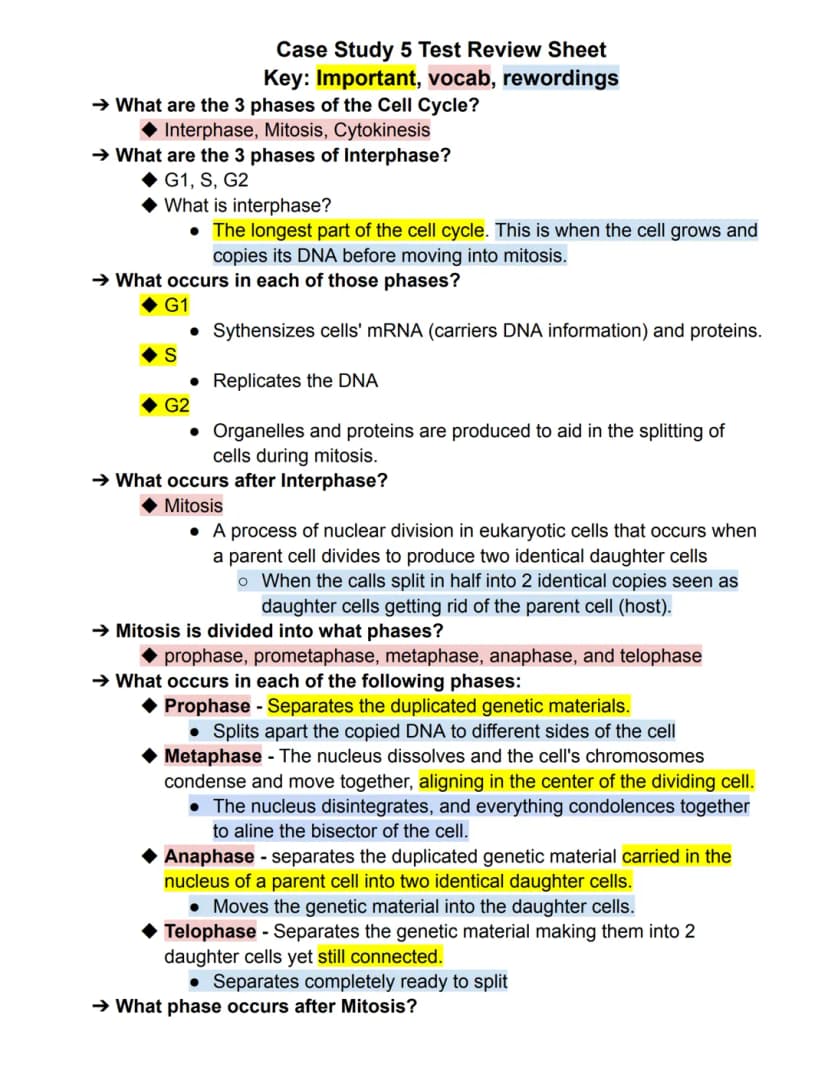
The cell cycle consists of three main phases: Interphase, Mitosis, and Cytokinesis. Interphase is the longest part, where cells grow and prepare for division.
Interphase breaks down into three stages: G1 (where cells synthesize mRNA and proteins), S (where DNA replication occurs), and G2 (where organelles and proteins are produced to help with cell division). Think of this as the cell's "preparation time" before the main event.
After interphase comes mitosis, where the parent cell divides to create two identical daughter cells. Mitosis progresses through several phases: prophase (separates duplicated genetic materials), metaphase (nucleus dissolves and chromosomes align in the center), anaphase (genetic material moves to opposite sides), and telophase (genetic material separates into two daughter cells).
Quick Tip: Remember the order of mitosis phases with the acronym PMAT: Prophase, Metaphase, Anaphase, Telophase.
2
of 4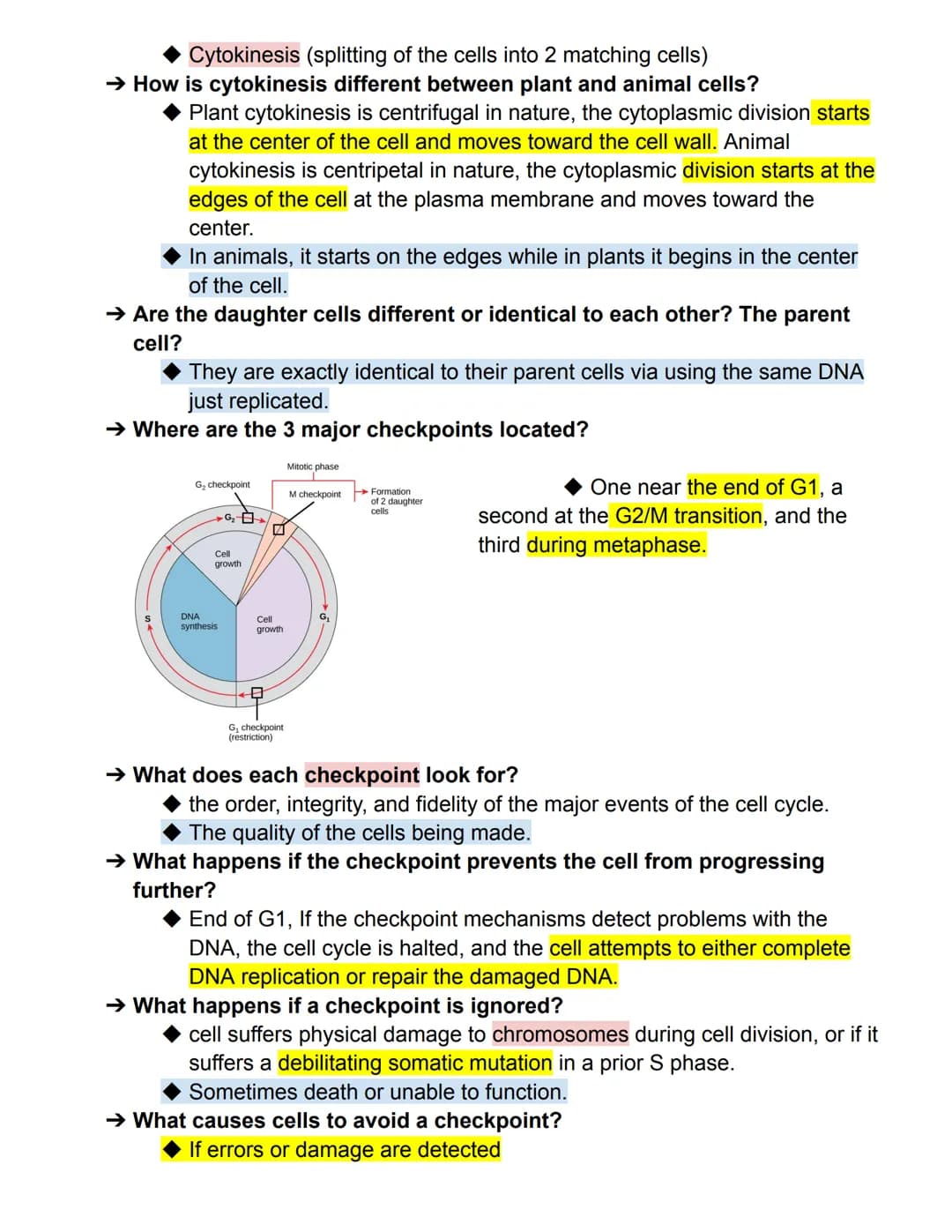
Cytokinesis and Cell Cycle Checkpoints
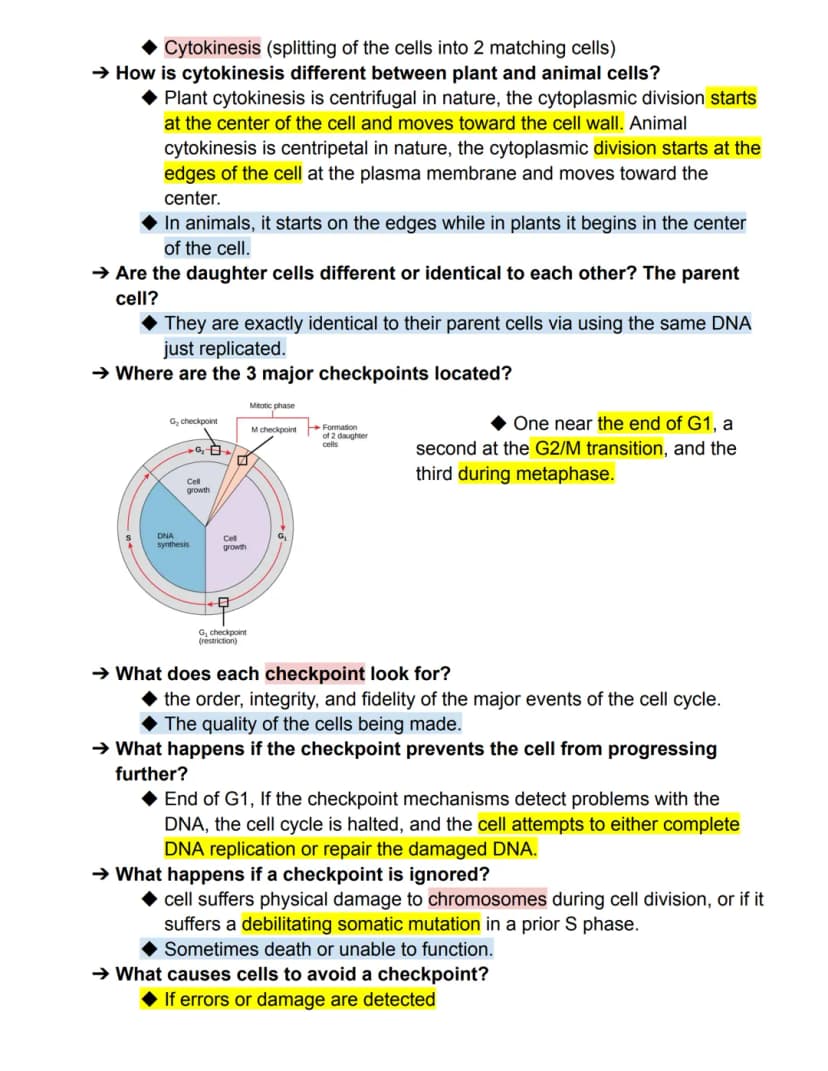
Following mitosis comes cytokinesis - the physical splitting of one cell into two identical daughter cells. Plant and animal cells handle this differently: in animal cells, division starts at the edges and moves inward, while plant cells begin division at the center and move outward.
The cell cycle has three major checkpoints that ensure everything runs smoothly. These occur near the end of G1, at the G2/M transition, and during metaphase. These checkpoints examine the "order, integrity, and fidelity" of cell division events - basically, they're quality control systems.
If a checkpoint detects problems with the DNA, the cell cycle halts while the cell attempts to repair the damage. But what happens if these checkpoints get ignored? The cell might suffer damage to chromosomes or mutations that can lead to serious problems or even cell death.
Important: Think of checkpoints like traffic lights - they keep cellular traffic moving safely and prevent accidents that could damage the cell's DNA.
3
of 4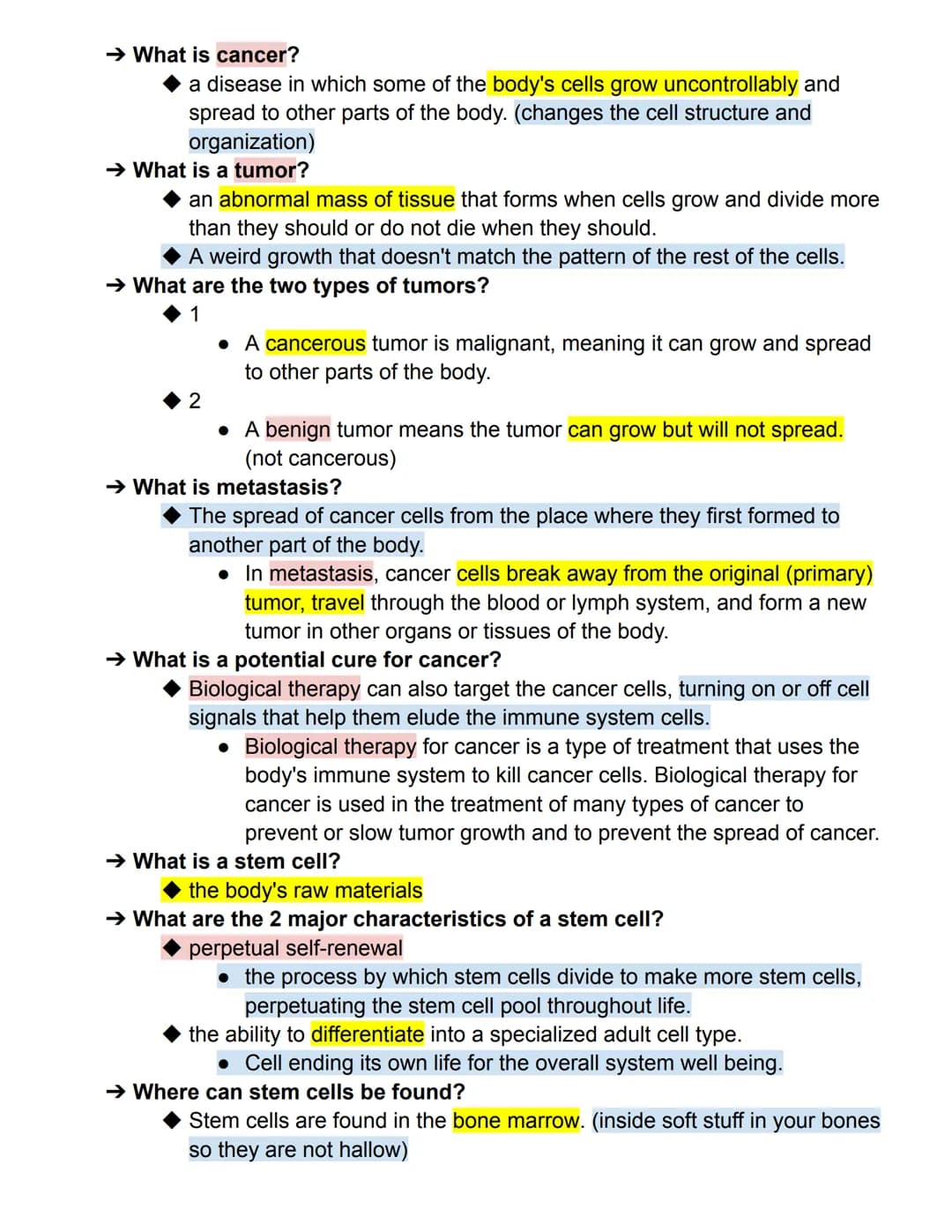
Cancer and Tumors
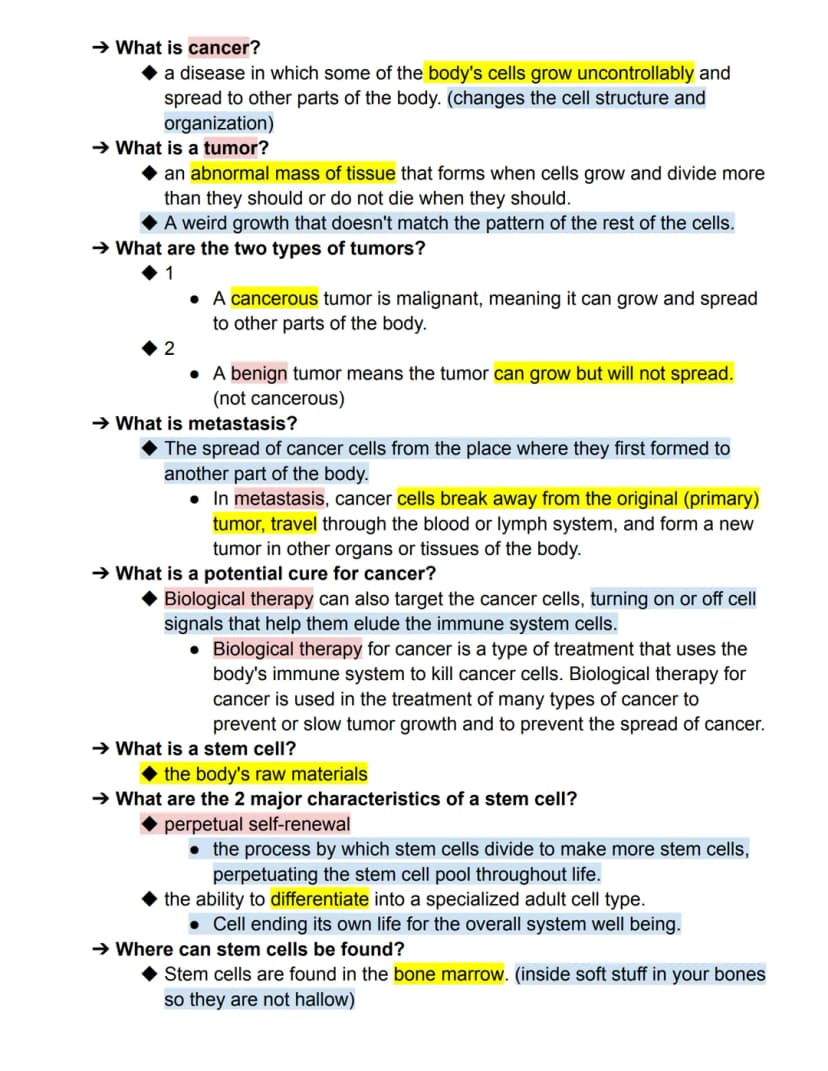
Cancer occurs when cells grow uncontrollably and spread throughout the body. These abnormal growths form tumors - masses of tissue that don't follow normal growth patterns.
Tumors come in two types: malignant (cancerous) tumors can grow and spread to other body parts through a process called metastasis. Benign tumors can grow but don't spread to other areas. During metastasis, cancer cells break away from the original tumor and travel through the blood or lymph system to form new tumors elsewhere.
Potential cancer treatments include biological therapy, which uses the body's immune system to fight cancer cells. These treatments can target cancer cells by adjusting cell signals that help them evade immune system detection.
Real-world connection: Understanding how normal cell division works helps scientists develop treatments when things go wrong. Each cancer treatment targets a specific part of the abnormal cell division process!
4
of 4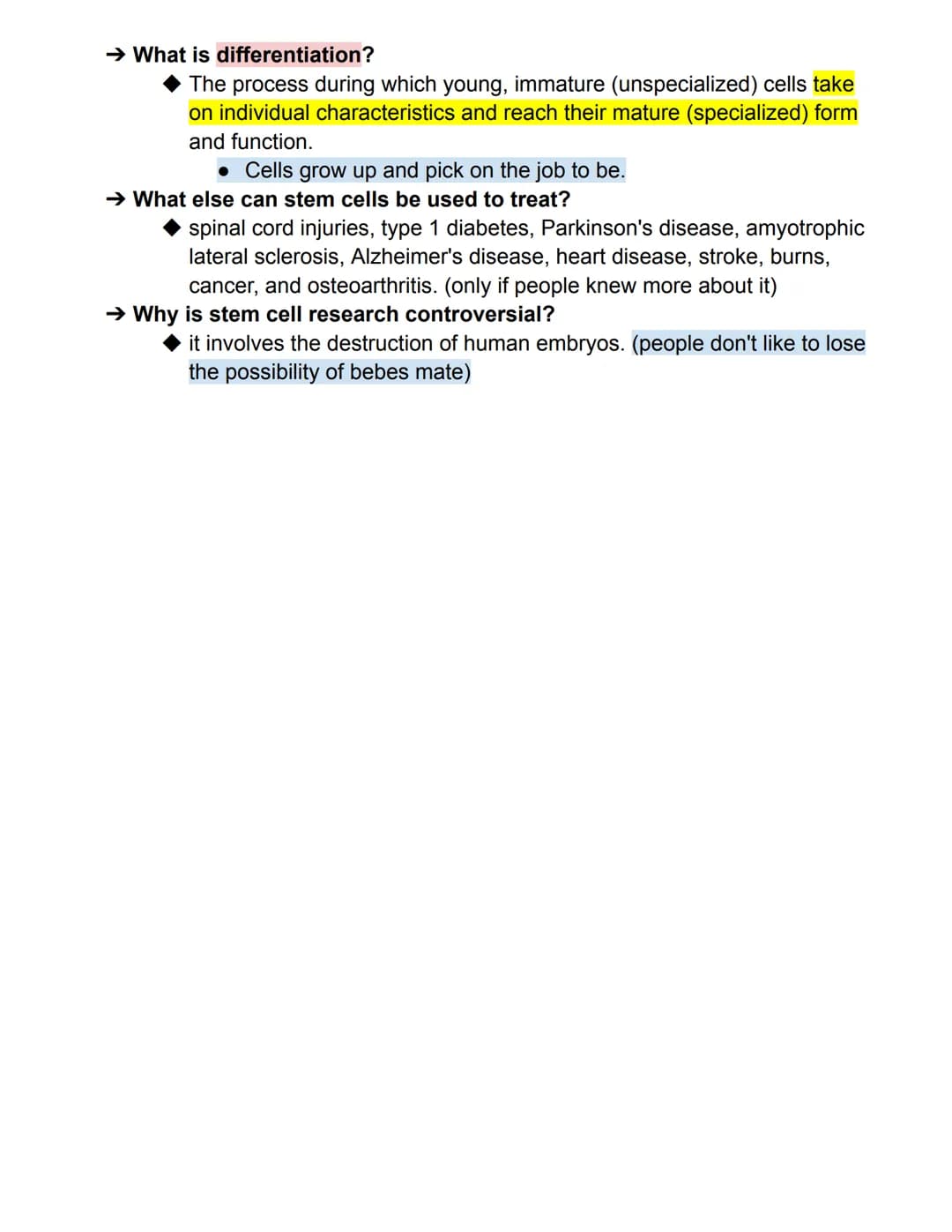
Stem Cells and Their Potential
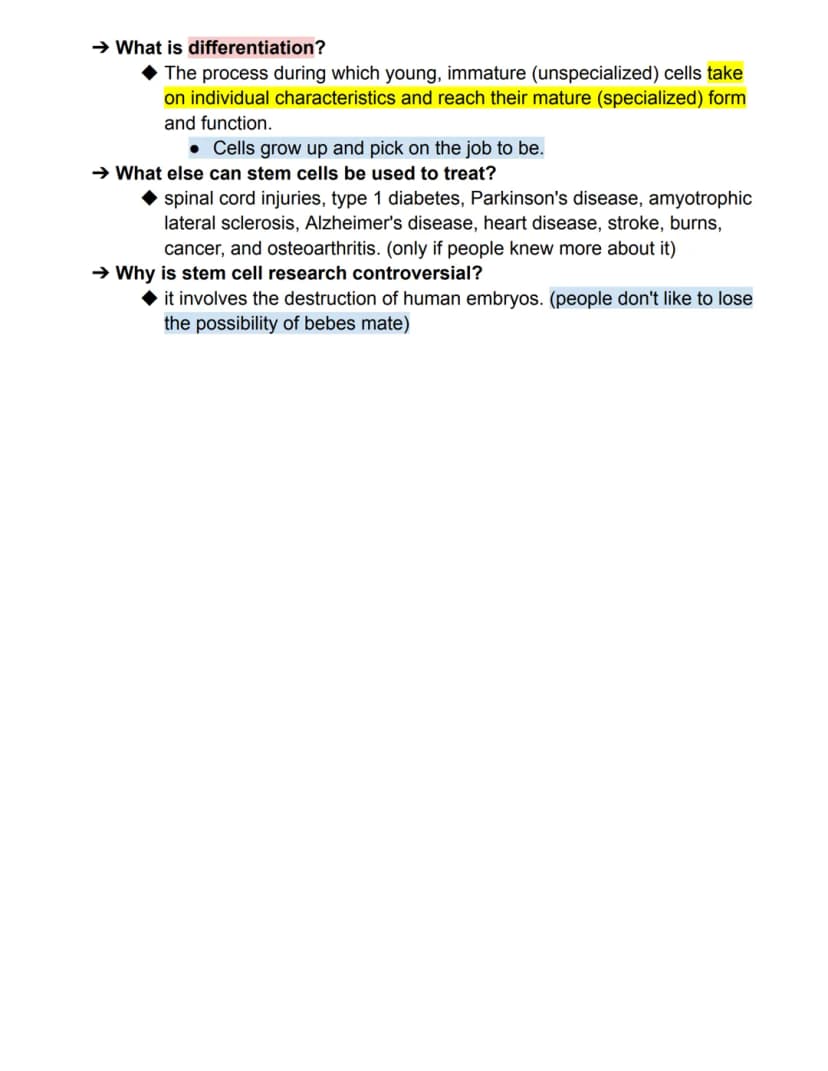
Stem cells are the body's raw materials - special cells with two amazing abilities: they can renew themselves through division and differentiate into specialized cell types. They're primarily found in bone marrow.
Differentiation is the process where young, unspecialized cells mature and take on specific characteristics and functions. Think of it like graduating from high school and choosing a specific career path!
Stem cells hold incredible potential for treating conditions like spinal cord injuries, diabetes, Parkinson's disease, Alzheimer's, heart disease, burns, and even cancer. However, stem cell research remains controversial because some methods involve the destruction of human embryos.
Think about it: Stem cells are like blank slates that can become virtually any cell in the body. How might this ability revolutionize medicine in your lifetime?
We thought you’d never ask...
What is the Knowunity AI companion?
Our AI companion is specifically built for the needs of students. Based on the millions of content pieces we have on the platform we can provide truly meaningful and relevant answers to students. But its not only about answers, the companion is even more about guiding students through their daily learning challenges, with personalised study plans, quizzes or content pieces in the chat and 100% personalisation based on the students skills and developments.
Where can I download the Knowunity app?
You can download the app in the Google Play Store and in the Apple App Store.
Is Knowunity really free of charge?
That's right! Enjoy free access to study content, connect with fellow students, and get instant help – all at your fingertips.
Similar Content
Most popular content in Biology
9Most popular content
9Can't find what you're looking for? Explore other subjects.
Students love us — and so will you.
4.6/5App Store
4.7/5Google Play
The app is very easy to use and well designed. I have found everything I was looking for so far and have been able to learn a lot from the presentations! I will definitely use the app for a class assignment! And of course it also helps a lot as an inspiration.
Stefan SiOS user
This app is really great. There are so many study notes and help [...]. My problem subject is French, for example, and the app has so many options for help. Thanks to this app, I have improved my French. I would recommend it to anyone.
Samantha KlichAndroid user
Wow, I am really amazed. I just tried the app because I've seen it advertised many times and was absolutely stunned. This app is THE HELP you want for school and above all, it offers so many things, such as workouts and fact sheets, which have been VERY helpful to me personally.
AnnaiOS user
Biology126 views·Updated May 19, 2026·4 pagesUnderstanding the Cell Cycle and Cancer Risks: Biology Unit 5 Case Study
Annika@amoreiousme
Dive into the fascinating world of cells and their life cycle! This review covers how cells grow, divide, and the important checkpoints that keep this process running smoothly. You'll also learn about what happens when cell division goes wrong, leading... Show more
1
of 4Sign up to see the content. It's free!
- Access to all documents
- Improve your grades
- Join milions of students
The Cell Cycle and Mitosis
The cell cycle consists of three main phases: Interphase, Mitosis, and Cytokinesis. Interphase is the longest part, where cells grow and prepare for division.
Interphase breaks down into three stages: G1 (where cells synthesize mRNA and proteins), S (where DNA replication occurs), and G2 (where organelles and proteins are produced to help with cell division). Think of this as the cell's "preparation time" before the main event.
After interphase comes mitosis, where the parent cell divides to create two identical daughter cells. Mitosis progresses through several phases: prophase (separates duplicated genetic materials), metaphase (nucleus dissolves and chromosomes align in the center), anaphase (genetic material moves to opposite sides), and telophase (genetic material separates into two daughter cells).
Quick Tip: Remember the order of mitosis phases with the acronym PMAT: Prophase, Metaphase, Anaphase, Telophase.
2
of 4Sign up to see the content. It's free!
- Access to all documents
- Improve your grades
- Join milions of students
Cytokinesis and Cell Cycle Checkpoints
Following mitosis comes cytokinesis - the physical splitting of one cell into two identical daughter cells. Plant and animal cells handle this differently: in animal cells, division starts at the edges and moves inward, while plant cells begin division at the center and move outward.
The cell cycle has three major checkpoints that ensure everything runs smoothly. These occur near the end of G1, at the G2/M transition, and during metaphase. These checkpoints examine the "order, integrity, and fidelity" of cell division events - basically, they're quality control systems.
If a checkpoint detects problems with the DNA, the cell cycle halts while the cell attempts to repair the damage. But what happens if these checkpoints get ignored? The cell might suffer damage to chromosomes or mutations that can lead to serious problems or even cell death.
Important: Think of checkpoints like traffic lights - they keep cellular traffic moving safely and prevent accidents that could damage the cell's DNA.
3
of 4Sign up to see the content. It's free!
- Access to all documents
- Improve your grades
- Join milions of students
Cancer and Tumors
Cancer occurs when cells grow uncontrollably and spread throughout the body. These abnormal growths form tumors - masses of tissue that don't follow normal growth patterns.
Tumors come in two types: malignant (cancerous) tumors can grow and spread to other body parts through a process called metastasis. Benign tumors can grow but don't spread to other areas. During metastasis, cancer cells break away from the original tumor and travel through the blood or lymph system to form new tumors elsewhere.
Potential cancer treatments include biological therapy, which uses the body's immune system to fight cancer cells. These treatments can target cancer cells by adjusting cell signals that help them evade immune system detection.
Real-world connection: Understanding how normal cell division works helps scientists develop treatments when things go wrong. Each cancer treatment targets a specific part of the abnormal cell division process!
4
of 4Sign up to see the content. It's free!
- Access to all documents
- Improve your grades
- Join milions of students
Stem Cells and Their Potential
Stem cells are the body's raw materials - special cells with two amazing abilities: they can renew themselves through division and differentiate into specialized cell types. They're primarily found in bone marrow.
Differentiation is the process where young, unspecialized cells mature and take on specific characteristics and functions. Think of it like graduating from high school and choosing a specific career path!
Stem cells hold incredible potential for treating conditions like spinal cord injuries, diabetes, Parkinson's disease, Alzheimer's, heart disease, burns, and even cancer. However, stem cell research remains controversial because some methods involve the destruction of human embryos.
Think about it: Stem cells are like blank slates that can become virtually any cell in the body. How might this ability revolutionize medicine in your lifetime?
We thought you’d never ask...
What is the Knowunity AI companion?
Our AI companion is specifically built for the needs of students. Based on the millions of content pieces we have on the platform we can provide truly meaningful and relevant answers to students. But its not only about answers, the companion is even more about guiding students through their daily learning challenges, with personalised study plans, quizzes or content pieces in the chat and 100% personalisation based on the students skills and developments.
Where can I download the Knowunity app?
You can download the app in the Google Play Store and in the Apple App Store.
Is Knowunity really free of charge?
That's right! Enjoy free access to study content, connect with fellow students, and get instant help – all at your fingertips.
Similar Content
Most popular content in Biology
9Most popular content
9Can't find what you're looking for? Explore other subjects.
Students love us — and so will you.
4.6/5App Store
4.7/5Google Play
The app is very easy to use and well designed. I have found everything I was looking for so far and have been able to learn a lot from the presentations! I will definitely use the app for a class assignment! And of course it also helps a lot as an inspiration.
Stefan SiOS user
This app is really great. There are so many study notes and help [...]. My problem subject is French, for example, and the app has so many options for help. Thanks to this app, I have improved my French. I would recommend it to anyone.
Samantha KlichAndroid user
Wow, I am really amazed. I just tried the app because I've seen it advertised many times and was absolutely stunned. This app is THE HELP you want for school and above all, it offers so many things, such as workouts and fact sheets, which have been VERY helpful to me personally.
AnnaiOS user